Gougères: The French Cheese Puff Worth Mastering
Burgundy's airy choux bites, with one small twist
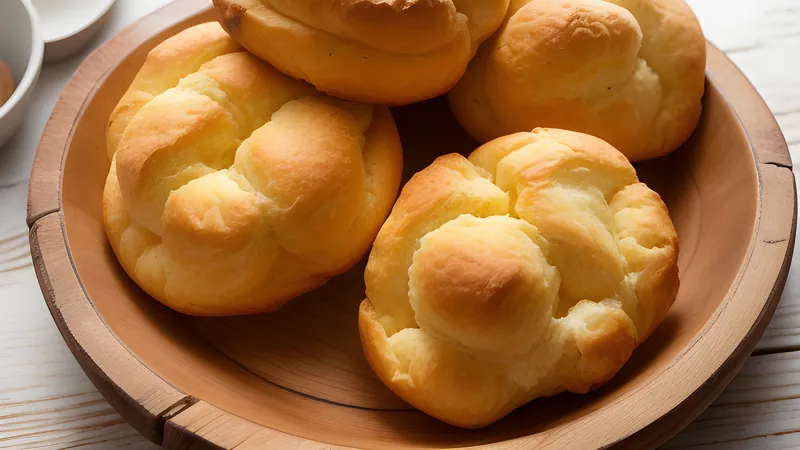
Gougères: The French Cheese Puff Worth Mastering
Ingredients
- ½ cup (120ml) water
- ½ cup (120ml) milk
- ½ cup (115g) unsalted butter
- ½ tsp salt
- 1 cup (125g) all-purpose flour
- 4 large eggs
- 1 cup (100g) grated Gruyère cheese
- ¼ tsp ground nutmeg
- ½ tsp black pepper
Method
- Bring the water, milk, butter and salt to a boil in a saucepan. Take it off the heat and tip in all the flour at once, beating hard. Return to low heat and keep stirring until the dough forms a smooth ball and a thin film coats the base of the pan, about 2 minutes.
- Scrape the dough into a bowl and let it cool for 3–4 minutes. Beat in the eggs one at a time, fully incorporating each before adding the next, until the dough is smooth, glossy and falls from the spoon in a thick ribbon.
- Fold in the grated Gruyère, nutmeg and black pepper, holding back a small handful of cheese for the tops.
- Pipe or spoon walnut-sized mounds onto parchment-lined baking sheets, spaced well apart. Scatter the reserved cheese over each.
- Bake at 400°F (200°C) for 22–25 minutes until deeply golden and puffed. Don't open the oven early. Cool a few minutes and serve warm.
There are recipes you make to feed people, and there are recipes you make to look like you know what you’re doing. Gougères are both, which is the best kind. They come out of the oven looking like you spent the afternoon at a patisserie, and the truth is they take one pot, one bowl and about forty-five minutes start to finish. Burgundy has been getting away with this trick for centuries.
1 What a gougère actually is
A gougère is choux pastry with cheese folded through it. That’s the whole idea. Choux is the same magic dough behind profiteroles and éclairs: you cook flour into a hot paste, beat in eggs, and the water trapped inside turns to steam in the oven, blowing each little mound into a hollow, crisp-shelled puff. Add a fistful of Gruyère and a knock of pepper and you’ve turned a sweet-pastry base into the most moreish savoury bite on the table.
In Burgundy they’re the classic thing to hand round with a glass of cold white or a kir while everyone pretends they’re not going to eat six. They’re a wine cellar snack by tradition, and there’s a reason for that — salt, fat and a faint nuttiness from the cheese are exactly what you want alongside a crisp glass of something.
2 The bit that goes wrong, and how to dodge it
Choux has a reputation for being temperamental. It isn’t, really, but it has two moments where people lose their nerve.
The first is drying the dough. After you add the flour, you have to keep that paste moving over low heat until it stops being sticky and starts being a cohesive ball that leaves a film on the pan. Skip this and the dough holds too much moisture, the puffs go flat, and you blame the recipe. Give it the full couple of minutes.
The second is the eggs. Beat them in one at a time, and genuinely finish each one before reaching for the next. The dough will look broken and slippery halfway through each addition — that’s normal, keep going and it comes back together glossy. You’re looking for a dough that drops from the spoon in a thick, reluctant ribbon. If your eggs are large and the dough already looks right after three, stop at three. Dough texture wins over the number on the page every time.
And the cardinal rule: don’t open the oven for the first twenty minutes. That blast of cold air collapses the steam dome you’ve worked to build. Trust the glow through the door.
3 My one small twist
Hold back a little of the grated Gruyère and scatter it over the tops just before they go in. As the puffs rise, that cheese melts and crisps into a lacy, golden lid — more flavour where your mouth meets it first, and they look properly bakery-smart. It’s a five-second move that earns far more credit than it costs.
4 Make them yours
Gruyère is the classic, but this is a forgiving formula. Comté brings a deeper, almost caramel note; Emmental is milder and stretchier; a sharp mature cheddar is not at all traditional and completely delicious. A little Dijon beaten in with the eggs, or some snipped chives or a grind of cayenne folded in with the cheese, all belong here.
Best of all, they freeze beautifully unbaked. Pipe your mounds onto a tray, freeze them solid, then bag them up. When friends turn up unannounced you bake them straight from frozen — add three or four minutes to the time — and look like you planned the whole thing.
5 Serving
Eat them warm, ideally within an hour of baking, when the shell still has its crackle and the inside is tender and a touch eggy. They’re an aperitif first and foremost, but a bowl of them next to a big green salad and a glass of wine is a perfectly good light supper, and nobody at my table has ever complained about that.
Make a batch once and you’ll stop buying fancy nibbles. This is the recipe that quietly becomes your party trick.
Related Content