Gỏi Gà: Vietnamese Chicken and Cabbage Salad
Poached chicken, shredded cabbage and a fish-sauce dressing with real backbone
Contents
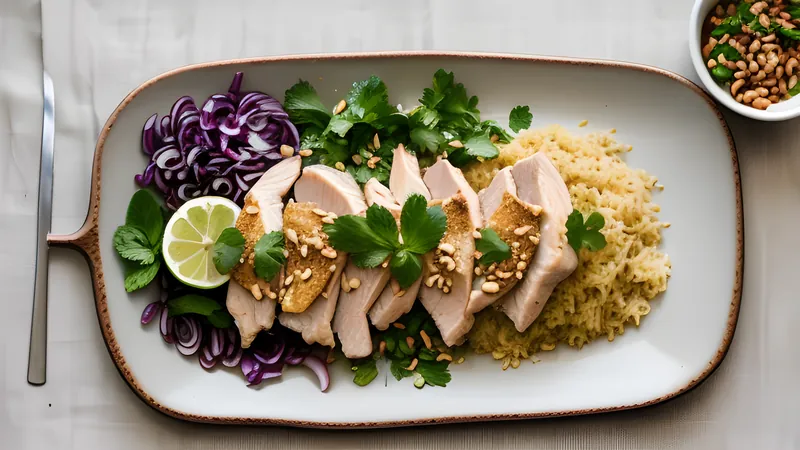
↓ Jump to recipeGỏi gà is the salad Vietnamese cooks reach for when there is poached chicken to use up and a hot afternoon to get through. It is built on crunch and sharpness: shredded cabbage, hand-torn chicken and a fish-sauce dressing that hits sour, salty, sweet and hot in the same spoonful. My one change to the standard bowl is a scattering of toasted-rice powder, the thính more usually seen in central Vietnamese dishes, which gives every forkful a faint nuttiness and a texture that ordinary peanuts alone never quite deliver.
Gỏi Gà: Vietnamese Chicken and Cabbage Salad
Ingredients
- 2 large bone-in, skin-on chicken thighs (about 500g), or 1 whole chicken leg quarter
- 1 thumb of ginger, sliced, plus 1 tbsp finely grated for the dressing
- 2 spring onions, whole, plus 2 more finely sliced
- 1 tsp fine salt, for the poaching water
- 400g white cabbage, very finely shredded
- 1 medium carrot, cut into fine matchsticks
- 1/2 small red onion, sliced paper-thin
- 2 tbsp uncooked jasmine or glutinous rice, for the toasted-rice powder
- 3 tbsp fish sauce
- 3 tbsp lime juice (about 2 limes)
- 2 tbsp caster sugar
- 1 garlic clove, crushed to a paste
- 1 to 2 bird's-eye chillies, finely chopped
- A large handful of Vietnamese coriander (rau răm) or ordinary coriander, roughly chopped
- A handful of mint leaves, torn
- 3 tbsp roasted peanuts, roughly chopped
- 2 tbsp crispy fried shallots
Method
- Put the chicken thighs in a small pan with the sliced ginger, whole spring onions and 1 tsp salt. Cover with cold water by 2cm, bring to a bare simmer, then poach very gently for 18 to 20 minutes until cooked through.
- Lift the chicken out and plunge into a bowl of iced water for 5 minutes to firm the flesh and stop it drying; reserve 2 tbsp of the poaching liquid. Once cool, tear the meat into coarse shreds, discarding skin and bone.
- Toast the raw rice in a dry frying pan over a medium heat for 6 to 8 minutes, shaking often, until deep golden and nutty-smelling. Cool, then grind to a coarse sand in a mortar or spice grinder.
- Salt the shredded cabbage with 1/2 tsp salt, toss, and leave in a colander for 15 minutes, then squeeze out the excess water with your hands.
- Whisk the fish sauce, lime juice, sugar, grated ginger, garlic, chilli and the 2 tbsp reserved warm poaching liquid until the sugar dissolves.
- In a large bowl, combine the squeezed cabbage, carrot, red onion, sliced spring onion and torn chicken. Pour over two-thirds of the dressing and toss well with your hands.
- Add the herbs and toss again, then taste and add more dressing as needed. Pile onto a platter and scatter with the toasted-rice powder, peanuts and crispy shallots.
The Story
Gỏi is the Vietnamese word for a whole family of raw or lightly dressed salads, and gà simply means chicken, so gỏi gà is chicken salad in the plainest possible reading. What that undersells is how central these salads are to the way people actually eat in Vietnam, where a table is assembled from several shared plates rather than a single main, and a bright, acidic gỏi does the job that a green salad does nowhere near as forcefully in a European meal. It cuts the richness of everything else on the table and resets the palate between mouthfuls of rice and braised meat.
The dish has deep roots in the practice of not wasting a bird. A chicken poached for stock, or a leftover roast, gives up exactly the sort of cool, firm meat that shreds well and drinks up a dressing, and the poaching liquid becomes the base of a soup served alongside. In the south, around the Mekong Delta, the cabbage is often swapped for shredded green banana blossom or lotus stem, and the herb of choice is nearly always rau răm, the peppery Vietnamese coriander that has a soapy, citrus bite quite unlike the flat-leaf sort. If you can find it at a South-East Asian grocer it lifts the whole bowl; ordinary coriander and extra mint make a perfectly good stand-in.
Poaching is where most home versions of this salad are won or lost. Chicken breast, the default choice for a Western cook, goes stringy and dry the moment it is overcooked, which is why I use thighs. Their higher fat and connective tissue keep them succulent even if you leave them a minute too long, and the dark meat has more flavour to stand up to a fierce dressing. The trick that matters most is the bare simmer: water at a rolling boil seizes and toughens the proteins, whereas water held at around 85°C, with barely a bubble breaking the surface, cooks the meat gently and evenly. The plunge into iced water afterwards firms the flesh and makes it far easier to tear into clean shreds along the grain.
The toasted-rice powder
This is the small change that turns a good gỏi gà into one people ask about. Thính is made by dry-toasting raw rice until it is a deep, even gold, then grinding it to a coarse powder somewhere between flour and fine sand. Glutinous rice gives the most fragrant result, but ordinary jasmine works well too. Scattered over the finished salad, it does two things at once: it adds a warm, popcorn-like aroma that reads as savoury and slightly smoky, and its grit clings to the dressing so that every forkful carries a little texture. It also quietly soaks up excess liquid at the bottom of the bowl, which keeps the salad from going watery as it sits.
Toast the rice slowly and watch it closely once it starts to colour, because the window between golden and burnt is narrow and a scorched batch tastes acrid. Keep the pan moving and pull it off the heat the moment the grains are the colour of weak tea and smell like toasted nuts. It keeps in a jar for a couple of weeks, so it is worth making more than you need; a spoonful over grilled pork or a rice-paper roll is never wasted.
Getting the dressing right
A Vietnamese dressing of this kind, a close cousin of nước chấm, is an exercise in balance, and the ratios in the recipe are a starting point rather than a rule. Fish sauces vary wildly in saltiness, and limes vary in sourness, so taste as you build it. The dressing should make you wince very slightly on its own; once it coats the cabbage and chicken, all that intensity mellows into something rounded. The splash of warm poaching liquid is my other small liberty here, loosening the dressing just enough to coat everything without diluting the punch, and it carries a faint chicken-and-ginger savour back into the bowl.
Salting the cabbage first is worth the quarter-hour it costs. Raw cabbage holds a surprising amount of water, and a salad dressed straight from the chopping board will leach liquid within minutes and end up sitting in a pale, watery pool. Fifteen minutes under salt draws that water out, and a firm squeeze in your hands leaves the shreds pliable and seasoned, so they take the dressing rather than repelling it. The cabbage stays crunchy but loses its squeaky rawness.
What can go wrong
The most common disappointment is a bland, flabby salad, and it usually comes from skipping the cabbage salting or dressing too far ahead. Gỏi gà wants to be tossed and eaten within twenty minutes or so; leave it dressed for an hour and the vegetables collapse and weep. Assemble everything, keep the dressing and the crunchy toppings separate, and bring it together only when you sit down.
Under-seasoning is the other frequent fault. This is a bold salad by design, and a timid hand with the fish sauce and lime leaves it tasting of wet cabbage. Trust the sourness and the salt; the sugar and herbs pull it all back into line. If it tastes flat once tossed, the answer is almost always more lime and a little more fish sauce rather than more oil, of which there is none here anyway. And do add the chilli to your own tolerance, but do add some: a whisper of heat is part of the architecture of the dish, working against the sweetness the way it does in a good Thai dressing.
Storage, make-ahead and variations
The components keep beautifully; the assembled salad does not. Poach the chicken and make the toasted-rice powder a day ahead, storing the meat covered in the fridge and the powder in a jar. Shred the cabbage and carrot in the morning and keep them in a bag with a piece of kitchen paper to catch moisture. The dressing holds for two or three days in a sealed jar and only improves as the garlic and chilli infuse. With everything prepped, the final salad comes together in five minutes.
For variations, poached prawns or leftover roast duck slot in beautifully in place of the chicken, and a handful of shredded green mango or firm underripe pear adds a fruity sharpness that suits the dressing. If you like this style of bright, herby, fish-sauce-driven bowl, my Yam Nua, the Thai grilled beef salad works the same sour-salty-hot balance around charred steak, and for a cooler, nuttier take on a noodle salad, my sesame-ginger soba leans on toasted sesame where this one leans on toasted rice.
Related Content