Goan Fish Curry with Kokum and Coconut
Xitti kodi, sour and scarlet
Contents
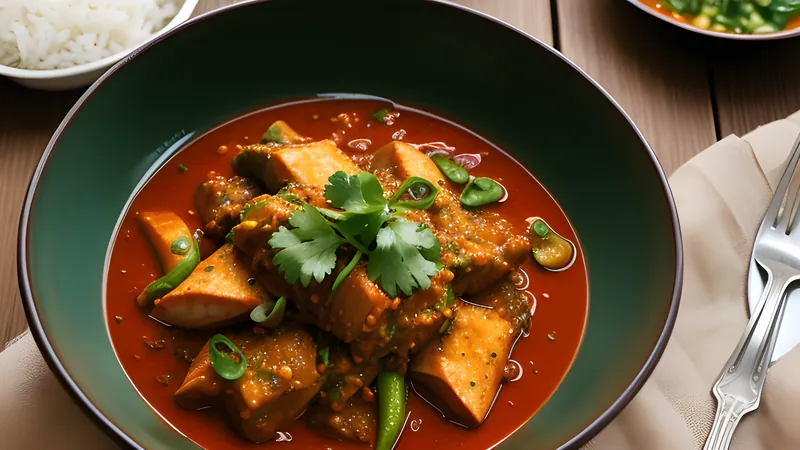
↓ Jump to recipeIf you have only ever made a fish curry from a jar or a supermarket paste, the Goan version will reset your expectations. It is built on a wet masala — fresh coconut and roasted spices ground with garlic and ginger into a thick scarlet paste — and that paste is the entire personality of the dish. My one departure from the everyday recipe is the souring agent: instead of the tamarind most people reach for, I use kokum, the dried purple rind of a coastal fruit that the Goan and Konkan kitchens have always favoured. It gives a cleaner, fruitier sourness and a faint smoky depth that tamarind cannot quite reach.
Goan Fish Curry with Kokum and Coconut
Ingredients
- 600g firm white fish (kingfish, pomfret, monkfish or cod), cut into large chunks
- 1 tsp salt, plus more to season
- 1/2 tsp ground turmeric
- 100g fresh or frozen grated coconut (or 6 tbsp desiccated, soaked in warm water)
- 8 dried Kashmiri chillies, stalks removed
- 1 tbsp coriander seeds
- 1 tsp cumin seeds
- 1 tsp black peppercorns
- 6 garlic cloves
- 1 tsp fresh ginger, chopped
- 6–8 kokum petals (or 2 tbsp tamarind paste)
- 2 tbsp coconut or vegetable oil
- 1 large onion, finely sliced
- 2 green chillies, slit lengthways
- 200ml warm water
Method
- Toss the fish chunks with 1 tsp salt and the turmeric and set aside while you make the paste.
- Dry-roast the Kashmiri chillies, coriander seeds, cumin and peppercorns in a pan over medium heat for 1–2 minutes until fragrant, then tip out.
- Blend the roasted spices with the coconut, garlic and ginger and enough water to make a smooth, thick scarlet paste.
- Soak the kokum petals in a little warm water for 10 minutes.
- Heat the oil in a wide pan and fry the sliced onion over medium heat for 8–10 minutes until soft and golden.
- Add the ground paste and fry, stirring, for 5–6 minutes until it darkens and the oil begins to separate at the edges.
- Pour in the 200ml warm water, add the soaked kokum with its liquid and the slit green chillies, and simmer for 5 minutes. Season.
- Slide in the fish, spoon the sauce over, and simmer gently for 6–8 minutes until just cooked through. Rest off the heat for 10 minutes before serving with rice.
A curry shaped by three cultures
Goa sits on India’s western coast, a thin green strip between the Western Ghats and the Arabian Sea, and its food is the product of a long and layered history. The Konkani cooking of the region was already coconut-rich and fish-heavy when the Portuguese arrived in 1510 and stayed for four and a half centuries. They brought chillies from the New World — before that, Indian food got its heat from pepper — and the vinegar-and-garlic sourness that runs through the Catholic Goan repertoire in dishes like vindaloo. What resulted was a cuisine that reads as unmistakably Indian yet carries these European threads through it.
This fish curry, known in Konkani as xitti kodi or simply fish curry rice, is the everyday backbone of a Goan meal, eaten at lunch almost daily along the coast. It is a Hindu-leaning dish in its use of kokum rather than the Portuguese vinegar, and it is defined by its brilliant red colour, which comes from Kashmiri chillies. These are the crucial ones: mild in heat but deep in colour, they let you build a vivid, generous curry without setting anyone’s mouth on fire. If all you can find are hotter chillies, use fewer and add a little sweet paprika to keep the colour.
Grinding your own masala
The single biggest leap in quality comes from grinding the spice paste yourself. It is a ten-minute job and it is the difference between a curry that tastes alive and one that tastes of the jar. Two techniques matter here.
First, dry-roast the whole spices before grinding. A minute or two in a hot, dry pan until they smell toasty and the cumin darkens a shade transforms them — roasting drives off raw harshness and coaxes out the aromatic oils locked in the seeds. Watch them closely, because the line between toasted and burnt is about fifteen seconds, and burnt spices turn the whole curry bitter.
Second, use coconut with some fat still in it. Fresh grated coconut is ideal and freezes well, so it is worth buying a bag of frozen grated coconut from an Asian grocer and keeping it in. If you only have desiccated, soak it in warm water first to plump it back up, otherwise it grinds to a dry, gritty paste. The coconut is not just for flavour: its fat body is what makes the sauce lush and rounded and stops the sourness and chilli from feeling harsh.
Blend everything to a genuinely smooth paste, adding water in small splashes. A high-powered blender does this in a couple of minutes; a smaller one may need patience and a few pauses to scrape down. The smoother the paste, the silkier the finished curry.
Kokum deserves a word of its own, because it is the ingredient that will be new to most people. It is the dried rind of Garcinia indica, a fruit related to the mangosteen that grows all along the Konkan coast, sun-dried until it is a sticky, near-black petal. It carries a sourness that is rounder and less puckering than tamarind, with a subtle salinity and a whisper of smoke, and it tints the sauce a deeper red. You buy it in small packets from Indian grocers and it keeps for a year in a jar. Soak the petals in warm water before use to soften them and release their colour, and add both the softened petals and their soaking liquid to the pan.
Frying the paste — the step that cannot be rushed
Once the onions are soft and golden, the ground paste goes in, and this is where the curry is really made. You need to fry it — properly fry it, over medium heat, stirring, for a good five or six minutes — until it darkens from bright to brick red and you see the oil beginning to bead and separate at the edges of the pan. That oil separation, what Indian cooks call the masala being bhunoed, is the visual signal that the raw taste of the spices and garlic has cooked out and the flavours have deepened and married. Skip this and the curry tastes raw and thin no matter how long you simmer it afterwards.
Only after the paste is fried do you add the water and the kokum. Let the sauce simmer for a few minutes to come together and thicken slightly, taste it for salt and sourness, and adjust before the fish goes anywhere near it. This is the moment to balance the curry, because once the fish is in you can no longer stir it hard.
Cooking the fish gently
Firm-fleshed fish is what you want, something that holds together in a simmering sauce. On the Goan coast it would be kingfish or pomfret; here, monkfish is superb if you are feeling flush, and a good thick cod or coley loin does the job admirably. Cut it into large chunks — big pieces survive the simmer where small ones fall apart.
Salting and turmeric-rubbing the fish at the start does two things: it seasons it through and the turmeric firms the surface slightly, helping it keep its shape. When it goes into the sauce, keep the heat gentle and resist stirring; instead, spoon the sauce over the pieces and shake the pan to move things around. Six to eight minutes is usually plenty — the fish is done when it turns opaque and flakes at a gentle prod. Then take it off the heat and, if you possibly can, let it rest for ten minutes or longer. Like most curries, this one improves as it sits and the flavours settle; many Goan cooks make it ahead for exactly this reason.
Serving, storage and variations
Serve it with plain boiled rice — traditionally the nutty red ukda rice of the region, though basmati is fine — and let people spoon the scarlet sauce generously over it. That is the whole meal: fish curry rice, maybe a simple vegetable bhaji on the side. The curry keeps beautifully for two or three days in the fridge and, if anything, tastes better on day two; warm it gently so the fish does not break up.
For variations, the same masala base is a workhorse. Swap the fish for peeled prawns (add them for just the last three or four minutes), or throw in a handful of okra or a few chunks of aubergine to make it go further. If you cannot get kokum, tamarind paste is the honest substitute — start with two tablespoons and add more to taste, as it is sharper. For more of the Kerala coast’s love affair with curry leaves and prawns, my Kerala prawn roast with curry leaf is the drier, spicier cousin of this dish, and if you want to stay in the coconut-and-seafood world but go creamier and milder, the Bengali prawn malai curry with coconut milk is where I would send you next.
Related Content