Gnocchi alla Sorrentina with Tomato and Mozzarella
Pillowy potato dumplings baked under bubbling cheese
Contents
↓ Jump to recipeThere is a version of gnocchi that has put a lot of people off gnocchi for life. It comes vacuum-packed in a plastic pillow, it is the weight and density of a fishing sinker, and after eating six of them you feel as though you have swallowed wet cement. If that is your only experience of the dish, I understand the scepticism entirely. Real gnocchi are almost the opposite thing: light, tender, faintly sweet dumplings that give under a fork. The gap between the two is almost entirely about water and flour, and once you understand that gap you can make good gnocchi for the rest of your life.
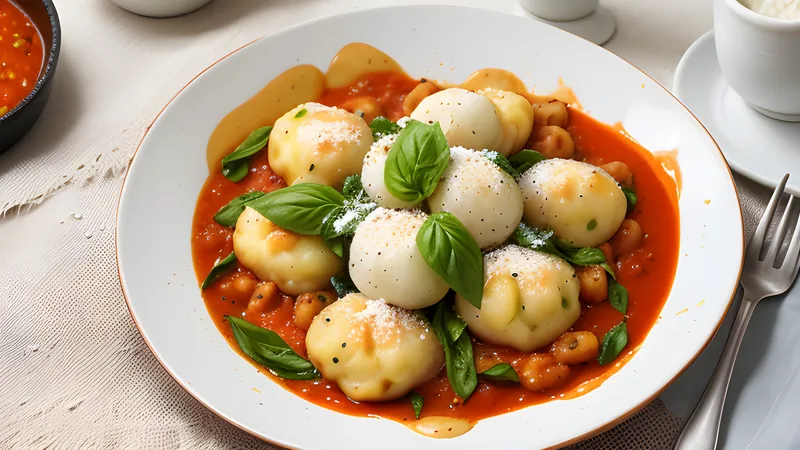
Gnocchi alla Sorrentina is where I always send people first, because the baked cheese-and-tomato treatment is forgiving and gorgeous, and because it is genuinely one of the great comforting suppers of southern Italy. You make the dumplings, dress them in a bright tomato sauce, bury the lot under torn mozzarella and bake it until the top blisters and the cheese pulls into long strings. It is the sort of dish people go quiet over.
Gnocchi alla Sorrentina with Tomato and Mozzarella
Ingredients
- 1kg floury potatoes (Maris Piper or King Edward), similar sizes
- 250-300g '00' flour, plus extra to dust
- 1 egg yolk
- 1/2 tsp fine salt, plus more for the water
- 2 tbsp olive oil
- 3 garlic cloves, lightly crushed
- 700g passata or tinned San Marzano tomatoes, blended
- 1 tsp salt
- Pinch of sugar (if needed)
- Handful of fresh basil, plus more to serve
- 125g smoked scamorza, diced
- 150g fresh mozzarella, torn and drained
- 40g Parmigiano-Reggiano, grated
Method
- Bake the whole unpeeled potatoes at 200C fan for 50-60 minutes until soft, then peel while hot and rice them.
- Cool the riced potato slightly, add egg yolk and salt, then work in the flour a little at a time to a soft, just-cohesive dough; do not overwork.
- Roll into ropes, cut into 2cm pillows, ridge on a fork or gnocchi board, and rest on a floured tray.
- Make the sauce: gently fry crushed garlic in olive oil until fragrant, add the tomatoes and salt, simmer 20 minutes, then discard garlic and stir in basil.
- Boil the gnocchi in batches in well-salted water; lift them out about 30 seconds after they float.
- Fold the drained gnocchi through the sauce with the smoked scamorza, tip into a baking dish, top with mozzarella and Parmigiano.
- Bake at 200C fan for 15 minutes until bubbling and blistered; rest 5 minutes and scatter with basil.
From Sorrento, and older than you think
The style takes its name from Sorrento, the town on the peninsula south of Naples looking across the bay towards Vesuvius. It belongs to the Campanian tradition of simple, ingredient-led cooking built on superb local tomatoes and the region’s fresh cheeses, the same larder that produced the Neapolitan pizza. Gnocchi themselves are far older and far more widespread; potato gnocchi as we know them only became possible after the potato reached Europe from the Americas and was slowly accepted, but flour-and-water dumplings of one kind or another go back to Roman times.
What makes the Sorrentina version specific is the finish: filante, meaning stringy, that glorious molten pull of melted mozzarella. Traditionally it is baked and served in individual terracotta dishes, which is worth doing if you have them because everyone gets their own bubbling, crisp-edged top.
The twist: smoked scamorza
The classic uses fresh mozzarella, and I keep some of that for its clean milkiness and its stretch. My addition is to fold diced smoked scamorza through the gnocchi before baking. Scamorza is a close cousin of mozzarella, drier and firmer, and the smoked version brings a gentle wood-fire note that gives the dish an unexpected savoury backbone. It stops the whole thing tasting merely of tomato and milk and adds the kind of depth you would otherwise chase with meat. It is the same logic I use to lift a simple pasta alla Norma.
The gnocchi themselves
Everything hinges on keeping the potatoes dry. Boiling them, the common method, waterlogs the flesh and forces you to add more flour to compensate, which is exactly how you end up with sinkers. I bake the potatoes whole and unpeeled instead, so they steam themselves dry from the inside. Then I peel them while still hot, which is worth the burnt fingertips, and pass them through a ricer or mouli. A ricer gives a fluffy, lump-free texture that no masher can match; masher gnocchi turn gluey because you crush and stretch the starch.
Let the riced potato cool slightly so the egg yolk does not scramble, then work in the salt, the yolk and the flour a little at a time. This is the moment of judgement. Add just enough flour to bring it into a soft dough that barely holds together, and stop. The more flour you add and the more you knead, the more gluten develops and the tougher the gnocchi. The dough should feel tacky and delicate, almost worryingly so. Different potatoes hold different amounts of water, which is why the flour is a range and not a fixed weight; trust the feel over the scale.
Roll pieces of dough into long ropes about as thick as your thumb, cut into two-centimetre pillows, and press each against the tines of a fork or a gnocchi board to make ridges. The ridges earn their keep by catching and holding the sauce. Lay them out on a well-floured tray, spaced apart.
Sauce, boil and bake
Keep the sauce plain so it lets the gnocchi lead. Warm the olive oil with lightly crushed garlic until it is fragrant and just turning gold, then fish the garlic out, add the blended tomatoes and salt, and simmer for twenty minutes until it thickens and loses its raw edge. A pinch of sugar rescues tomatoes that taste sharp. Stir in torn basil at the end.
Boil the gnocchi in batches in plenty of well-salted water. They are ready about thirty seconds after they bob to the surface; lift them out with a slotted spoon and do not wait for a rolling crowd of them, or the first ones overcook. Fold the drained gnocchi gently through most of the sauce along with the smoked scamorza, then tip into a baking dish, spoon the rest of the sauce over, and top with torn mozzarella and grated Parmigiano. Bake at 200°C fan for fifteen minutes until it is bubbling and the top has caught dark blisters in places. Rest it five minutes, or the cheese runs off the spoon like lava, and finish with fresh basil.
What goes wrong
Heavy gnocchi mean too much flour or waterlogged potatoes; go back to baking rather than boiling them and be braver about stopping early with the flour. If the dumplings dissolve in the boiling water, the dough was too wet or too loosely bound, and a little more flour and a gentler hand next time fixes it. Test one gnocco in the water before you cook the whole tray, so you can adjust the dough if it falls apart.
A watery mozzarella will flood the dish, so tear it and let it drain on kitchen paper for ten minutes before it goes on. And do not overbake; you want the cheese molten and blistered, and pushing it further only makes it greasy and tough.
Make-ahead and variations
Shaped raw gnocchi freeze beautifully. Spread them on a floured tray, freeze until solid, then bag them and cook straight from frozen, adding a minute to the boil. This is the real reason to make a big batch. Fresh dough, by contrast, does not like to sit around; cook it within an hour or freeze it.
The assembled dish can be built ahead and refrigerated, then baked from cold with an extra five minutes. For a lighter supper, skip the bake entirely and simply toss the boiled gnocchi through the tomato sauce with a little mozzarella folded in off the heat. And if you catch the gnocchi-making habit, the same dough is the gateway to a whole family of dishes; from here it is a short step to filled pastas like butternut and sage ravioli and the wider world of made-by-hand Italian suppers.
Choosing the potato
Not all potatoes make good gnocchi, and the wrong bag will fight you the whole way. You want a floury, high-starch variety such as Maris Piper or King Edward, the same sort you would reach for to make a roast potato or a fluffy mash. Waxy salad potatoes hold too much moisture and too little starch, so the dough needs far more flour to come together and the gnocchi turn out dense and rubbery. Pick potatoes of a similar size so they bake evenly, and choose older, drier ones over fresh new-season potatoes, which carry more water under their thin skins. If you can, weigh the riced potato after peeling rather than trusting the raw weight, since a good deal of moisture cooks off in the oven. Get the potato right and half the battle is won before you have touched the flour at all; the rest is simply a light hand and the confidence to stop adding flour a moment before you think you should.
Related Content