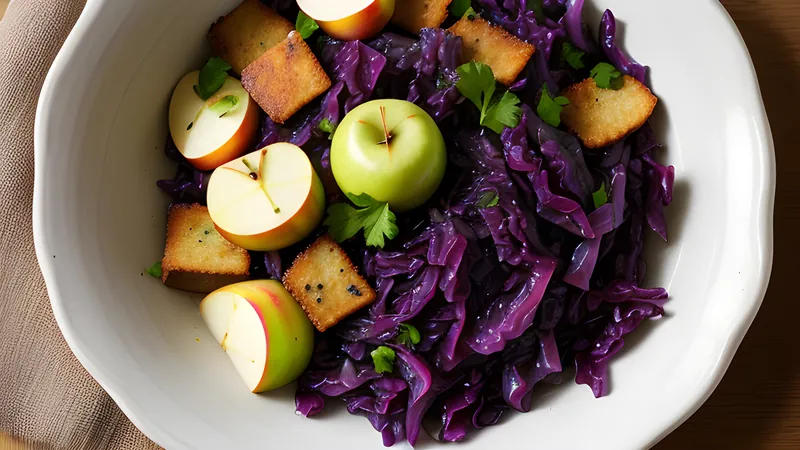
German Rotkohl: Braised Red Cabbage with Apple and Clove
Apple, cloves and a splash of blackcurrant, simmered until the cabbage turns almost jammy
Contents
↓ Jump to recipeThe first time I made rotkohl properly, rather than tipping a jar of the supermarket version into a pan to heat through, I was shocked at how little it resembled what I’d been eating for years. Real rotkohl isn’t sweet-and-sour cabbage in the takeaway-Chinese sense. It’s deep, faintly spiced, and balanced on a knife-edge between sharp and sweet that a jar simply can’t replicate once the cabbage has been sitting in vinegar brine for months.
This is the cabbage dish that turns up on German tables from October through to New Year, usually next to something rich enough to need a sharp counterpoint — a roast goose, a hunk of pork knuckle, a coil of bratwurst with mustard. It takes an hour and a half of mostly unattended simmering, and it’s one of the few side dishes that genuinely improves the day after you make it, which makes it one of the least stressful things you can put on a Christmas table.
German Rotkohl: Braised Red Cabbage with Apple and Clove
Ingredients
- 25g goose fat, duck fat, or unsalted butter
- 1 large onion, thinly sliced
- 1 red cabbage (about 1.2kg), quartered, cored and finely shredded
- 2 Bramley or other tart cooking apples, peeled, cored and diced
- 4 whole cloves
- 1 cinnamon stick
- 2 bay leaves
- 100ml red wine vinegar
- 3 tbsp soft light brown sugar
- 250ml red wine
- 200ml vegetable or chicken stock
- 2 tbsp creme de cassis or blackcurrant cordial
- Salt and black pepper, to taste
Method
- Melt the fat in a large, heavy-based pot over medium heat and sweat the onion for 5-6 minutes until soft and translucent.
- Add the shredded cabbage in two or three batches, stirring each batch down before adding the next, until it's all in the pot and glistening with fat.
- Add the diced apple, cloves, cinnamon stick, bay leaves, vinegar, sugar, wine and stock. Stir well and bring to a gentle simmer.
- Cover and cook on low heat for 1 hour 15 minutes, stirring every 20 minutes or so and adding a splash of water if the pot looks dry.
- Uncover for the final 10-15 minutes if there's still a lot of liquid, and let it bubble down until glossy rather than soupy.
- Stir in the cassis or blackcurrant cordial, then fish out the cloves, cinnamon stick and bay leaves.
- Taste and adjust with a little more vinegar for sharpness or sugar for roundness, season with salt and pepper, and serve hot.
Why the same cabbage has two different names
Ask a cook from Cologne what this dish is called and they’ll say Rotkohl. Ask someone from Bavaria or Austria and you’ll more likely hear Blaukraut, for the same cabbage, cooked in a broadly similar way. The split isn’t just dialect. It’s chemistry sitting on a regional fault line.
Red cabbage gets its colour from anthocyanin pigments in the cell walls, and those pigments are pH indicators as much as they are pigments. In an acidic environment — plenty of vinegar, wine, or apple in the pot — the anthocyanins stay a vivid red-purple, which is why northern and western German versions, built on a generous glug of vinegar, are red enough to earn the name Rotkohl. Cook the same cabbage with less acid, or with a pinch of bicarbonate of soda the way some southern German and Austrian cooks traditionally did to soften the leaves faster, and the pigments shift toward blue, giving you Blaukraut. It’s the same trick as a red cabbage water indicator you might remember from a school chemistry lesson, just happening slowly in a pot instead of a test tube. Add a squeeze of lemon to a batch that’s gone dull and blue-grey and you’ll watch it blush back toward red within a minute, which is a genuinely useful party trick if a batch ever looks tired.
This recipe sits on the vinegar-heavy, red-leaning side of that divide, partly because I think the sharper result is more interesting on the plate, and partly because it’s the more forgiving version for anyone cooking it for the first time — the acid is doing real, tangible work, not just colour management, since it also keeps the cabbage from turning to mush over the long simmer.
Building the braise: fat, apple and warm spice
Traditional rotkohl starts with rendered goose or duck fat, which makes obvious sense if you’re already roasting a goose alongside it and have the fat to spare, but butter does a perfectly good job if you’re not. The fat’s job here is small but important: it coats the shredded cabbage before any liquid goes in, which helps the leaves soften evenly rather than boiling into stringy strands in a pool of vinegar and wine.
Apple is non-negotiable. A tart cooking apple like a Bramley breaks down almost completely over the long simmer, melting into the braise and thickening it slightly while it lends natural sweetness that balances the vinegar without ever tasting like fruit salad. Braeburn or another firm eating apple works if that’s what’s in the bowl, though it holds its shape more and gives you visible chunks of apple rather than a cabbage that’s absorbed the fruit into its body.
The warm spices — cloves, cinnamon, bay — are there for background, not for volume. This is not a mulled-wine cabbage; you should be able to taste the effect of the spice without being able to immediately name which spice did it. Whole cloves and a cinnamon stick, both fished out before serving, give you that effect far more cleanly than ground versions, which tend to leave gritty sediment and can turn bitter if they cook for the full ninety minutes.
Choosing the cabbage itself matters more than most recipes let on. Look for a head that feels heavy for its size and has tight, glossy leaves rather than a loose, papery outer layer, which is usually a sign it’s been sitting in storage too long and has started drying out from the outside in. Quarter it through the core, cut the white core away at an angle from each wedge, then shred across the grain into ribbons about the width of a pencil — thinner than that and the cabbage disintegrates before the flavours have had time to work through it; much thicker and you’ll still be waiting for the centre of each strand to soften once the outside is already collapsing.
Method
Melt the fat in a large, heavy-based pot over medium heat and sweat the sliced onion for 5–6 minutes, until soft and translucent but not coloured. Add the shredded cabbage in two or three batches, stirring each one down into the pot before adding the next — trying to force all 1.2kg in at once just means the top layer steams rather than sits in the fat.
Once all the cabbage is in, add the diced apple, cloves, cinnamon stick, bay leaves, red wine vinegar, sugar, red wine and stock. Stir everything together and bring it to a gentle simmer. Cover the pot and cook on low heat for around 1 hour 15 minutes, stirring every 20 minutes or so — this is the point where you can walk away and do something else, checking in occasionally to make sure nothing’s caught on the base and adding a splash of water if the pot looks like it’s drying out before the cabbage has fully softened.
Once the cabbage is tender and deeply coloured, taste it. If there’s still a lot of liquid sitting at the bottom, uncover the pot for the final 10–15 minutes and let it reduce down to something glossy and coating rather than soupy. This is also the moment to stir in the crème de cassis or blackcurrant cordial — a small addition, but one that adds a dark, slightly tannic fruitiness that plain apple doesn’t quite reach, and it plays particularly well against the goose fat if you’ve used it. Fish out the cloves, cinnamon stick and bay leaves, taste again, and adjust with a touch more vinegar if it needs sharpening or a pinch more sugar if it’s too puckering. Season with salt and pepper and serve hot.
What it’s built to sit under
Rotkohl exists to be a foil, and German cooking treats it that way rather than as a dish in its own right. The classic pairing is Martinsgans, the roast goose eaten around St Martin’s Day in November and again at Christmas, where the cabbage’s acidity cuts straight through the bird’s fat. It’s just as at home next to Kassler — brined, smoked pork loin — or a simple pan of bratwurst and mash, where the sharpness does the same job a good mustard would otherwise be doing alone.
The timing isn’t an accident either. Red cabbage is harvested through autumn and stores well into winter, which is exactly the stretch of the calendar — Martinmas on 11 November, the Christmas markets, New Year’s Eve — when German cooking leans hardest on rich roasted meats that need something acidic alongside them. Rotkohl and its Blaukraut cousin turn up at almost every German Christkindlmarkt stall selling a plate of Bratwurst or a Schnitzel roll, ladled on as a matter of course rather than offered as an option, the way chips come with a British fish supper whether you ask for them or not.
If you’re building out a full German-inspired spread, a batch of pretzel knots with brown butter and mustard salt alongside covers the bread course with something that shares the same beer-hall register. And if cabbage braised low and slow with fruit and spice is your kind of thing, it’s worth comparing this against Poland’s bigos, the hunter’s stew built on sauerkraut and fresh cabbage together — a reminder of how differently two neighbouring cuisines can treat the same vegetable once meat, fruit and time get involved.
Make-ahead and storage
Rotkohl is one of the rare dishes where making it a day ahead genuinely improves it, since the vinegar and spice have time to work all the way through the cabbage rather than just coating the surface. Cool it completely, then keep it in the fridge in an airtight container for up to 5 days, reheating gently in a covered pan with a splash of water or stock to loosen it back up.
It freezes well for up to 3 months. Thaw it overnight in the fridge, then reheat slowly on the hob rather than in the microwave, which tends to cook the edges of the container before the middle has caught up. A minute of stirring in a small extra knob of butter at the end helps restore the gloss that a spell in the freezer flattens out.
Variations
Swap the red wine vinegar for the same quantity of apple cider vinegar for a slightly softer, fruitier edge, or replace the red wine with more stock and an extra splash of vinegar for a version with no alcohol at all. Some cooks add 100g of peeled, grated raw potato in the last 20 minutes of cooking as a traditional thickener if the braise still looks thin — it dissolves in almost entirely and you’d never know it was there. If you want a nuttier, more autumnal version, stir through a handful of roasted, peeled chestnuts along with the apple; they hold their shape and add a starchy sweetness that’s particularly good alongside venison or duck rather than goose.
Related Content