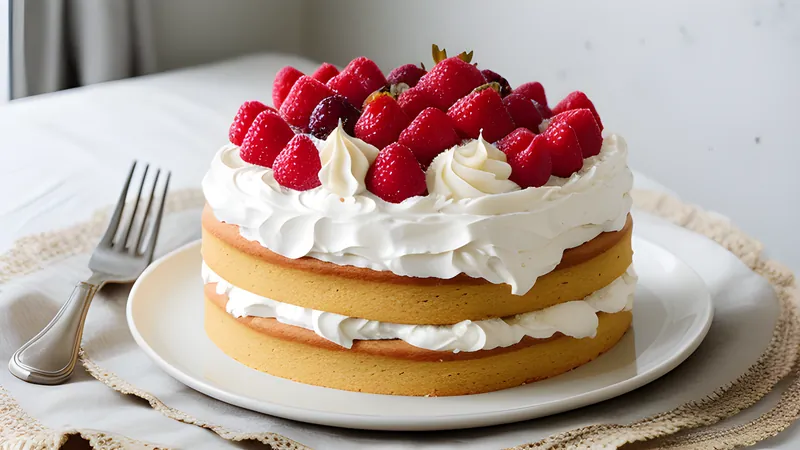
Génoise with Raspberry and Chantilly
The whisked Italian sponge, soaked, layered with cream and crushed berries
Contents
↓ Jump to recipeAsk a French pastry chef what a génoise is and they will tell you it is the sponge everything else is built on. It is the foundation of gateaux, the base of countless layer cakes, the thing you learn early because so much depends on it. The name points to Genoa, and the technique is credited to an eighteenth-century Genoese pastry cook working in France, which is a very continental sort of origin: an Italian method with a French name that the whole of European patisserie then adopted as its own.
What makes a génoise a génoise is what it leaves out. No baking powder, no bicarbonate, no chemical lift at all. The entire rise comes from air you whisk into whole eggs, expanded by the heat of the oven. That is the whole trick, and it is why a good génoise feels almost weightless, and why a bad one sits in the tin like a flannel. Everything hangs on how you treat the eggs, so that is where we will spend our attention.
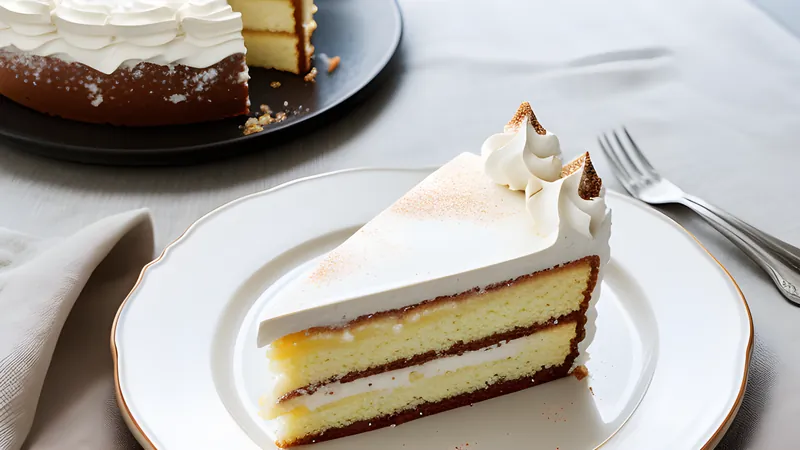
Génoise with Raspberry and Chantilly
Ingredients
- 4 large eggs, at room temperature
- 120g caster sugar
- 120g plain flour, sifted
- 30g unsalted butter, melted and cooled
- 1 tsp vanilla extract
- 80ml water (for the syrup)
- 60g caster sugar (for the syrup)
- 2 tbsp kirsch or lemon juice
- 450ml double cream, cold
- 40g icing sugar, sifted
- 1 tsp vanilla bean paste
- 400g fresh raspberries
- 2 tbsp raspberry jam, warmed and sieved
Method
- Heat the oven to 170C fan. Butter and line a 20cm round tin. Bring a pan with a few centimetres of water to a bare simmer.
- Whisk the eggs and 120g caster sugar in a heatproof bowl over the pan until warm to the touch (about 40C), then take off the heat and whisk on high for 6-8 minutes until tripled in volume, pale and thick enough to hold a ribbon for 3 seconds.
- Sift the flour over in three additions, folding gently with a large spoon so you keep the air. Fold a spoon of the batter into the melted butter and vanilla, then fold that back in until just combined.
- Pour into the tin and bake 25-28 minutes until golden and springy and the edges pull from the tin. Cool 5 minutes, then turn out onto a rack to cool completely.
- For the syrup, simmer the water and 60g sugar for 2 minutes, cool, then stir in the kirsch or lemon juice.
- Whip the cream with icing sugar and vanilla bean paste to soft, holdable peaks. Do not overwhip.
- Slice the cooled sponge horizontally into three even layers. Brush each cut face generously with syrup.
- Set the base layer on a plate. Spread a third of the chantilly, scatter a third of the raspberries pressing some down. Repeat with the middle layer. Top with the final sponge, spread the rest of the cream, and crown with the remaining raspberries brushed with warm sieved jam to glaze.
The warm-egg method, and why it works
You begin by warming the eggs and sugar together over a pan of barely simmering water, whisking until the mixture is warm to the touch, around body temperature or a touch above. This is the step people skip, and it is the one that matters most. Warm eggs whisk to a far greater volume than cold ones, because gentle heat relaxes the proteins and lets them trap air more readily, and the sugar dissolves fully so the foam is stable and fine-textured.
Take it off the heat and whisk hard, ideally with an electric whisk, for a good six to eight minutes. You are looking for the ribbon: lift the beaters and the batter should fall in a thick trail that sits on the surface for two or three seconds before sinking. Tripled in volume, pale as clotted cream, holding its own shape. Under-whisk and there simply is not enough air to raise the flour; the cake bakes low and tight.
Then comes the fold, and folding is where hard-won volume gets thrown away in seconds. Sift the flour over in additions and cut through with a large metal spoon or spatula, turning the bowl, lifting from the bottom, deflating as little as you can. The melted butter is folded in last and gently; it is heavy, and dumped in carelessly it drives the air straight out and leaves a dense streak at the base. Fold a little batter into the butter first to slacken it, then return the lot. Just combined is the goal, no more.
If this whisk-and-fold rhythm feels familiar, it is the same discipline behind the almond joconde in my opera cake with coffee and chocolate. Master the génoise and that grander project stops looking so daunting.
A sponge that expects to be soaked
Here is the thing to understand about génoise, and the reason beginners sometimes decide they dislike it. On its own, eaten dry, it is a little plain and a little dry. That is by design. A génoise is engineered to be soaked. Its close, even, springy crumb drinks up syrup without going to pieces, and it is the syrup that turns it from a decent sponge into something memorable.
So do not judge the bare cake. Brush every cut surface generously with the kirsch syrup; the sponge should be moist and fragrant right through. Kirsch is the classic partner to raspberry, a cherry brandy whose almondy note flatters the berries, but lemon juice makes a lovely, bright, family-friendly version if you would rather leave the booze out.
This principle of a sponge built to soak sits behind a whole family of puddings. My trifle with sherry custard and raspberry leans on exactly the same idea, and once you see it you notice it everywhere.
Chantilly and berries
Chantilly is simply cream whipped with a little sugar and vanilla, named after the Château de Chantilly north of Paris, where the maître d’hôtel Vatel is romantically credited with it in the seventeenth century. The one rule is restraint: whip to soft, holdable peaks and stop. Cream taken too far turns grainy and, a minute later, buttery, and there is no coming back from it. Cold cream and a cold bowl whip faster and more reliably.
Layer the cream with fresh raspberries, pressing a few down into the cream so they burst and bleed a little colour and sharpness through each stripe. A final glaze of warm sieved raspberry jam brushed over the top berries makes them glossy and holds them in place, the same jeweller’s trick you would use to finish a fruit tart.
What can go wrong, and how to dodge it
A flat, dense cake almost always means lost air, either from under-whisking the eggs or over-folding the flour and butter. Whisk to a proper firm ribbon; fold like you mean to keep the volume.
A rubbery, tough crumb comes from overmixing once the flour is in, which develops the gluten. Stop the moment the flour disappears.
A cake that sinks in the middle usually left the oven too soon. Génoise must be springy all over and just pulling from the tin’s edge; open the door as little as you can before then.
Weeping cream means the assembled cake sat too long at room temperature or the cream was overwhipped. Chill it, and eat it the day it is made for the best texture.
Serving, storage and variations
Serve génoise the day you build it, cool but not fridge-cold, cut with a serrated knife in a gentle sawing motion so you do not compress the layers. It will keep in the fridge overnight; the sponge stays lovely thanks to the syrup, though the raspberries soften.
Variations to try. Swap the raspberries for sliced strawberries and you are within sight of a fraisier, the French strawberry cake, the more formal cousin of this one. Fold lemon curd through the chantilly for a citrus version, or soak the sponge in strong coffee syrup and layer with chocolate cream for something closer to a tiramisu in cake form.
Chocolate génoise: replace 30g of the flour with 30g of cocoa for a cocoa sponge that takes beautifully to a cherry filling.
Genoa fingers and trimmings. A génoise slices cleanly enough that the offcuts from levelling the domed top are worth saving; cube them, dry them slightly in a low oven and you have the beginnings of an impromptu trifle, or split the whole sponge into a single thin sheet, spread with jam and cream and roll it for a Swiss-roll-style version. Nothing about this cake needs to be wasted, and the crumb is versatile enough to be reinvented twice from one bake.
A génoise is a small act of faith. You put no raising agent in, you whisk air into eggs and trust it to hold, and it does. Get it right once and you will understand why French kitchens treat it as bedrock. Everything worth building starts with a sponge you can rely on, and this is the one.
Related Content