Frittata with Potato, Chorizo and Roasted Pepper
Set slow, finished under the grill, good hot or cold
Contents
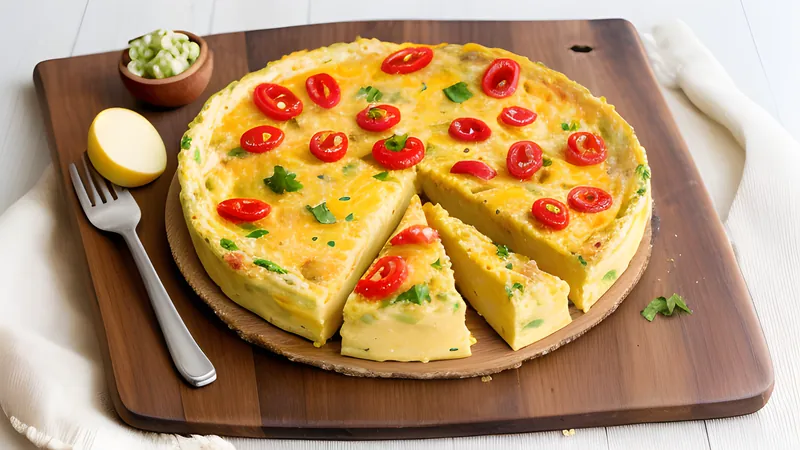
↓ Jump to recipeThe frittata is the most forgiving thing you can do with eggs, and one of the most useful. It is the dish that turns half an onion, a few potatoes and the end of a chorizo into a proper meal for six, eaten hot from the pan for supper, cut cold into wedges for a lunchbox, or served in fat slices on a picnic blanket. Unlike its French cousin the omelette, which demands to be eaten the instant it leaves the pan, a frittata is happy to sit and wait, and arguably improves after an hour’s rest. This version leans Spanish in its filling, all smoky chorizo and sweet roasted pepper, while keeping the slow Italian method that gives you a custardy, tender set rather than a rubbery slab.
The small thing that lifts it is letting the chorizo do double duty. When you crisp it in the pan it renders out a good slick of paprika-stained orange oil, and I cook the onions in that fat rather than adding fresh oil, so the smoky, garlicky flavour runs through the whole frittata instead of sitting in pockets. It is a free upgrade, and skipping it is the most common way people leave flavour on the table.
Frittata with Potato, Chorizo and Roasted Pepper
Ingredients
- 8 large eggs
- 4 tbsp full-fat milk
- 0.5 tsp fine salt, plus more for the potatoes
- A grind of black pepper
- 3 tbsp olive oil
- 350g waxy potatoes (such as Charlotte), peeled and cut into 1cm dice
- 150g cooking chorizo, skinned and crumbled or diced
- 1 onion, thinly sliced
- 2 roasted red peppers (from a jar is fine), cut into strips
- 2 garlic cloves, finely chopped
- 50g Manchego or mature Cheddar, grated
- 2 tbsp flat-leaf parsley, chopped
Method
- Whisk the eggs with the milk, salt and pepper and set aside.
- Heat 2 tbsp olive oil in a 24cm ovenproof non-stick frying pan over a medium heat. Add the diced potato with a pinch of salt and cook, turning now and then, for 10 to 12 minutes until tender and golden. Lift out with a slotted spoon and set aside.
- Add the chorizo to the same pan and cook for 3 to 4 minutes until it releases its orange oil and crisps at the edges. Lift out to join the potatoes.
- Add the remaining 1 tbsp oil and the sliced onion with a pinch of salt. Cook gently for 8 minutes until soft and sweet, then add the garlic for 1 minute.
- Return the potato and chorizo to the pan, add the roasted pepper strips and stir to distribute everything evenly. Scatter over half the cheese and the parsley.
- Turn the heat to low. Pour in the eggs, tilting the pan so they settle around the filling. Cook, undisturbed, for 10 to 12 minutes until the edges are set and the centre is only just wobbly.
- Scatter over the remaining cheese and slide under a hot grill for 2 to 3 minutes until the top is set, puffed and golden.
- Rest for 5 minutes, then loosen the edges and slide onto a board. Cut into wedges and serve warm, or leave to cool completely.
Italy’s thrift dish
Frittata comes from the Italian fritto, “fried”, and it began, as so much of the best Italian cooking did, as a way to use up whatever was to hand. Every region and every household has a version: with wild greens and herbs in spring, with leftover pasta (frittata di maccheroni) in Naples, with courgettes in summer, with onions cooked down almost to jam. It is peasant economy raised to an art, the sort of dish invented by cooks who could not afford to waste an egg or a scrap of yesterday’s vegetables.
It sits in a broad Mediterranean family of set-egg dishes. Spain has its tortilla española, thick with potato and onion and turned in the pan; Iran has kuku, packed dense with herbs or aubergine; the Arab world has eggah. What unites them is the same idea: eggs used as a binder for a generous quantity of filling, cooked slowly so the whole thing sets into something sliceable and substantial. My potato-and-chorizo version is a deliberate nod across the border to the Spanish tortilla, borrowing its filling but keeping the open-faced, grill-finished Italian technique that is a good deal less nerve-racking than flipping a tortilla mid-air.
Chorizo is the pivot of the flavour here. Spanish cooking chorizo, the soft, uncured kind, is seasoned with pimentón (smoked paprika) and garlic, and when you fry it that seasoning bleeds out into the fat and stains everything it touches a deep russet. That coloured oil is one of the great free gifts of Spanish cookery, and any recipe that discards it has missed the point.
Why low and slow, then the grill
The single most common frittata failure is overcooking, which gives you a bouncy, weeping, faintly grey disc. Understanding why keeps you on the right side of it.
Eggs set through protein coagulation, and the process is unforgiving at high heat: push it too hard and the proteins seize tight, wring out their water and turn tough. The whole strategy of a good frittata is to slow that set right down. A low flame lets the eggs firm up gradually into a soft, custardy curd while staying moist, and the milk whisked in dilutes the proteins slightly so they set more gently and forgivingly.
The reason we finish under the grill rather than flipping is partly nerve and partly texture. By the time the edges and base are set, the top is still wet, and rather than cook it from below (which risks toughening the bottom into leather while you wait), a blast of grill heat sets the surface from above in a couple of minutes and puffs it attractively. Pulling it while the very centre still has the faintest wobble is the trick, because carry-over heat during the five-minute rest finishes the middle to a tender, just-set custard. Cut into it straight from the grill and it will look underdone; give it five minutes and it will be exactly right.
Precooking the potato matters too. Raw diced potato will never cook through in the time the eggs take to set, so it goes in first, fried until tender and golden, and only rejoins the party once the egg goes in. Adding it raw is how people end up with chalky potato in an otherwise good frittata.
Building it
Work in one pan, in stages, and let each element season the next. Fry the potato in olive oil until tender and gold, then lift it out. Crisp the chorizo in the same pan until it renders its oil, then lift that out too. Now soften the onions slowly in the chorizo fat until sweet, add the garlic, and return the potato and chorizo along with the strips of roasted pepper. Take a moment to distribute everything evenly across the pan, because a frittata is only as good as its cross-section and you want potato, chorizo and pepper in every slice.
Turn the heat low, pour in the seasoned eggs, and let them settle around the filling. Now leave it be for a good ten to twelve minutes, resisting every urge to prod it, until the edges are set and the centre only just trembles. A scatter of cheese on top, then under a hot grill until puffed and golden. Rest it, loosen the edges, and slide it onto a board.
Tips, swaps and make-ahead
No ovenproof pan? Cook the frittata most of the way in any non-stick pan, then slide it onto a plate, invert it back into the pan and cook the second side for a couple of minutes, tortilla-style. It takes a little courage but works well.
Vegetarian version: drop the chorizo and add a heaped teaspoon of smoked paprika to the onions along with a handful of pitted black olives, which gives you the smoke and savour without the meat. A little extra olive oil makes up for the fat the chorizo would have rendered.
Other fillings: this method is a template. Swap in sautéed courgette and mint, leftover roast vegetables, cooked greens with chilli, or the classic potato-and-onion. Keep the ratio of roughly eight eggs to about 500g of cooked filling and you will not go far wrong.
Make-ahead and storage: frittata is genuinely better an hour or two after cooking and keeps for three days covered in the fridge. It is excellent cold, which makes it ideal picnic and packed-lunch food. Bring it back to room temperature before serving if it has been chilled, as fridge-cold dulls the flavour.
If you like the smoky-chorizo direction, it shares a spice rack with migas of tortilla, egg and chorizo and the hearty chickpea and chorizo stew with spinach. For eggs at the other, more delicate end of the craft, the puffed Gruyère soufflé omelette makes a fine contrast on the same brunch table.
A frittata asks almost nothing of you beyond a little patience at the hob and the restraint to leave it alone while it sets. In return it feeds a crowd, forgives your improvisations, and tastes just as good at four in the afternoon as it did at nine in the morning. Few dishes earn their place in the weeknight repertoire so easily.
Related Content