Fougasse with Rosemary and Olive
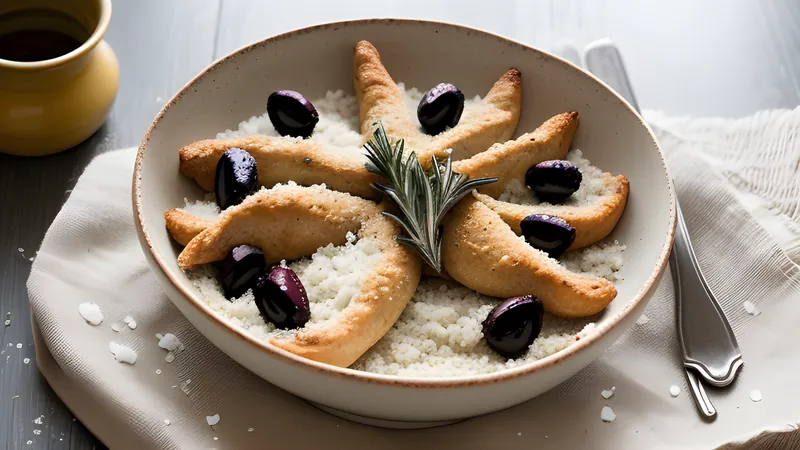
The leaf-slashed Provençal loaf, all crust and rosemary, torn straight from the board
Contents
↓ Jump to recipeA fougasse looks like a leaf, or a ladder, or a wheat ear pressed flat, and that shape is the whole point of it. The dramatic slashes cut through the dough open up in the oven into long gaps, and every one of those gaps becomes another crisp edge. Where most breads are prized for their crumb, the fougasse is built for maximum crust: it is a loaf engineered so that no bite is far from a browned, chewy, rosemary-scented edge. It is a Provençal classic, it takes an afternoon, and it is one of the most satisfying things you can tear apart at a table.
Fougasse with Rosemary and Olive
Ingredients
- 500g strong white bread flour, plus extra for dusting
- 7g fast-action dried yeast (one sachet)
- 10g fine salt
- 350ml water, lukewarm
- 3 tbsp olive oil, plus more for the bowl and top
- 2 tbsp fresh rosemary leaves, roughly chopped
- 80g pitted black olives (Kalamata or Niçoise), roughly chopped
- Flaky sea salt, to finish
- 1 tbsp fine semolina or polenta, for dusting the tray
Method
- Warm the water to blood temperature, stir in the yeast and leave a few minutes to wake up. Mix the flour and salt in a large bowl, then add the yeasted water and the 3 tbsp olive oil and bring together into a rough, wet dough.
- Knead lightly for 2 minutes, then over the next hour give the dough three or four rounds of stretch-and-fold with a 10-minute rest between each, until smooth and stretchy.
- Work the chopped rosemary and the chopped, blotted-dry olives through the dough with a final fold or two, then cover and prove for 1 to 1.5 hours until roughly doubled and full of bubbles.
- Tip the risen dough onto a well-floured surface, handling it gently to keep the bubbles, and divide in two. Press each piece into a flattish oval or triangle about 1.5cm thick on a tray dusted with semolina or polenta.
- Cut straight through each piece to the tray with a sharp knife or pizza wheel: one long central spine, then three or four angled cuts out from it on each side like the veins of a leaf. Gently pull each slit open wide with your fingers.
- Brush or drizzle the tops with olive oil, scatter over the reserved rosemary and a good pinch of flaky salt, and rest the shaped loaves for 20 minutes.
- Heat the oven to 240C fan with a baking stone or heavy tray inside and an empty metal tray on the bottom shelf. Slide in the fougasse, throw a few ice cubes or a splash of water into the hot bottom tray and shut the door fast for steam.
- Bake for 18 to 22 minutes until deeply golden all over, the cut edges well browned and the base sounding hollow when tapped. Cool on a rack for at least 10 minutes before tearing.
A loaf shaped like the fire
The fougasse belongs to a whole Mediterranean family of hearth breads that share a common ancestor and a common name root: the Latin panis focacius, bread baked in the ashes of the hearth (focus). That single word branches out across the map into Italy’s focaccia, Catalonia’s fogassa, and Provence’s fougasse. They are cousins, and if you have baked focaccia you already understand the dough: wet, oily, generous with salt.
In the old bakeries of Provence the fougasse had a practical job before it was a delicacy. Bakers would use a small piece of the day’s dough to make a fougasse and bake it first, using it to test the temperature of the wood-fired oven before committing the main batch of loaves. If the fougasse baked well, the oven was ready. It was the baker’s own snack and gauge, and because it was thin and slashed it baked fast, in the fierce early heat. Over time it became a thing worth making for its own sake, sold studded with olives, anchovies, bacon lardons or, in the sweet versions of the Rhône, orange-flower water and sugar. There is a whole Provençal tradition of the fougasse d’Aigues-Mortes and the pompe à l’huile eaten at Christmas among the thirteen desserts.
The leaf shape, with its central spine and angled cuts, is not decoration for its own sake. It maximises the ratio of surface to interior, which is exactly what you want from a bread meant to be crackling and torn rather than sliced for sandwiches.
The dough: wet, oiled and patient
Do not be tempted to make this a stiff dough. A slack, high-hydration dough is what gives the fougasse its light, holey interior and lets the cuts open cleanly. At this hydration the dough will feel sticky and alarming for the first few minutes; that is correct, and it firms up as the gluten develops.
Warm the water to blood temperature, stir in the yeast, and leave it a few minutes to wake up. Mix the flour and salt in a big bowl, then add the yeasted water and the olive oil and bring it together into a rough, wet dough. Rather than fighting it on the worktop, I like the stretch-and-fold method for a dough this wet: knead lightly for two minutes, then over the next hour give it three or four rounds of grabbing one edge, stretching it up and folding it back over itself, with a ten-minute rest between each. This builds strength without adding flour and keeps the dough loose and extensible. The same patient, hands-off approach carries the wet dough of a pain de campagne through its long cold ferment.
Once the dough is smooth and stretchy, work in the chopped rosemary and olives with a final fold or two, distributing them evenly. Cover the bowl and prove for an hour to ninety minutes, until roughly doubled and full of bubbles.
A note on the olives and rosemary
Chop the olives, do not leave them whole. Whole olives create wet pockets that steam and stop that patch of crust crisping, and they roll out awkwardly when you shape. Use a properly flavourful olive with some brine and bitterness behind it, a Kalamata or a small Niçoise, and blot them dry after chopping so they do not slick the dough with brine. Pitted olives save your teeth and your reputation; check for stragglers.
Rosemary is assertive and it works best chopped fairly fine and worked through the dough, so it perfumes the whole loaf rather than sitting in charred needles on top. Keep a little back to scatter over the surface with the flaky salt before baking, where it will crisp and go fragrant. If you like the anchovy tradition, a couple of finely chopped fillets folded in with the olives melt away and leave a deep savoury hum that most people cannot place.
Shaping the leaf
This is the part that looks intimidating and is genuinely easy. Tip the risen dough onto a well-floured surface, handling it gently to keep the bubbles, and divide it in two. Working with one piece at a time, coax and press each into a flattish oval or triangle about 1.5cm thick. Dust a baking tray with semolina or polenta, which behaves like tiny ball bearings and lets the fragile shaped dough slide into the oven without sticking.
Now the cuts. Use a sharp knife, a bench scraper or a pizza wheel and cut straight through the dough to the tray, not just scoring the surface. Make one long cut down the centre for the spine, then three or four angled cuts out from it on each side, like the veins of a leaf. Once cut, gently pull the dough apart at each slit with your fingers to open the holes wide, because they will close up again as the dough relaxes and proves, and generous openings now mean open leaves later. Brush or drizzle the top with olive oil, scatter over the reserved rosemary and a good pinch of flaky salt, and let the shaped loaves rest for twenty minutes.
The bake
Fougasse wants a hot, humid oven for a fast, crisp bake. Heat your oven to 240C fan with a baking stone or heavy tray inside if you have one, and put an empty metal tray on the bottom shelf to preheat. Slide the fougasse in, then throw a few ice cubes or a splash of water into the hot bottom tray and shut the door fast; the burst of steam keeps the surface supple long enough for the cuts to open and gives the crust its shine before it sets.
Bake for 18 to 22 minutes until deeply golden all over, with the exposed inner edges of the cuts well browned and the base sounding hollow when tapped. A fougasse should be baked hard and crisp, so err towards the longer end if you like real crackle. Cool it on a rack for at least ten minutes, though tearing off a hot end straight away is a baker’s privilege and I will not tell.
What goes wrong, and why
If the cuts close up and vanish in the oven, you either did not open them wide enough after cutting, or the dough was too stiff to hold them, or it over-proved and lost its structure; cut boldly and pull the holes generously. If the loaf is pale and bendy rather than crisp, the oven was too cool or the bake too short, since fougasse needs real heat and real colour. If it comes out dense, the dough was under-proved or over-floured during shaping, so keep the hydration high and handle it lightly. A leathery, tough crust usually means no steam went in; that early humidity matters.
Serving, storing and variations
Fougasse is at its best warm from the oven, torn into ragged pieces and dunked in more olive oil, or served alongside soup, charcuterie and cheese. It is a natural table centrepiece for a spread of small Provençal things: tapenade, marinated peppers, a bowl of a rich Sicilian caponata whose olives and capers rhyme with the loaf. Because it is all crust, it goes stale fast, so eat it the day it is baked. If you must keep it, freeze it once cool and warm it straight from frozen in a hot oven for five minutes, which brings back most of the crackle.
Variations are easy once the base is yours. Swap the rosemary and olive for thyme and grated Gruyère, or caramelised onion and lardons, or, for the sweet Provençal tradition, leave out the savoury lot, work a little orange-flower water into the dough and dust the baked loaf with sugar. The technique stays the same: wet dough, bold cuts, hot oven, plenty of crust.
Related Content