Beer-Battered Fish and Chips
Crisp, golden and properly British
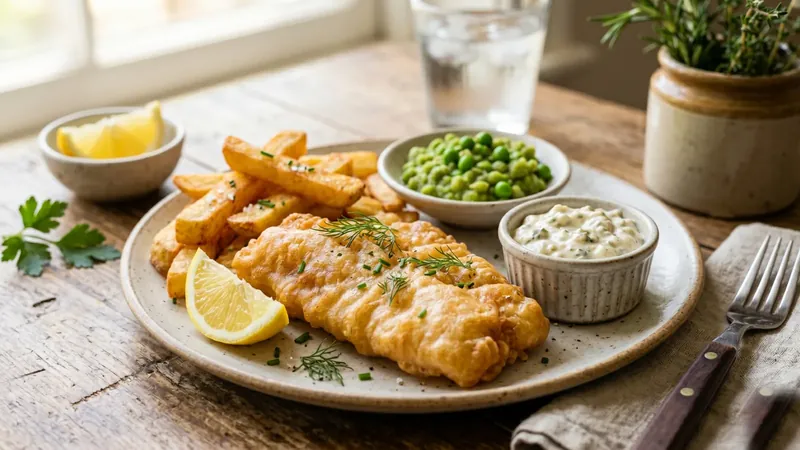
Few meals say British seaside quite like a parcel of fish and chips, and the secret to that shattering crisp coating is an ice-cold beer batter, whisked at the very last second so the bubbles survive the fryer. The small flourish here is a malt-vinegar salt, made by drying vinegar into flaky sea salt, which delivers all the sharp tang of the chip-shop bottle without ever turning the batter soggy. Hot, golden and unapologetically generous, this is comfort food at its finest.
Beer-Battered Fish and Chips
Ingredients
- 4 skinless cod or haddock fillets, about 150g each
- 1kg floury potatoes, such as Maris Piper
- 200g plain flour, plus extra for dusting
- 1 tsp baking powder
- 330ml ice-cold beer or lager
- 1.5 litres sunflower oil, for frying
- 1 tbsp malt vinegar
- 2 tsp flaky sea salt
- Lemon wedges and mushy peas, to serve
Method
- Peel the potatoes and cut into thick chips, then rinse under cold water and pat thoroughly dry.
- Heat the oil in a deep, heavy pan to 130C and fry the chips for 6-7 minutes until soft but pale, then lift out and drain.
- Stir the malt vinegar into the flaky salt, spread on a tray and leave to dry while you cook, then crush back to a coarse salt.
- Whisk the flour and baking powder with a pinch of salt, then pour in the ice-cold beer and whisk to a smooth batter just before frying.
- Raise the oil to 190C, dust each fish fillet in flour, then dip into the batter and let the excess drip off.
- Lower the fish gently into the oil and fry for 6-8 minutes until deep golden and crisp, turning once.
- Drain the fish on kitchen paper and keep warm in a low oven.
- Return the chips to the 190C oil and fry for a further 3-4 minutes until golden and crunchy.
- Drain the chips and scatter with some of the malt-vinegar salt.
- Serve the fish and chips at once with lemon wedges, mushy peas and the rest of the salt.
3 The Story
Fish and chips became a national institution in Victorian Britain, when two separate food traditions met and married. Fried fish, dredged in flour or batter, was sold in the cities of the south and is often linked to Jewish immigrant cooks who brought the technique with them, while the fried chip arrived from the industrial north. The two were eventually sold together from the same counter, and by the late nineteenth century dedicated chip shops were spreading rapidly across the country, fed by an expanding railway network that could carry fresh catch inland and by the trawler fleets working the North Sea.
The dish earned a peculiar wartime status, too. During both world wars it was deliberately left off the ration, judged too important to the morale and diet of ordinary working people to be restricted, which only deepened its place in the national affection.
The batter is where most of the skill lies. Cold liquid and a quick hand keep the gluten from developing, so the coating stays light rather than bready. Beer does two jobs at once: its bubbles aerate the batter, and the alcohol evaporates fast in the fryer to leave a drier, crisper shell. Keeping everything ice-cold until the moment of frying maximises the dramatic sizzle that puffs the coating up.
Chips, meanwhile, reward patience. The double fry is the classic method, with a first gentle cooking to soften the inside, then a second blast at high heat to crisp and colour the outside. Floury potatoes such as Maris Piper give the fluffiest centre.
The vinegar salt is a modern kitchen idea rather than a heritage one, but it solves a genuine problem. Splashing liquid vinegar over batter quickly softens it, whereas drying the vinegar’s flavour into crunchy salt crystals lets the seasoning cling to the surface while keeping it crisp. It is a small, honest improvement on a much-loved classic, leaving the fish and chips themselves exactly as tradition demands.
Related Content