Fettuccine Alfredo, the Roman Original
No cream, no garlic, just butter, Parmesan and a great deal of technique
Contents
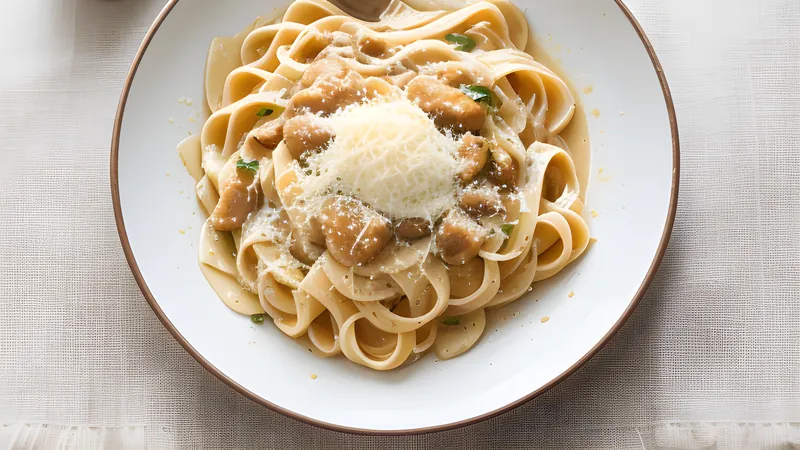
↓ Jump to recipeIf you have only ever met Fettuccine Alfredo as the heavy, cream-drenched bowl served across America, the original will surprise you. There is no cream in it. No garlic, no flour, no nutmeg, no chicken. There are three things: fresh fettuccine, good butter and young Parmesan, plus a ladle of starchy pasta water and a cook who knows how to bring them together. It is one of the great examples of Italian cooking’s genius for turning almost nothing into something you remember for years.
The dish has a real and rather charming history. In 1908, a Roman restaurateur called Alfredo di Lelio made a plate of buttered noodles for his wife, who had lost her appetite after childbirth. He used a generous quantity of the best butter and Parmesan he had and worked it into the pasta at the table until it turned silky. She ate. He put it on the menu of his restaurant on Rome’s Via della Scrofa, where it became “fettuccine al triplo burro”, fettuccine with triple butter. In the 1920s the American film stars Mary Pickford and Douglas Fairbanks ate there on their honeymoon, adored it, and carried the legend home. American kitchens, lacking Alfredo’s theatrical tableside tossing and his particular butter, reached for cream to guarantee a sauce, and a different dish was born under the same name.
Fettuccine Alfredo, the Roman Original
Ingredients
- 250g fresh fettuccine (or 200g dried egg fettuccine)
- 80g cold unsalted butter, cut into cubes
- 80g young Parmigiano-Reggiano (18–24 months), very finely grated
- Fine sea salt for the pasta water
- Freshly ground black pepper (optional, for serving)
Method
- Bring a wide pan of water to the boil and salt it lightly, less than usual, because the cheese is salty. Warm a large serving bowl.
- Grate the Parmesan very finely, ideally on a Microplane, so it melts smoothly. Have the butter cubed and to hand.
- Cook the fettuccine until just al dente: 2–3 minutes for fresh, per the packet for dried. Reserve a large mug of the starchy cooking water before draining.
- Working quickly, tip the drained hot pasta into the warm bowl. Add the cold butter cubes and toss until melted and coating the strands.
- Add a splash of the hot pasta water, then scatter over the Parmesan a handful at a time, tossing vigorously between each addition.
- Keep tossing and adding small splashes of pasta water until the cheese and butter emulsify into a smooth, glossy sauce that clings to the pasta. If it clumps, it is too hot or too dry; add more water and keep moving.
- Serve at once, with black pepper if you like. Alfredo waits for no one.
Why the original has no cream
Cream is a crutch. It thickens a sauce reliably and forgives clumsy technique, which is precisely why it took over abroad. The Roman version has no such safety net. Its silkiness comes entirely from an emulsion: microscopic droplets of butter fat suspended in water, held together by the starch that has leached from the pasta and by the proteins in the Parmesan. Get it right and the sauce is lighter, brighter and far more of the cheese and butter comes through than cream would ever allow.
This is the same physics that makes spaghetti aglio e olio and a proper cacio e pepe work. Treat the pasta water as an ingredient in its own right. As the fettuccine cooks it sheds starch into the water, and that starchy liquid is what lets fat and cheese bind into a stable, glossy sauce instead of splitting into an oily puddle with a rubbery lump of cheese in the middle. Keep the water cloudy and starchy by using a narrow pan and not too much of it, and you give yourself the best possible chance.
The one thing that changes everything: use young Parmesan
Here is my twist, and it is a matter of shopping rather than technique. Reach for a younger Parmigiano-Reggiano, aged around eighteen to twenty-four months, rather than a sharp, crumbly thirty-six-month wheel. The older cheese is glorious for grating over a finished plate, but it has lost much of its moisture and its proteins have broken down into crystalline crunch, which makes it prone to seizing into strings when it hits hot pasta. A younger cheese still holds enough moisture and intact protein to melt smoothly into the emulsion. It is the single change that turns a temperamental sauce into a reliable one, and almost nobody tells you to do it.
Grate whichever you use as finely as you possibly can. A Microplane is ideal. Fine shreds melt fast and evenly; coarse gratings sit as stubborn lumps and pull the sauce apart. If you have a block of very hard, well-aged Parmesan and nothing younger, grate it to a near powder and lean harder on the pasta water to compensate.
The method, and where it goes wrong
Everything about Alfredo happens fast and hot, so have your ingredients ready before the pasta is drained. Grate the cheese, cube the cold butter, warm the serving bowl. Salt the pasta water lightly, because eighty grams of Parmesan brings its own considerable salt.
Fresh fettuccine cooks in two or three minutes. Reserve a big mug of the cooking water, then drain and get the pasta into the warm bowl at once. Cold butter goes in first and is tossed until it melts and slicks every strand. Then a splash of hot pasta water, then the Parmesan added in handfuls, tossing hard between each, loosening with more water whenever it looks tight.
The commonest failure is heat. If the pasta is too hot and the mix too dry, the cheese proteins tighten and clump into a gluey knot, and the fat weeps out greasy. The cure is counterintuitive: more pasta water and more vigorous tossing, which cools the mass a touch and reintroduces the starch and moisture that hold the emulsion. Work off the direct heat, in the bowl, using the residual warmth of the pasta. If it splits despite you, a final splash of water and relentless stirring will usually bring it back.
The second failure is patience. Alfredo will not sit. Within a minute or two of being plated it stiffens and the sauce tightens as it cools. Serve it the moment it turns silky, straight into warm plates, and eat it immediately.
Getting the pasta right
Fresh egg fettuccine is worth it here, because its slight porosity grips the sauce and its richness suits the dish. If you make your own or buy good fresh pasta, so much the better. Dried egg fettuccine works too; cook it to al dente and lean a little more on the pasta water, since dried pasta sheds less starch than fresh.
The ratio is the frame to remember: roughly equal weights of butter and cheese, around forty grams of each per person, to a hundred and twenty-five grams of fresh pasta. Scale it up carefully. Doubling is fine; going much beyond four portions makes the tossing unwieldy and the emulsion harder to control, so cook in two batches for a crowd. A wide, low bowl gives you more room to toss than a deep one, and warming it first keeps the butter from setting before the sauce comes together.
Variations and what not to do
The original barely tolerates variation, because there is nowhere for a mistake to hide. A twist of black pepper at the table is welcome and edges the dish toward cacio e pepe. A little of the pasta water worked in with a knob of extra butter revives leftovers, though frankly it is best fresh. If you want something in the same buttery, cheesy family with a little more going on, my mushroom and Taleggio risotto scratches the same itch on a night you have more time.
What I would ask you to resist is adding cream, garlic or chicken and still calling it Alfredo. Those make a perfectly nice bowl of pasta; they simply make a different dish. The Roman original is a lesson in how far three good ingredients and a little technique will carry you, and it is a lesson worth learning by heart.
What to serve it with, and when
Because it is so rich and so plain, Alfredo is best as a small first course or a quick supper for two rather than a groaning main. A sharp green salad with a lemony dressing on the side cuts the butter and cheese and resets the palate between forkfuls. A glass of crisp, high-acid white, a Roman Frascati or a Soave, does the same job in liquid form. Keep the portions modest; eighty grams of butter and eighty of cheese is a lot for two people, and the pleasure of the dish is in its intensity, so a generous mound quickly becomes too much of a good thing.
If you fancy building a small Italian menu around it, follow the Alfredo with something bright and vegetable-led to lighten the meal, then finish on fruit or a plain biscotti with coffee. It is the sort of dish that reminds you good cooking is often about restraint, and about doing very little to very good ingredients while paying close attention. Master this one plate and you will find your cacio e pepe, your carbonara and every other emulsion-based pasta suddenly falls into place, because they are all the same trick with different flavourings.
Related Content