Fennel, Orange and Black Olive Salad
A Sicilian winter salad, sharpened with toasted fennel seed
Contents
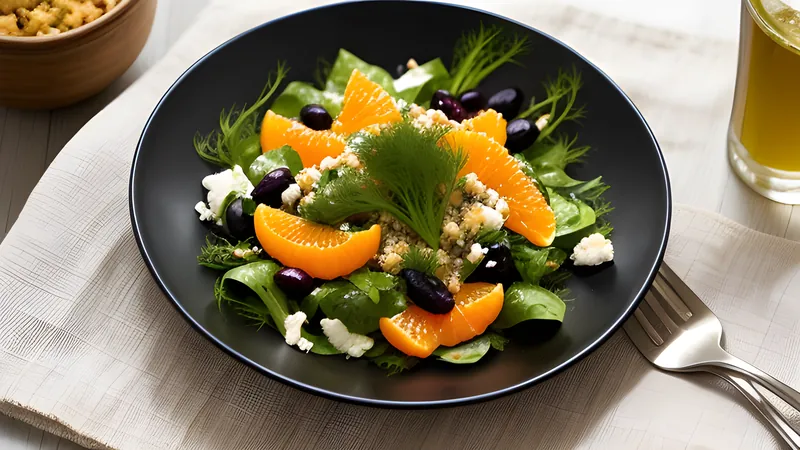
↓ Jump to recipeThis is the salad Sicily makes when the winter oranges come in and everyone is a little tired of heavy food. Cold, crisp shavings of raw fennel, sweet-sharp orange segments and dark, briny olives make a plateful that tastes of clean sunshine, and it takes about twenty minutes to put together. My small addition is a pinch of toasted, crushed fennel seed stirred through the dressing, which echoes the anise of the raw bulb and gives the whole thing a warm, aromatic backbone.
Fennel, Orange and Black Olive Salad
Ingredients
- 2 medium fennel bulbs, with any fronds reserved
- 3 large oranges (a mix of blood orange and navel if you can)
- 80g good black olives (Kalamata or dry-cured), pitted and torn
- 1/2 small red onion, sliced paper-thin
- 1 tsp fennel seeds
- 4 tbsp extra-virgin olive oil
- 1 tbsp red wine vinegar
- 1/2 tsp Dijon mustard
- Flaky salt and black pepper
- A small handful of flat-leaf parsley leaves
Method
- Toast the fennel seeds in a dry pan over medium heat for 1 to 2 minutes until fragrant and just darkened, then crush lightly in a mortar.
- Soak the sliced red onion in cold water for 10 minutes to soften its bite, then drain and pat dry.
- Slice the top and base off each orange, stand it on a board and cut away all the peel and white pith following the curve of the fruit. Cut between the membranes to release segments over a bowl, catching the juice; squeeze the spent cores to extract the rest.
- Whisk 2 tablespoons of the caught orange juice with the vinegar, mustard, crushed fennel seed and a pinch of salt, then whisk in the olive oil to a loose dressing.
- Halve the fennel bulbs and shave them wafer-thin on a mandoline or with a sharp knife, dropping the slices into cold water for 5 minutes to crisp, then drain and dry well.
- Arrange the fennel and orange segments on a platter, scatter over the drained onion and torn olives.
- Spoon the dressing over, season with flaky salt and black pepper, and finish with the parsley and reserved fennel fronds. Serve at once.
The Story
The pairing of fennel and orange is Sicilian to its bones, a product of the island’s long Arab period and the citrus groves the Arabs planted around Palermo in the ninth and tenth centuries. Insalata di arance e finocchi appears in countless regional variations, some with a scatter of black olives, some with slivers of raw onion or a shaving of salted ricotta, some dressed with nothing more than the island’s peppery olive oil and a little salt. In its simplest form it is a peasant dish, built from what grows in the winter garden when green vegetables are scarce and the citrus trees are heavy.
Blood oranges, in particular, are a Sicilian speciality, and their deep crimson flesh is a quirk of geography. The pigment is anthocyanin, the same class of compound that colours red cabbage and blackberries, and it develops only when the fruit is exposed to cold nights during ripening. The slopes around Mount Etna, warm by day and sharply cold after dark, produce exactly those conditions, which is why the arancia rossa di Sicilia carries a protected designation and why a genuine blood orange from that region has such an intense, almost raspberry-like edge to its sweetness.
Fennel arrived in the Sicilian kitchen from a different direction. The bulbing Florence fennel we shave into this salad is a cultivated form of a wild Mediterranean plant that grows all over the island, its feathery tops and seeds used in everything from pasta con le sarde to sausage. Raw and thinly sliced, the bulb is crisp, cool and faintly aniseed, a texture close to celery with a perfume all its own, and it makes an ideal foil for the soft, juicy oranges.
Getting the fennel right
Everything about this salad depends on the fennel being cut properly. It wants to be shaved wafer-thin, thin enough to be almost translucent, so that it reads as a delicate ribbon rather than a chunk of raw vegetable. A mandoline is the easiest route; if you use a knife, halve the bulb, sit it flat on the board and slice across as finely as you can. A five-minute bath in cold water crisps the shavings and takes the raw, sulphurous edge off, which makes a real difference to how clean the salad tastes.
Choose bulbs that are white, tightly packed and heavy, with fresh green fronds if you are lucky enough to find them still attached, since the fronds make a lovely, dill-like garnish. Cut away any thick, stringy outer layer before you shave, and slice the fennel as close to serving as you can, because cut fennel begins to soften and dull after an hour or so.
The segmenting trick and why juice matters
Peeling the oranges to the flesh, cutting away every scrap of bitter white pith and releasing the segments from their membranes, gives you clean, jewel-like pieces that carry no chewy skin. Work over a bowl so you catch every drop of juice that runs, because that caught juice becomes the acid and sweetness in the dressing, tying the whole salad together with the flavour of the very fruit it dresses. Squeeze the emptied membranes hard to wring out the last of it.
This is a case where the dressing is built to taste of the salad itself. The orange juice softens the vinegar’s sharpness and adds a fruity roundness that a plain vinaigrette lacks, while the toasted fennel seed threads the anise note right through. Toasting the seeds first is worth the extra minute, since dry heat volatilises their aromatic oils and turns a slightly medicinal raw spice into something warm, nutty and fragrant.
What can go wrong
The two failures here are a watery plate and a bland one. Wateriness comes from fennel that has not been dried after its soak, or from oranges left sitting in their own juice on the platter; dry the fennel thoroughly in a clean cloth and arrange the components just before dressing. Blandness almost always means under-seasoning, since raw fennel and sweet orange both need a confident hand with flaky salt to snap into focus, and the olives should be properly briny rather than the mild, canned sort that add colour and little else.
Balance is the other thing to watch. If the salad tastes too sweet, a few more drops of vinegar or a squeeze of lemon pulls it back; if it tastes sharp, another thread of olive oil rounds it out. Taste and adjust on the plate, because oranges vary enormously in sweetness from one to the next.
Storage, make-ahead and variations
This is a salad to assemble and eat, and it does not keep once dressed, as the fennel wilts and the oranges weep. You can prepare every component ahead, though: segment the oranges and keep them chilled in their juice, shave and soak the fennel up to a couple of hours before, make the dressing and pit the olives, then bring it all together at the last minute.
For variations, a handful of rocket adds a peppery green edge, shaved salted ricotta or a little feta brings a salty, creamy note, and toasted almonds or pistachios give crunch. A drizzle of good oil and a few chilli flakes push it towards the Calabrian coast. For another salad that leans on briny black olives against sweet fruit, my watermelon, feta and mint with black olive uses a dried-olive crumb to the same end, and if you love fennel cooked as well as raw, the roasted fennel with Parmesan and lemon turns the bulb soft, sweet and golden.
Related Content