Fattoush with Sumac and Crisped Pitta
Yesterday's bread, baked golden in brown butter
Contents
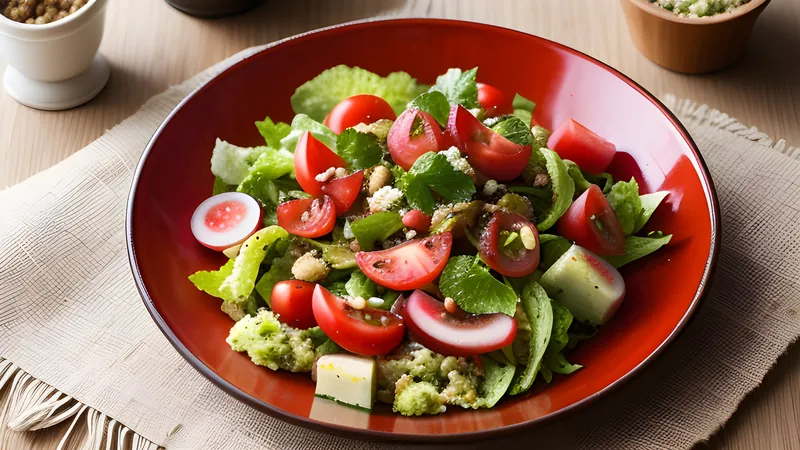
↓ Jump to recipeFattoush already runs on stale flatbread, but baking the torn pieces in browned butter rather than frying them plain gives the crisps a nutty depth that plain oil never quite reaches, and it plays beautifully against the sour tang of sumac and pomegranate molasses that carries the rest of the salad. The vegetables stay classic; only the bread gets the upgrade.
Fattoush with Sumac and Crisped Pitta
Ingredients
- 2 stale pitta breads, split into thin layers
- 40g unsalted butter
- 2 tsp sumac, divided
- 3 Lebanese (mini) cucumbers, cut into chunks
- 4 ripe tomatoes, cut into wedges
- 6 radishes, thinly sliced
- 4 spring onions, sliced
- 1 small green pepper, diced
- A large handful of flat-leaf parsley, roughly chopped
- A small handful of mint leaves, torn
- 4 tbsp extra-virgin olive oil
- 2 tbsp lemon juice
- 1 tbsp pomegranate molasses
- 1 small garlic clove, crushed
- Salt and black pepper
Method
- Preheat the oven to 190C (170C fan).
- Melt the butter in a small pan over a medium heat, swirling constantly, until it foams, then turns a nutty golden-brown and smells toasted, 3 to 4 minutes; remove from the heat immediately.
- Tear the split pitta layers into rough shards, toss with the brown butter and 1 teaspoon of the sumac, and spread on a baking tray.
- Bake for 8 to 10 minutes, turning once, until deeply golden and crisp all over, then set aside to cool; they will crisp further as they cool.
- In a large bowl, combine the cucumbers, tomatoes, radishes, spring onions, green pepper, parsley and mint.
- Whisk the olive oil, lemon juice, pomegranate molasses, crushed garlic and remaining teaspoon of sumac with a good pinch of salt and pepper.
- Pour the dressing over the vegetables and toss well, then scatter over the crisped pitta and toss once more just before serving.
The Story
Fattoush belongs to a family of Levantine dishes built around fatteh, meaning “crumbs” or “crumbled”, which describes a whole genre of Lebanese and Syrian cooking that repurposes stale flatbread rather than discarding it: fatteh with chickpeas and yoghurt for breakfast, fatteh with aubergine, and this salad, which turns the bread into something eaten cold and crisp rather than soaked and warm. Home cooks across the Levant developed the dish out of the same practical instinct that produced panzanella in Tuscany, though the seasoning is entirely its own: sumac in place of vinegar, and a scatter of fresh herbs heavy enough to make the salad feel closer to a herb dish with vegetables added than a lettuce bowl.
Sumac is the ingredient that defines the flavour, a rusty-red spice ground from the dried, tart berries of the sumac shrub, used across the Levant, Iran and Turkey for centuries before lemons were widely available as a souring agent. Unlike vinegar or lemon juice, its sourness is dry and fruity rather than sharp and wet, closer to the tannic tartness of a good red wine than to citrus, and it does not thin out a dressing the way an acid in liquid form does. Buying it whole and grinding it fresh, where possible, keeps that fruitiness; pre-ground sumac that has sat on a shelf for a year tends to taste flat and dusty rather than bright.
Pomegranate molasses is the other pillar, a thick, near-black syrup made by reducing pomegranate juice slowly until it concentrates into something tart, sweet and faintly bitter all at once. It arrived in Levantine cooking long before pomegranate seeds themselves became a fashionable garnish elsewhere, valued as a way to preserve the fruit’s juice through the year and to add a sour-sweet depth that neither vinegar nor sugar can replicate alone. A tablespoon in the dressing here rounds out the sumac’s dry tartness with something richer, and the two together are what make fattoush taste unmistakably of the Levant rather than like a generic vegetable salad with bread on top.
What can go wrong
The crisps are the part most likely to disappoint, and the usual culprit is moisture. Pitta that still has some give left in it will steam rather than crisp in the oven, coming out leathery instead of shattering when you bite down; if your bread is only a day old rather than properly stale, split it and leave it uncovered on the counter for an hour before baking to dry out the surface. The other risk is the brown butter itself: it goes from nutty to burnt within moments once it starts to turn, so pull it off the heat the instant it smells toasted and turns the colour of hazelnuts, and tip it out of the hot pan straight away so residual heat does not scorch the milk solids further.
Salt the vegetables too early and the salad turns watery, since tomatoes and cucumber both shed liquid once cut and seasoned; toss the dressing through only shortly before serving, and add the pitta crisps at the very last moment. Crisps added even 20 minutes ahead of time will have started softening in the dressing’s moisture by the time the bowl reaches the table, losing the crunch that makes the whole dish work.
A related mistake is treating this as a lettuce salad with bread scattered on top. Fattoush recipes vary on whether romaine or another crisp lettuce belongs in the bowl at all, and many Lebanese home cooks leave it out entirely, letting cucumber, tomato and a heavy hand of parsley and mint carry the volume instead; if you do add lettuce, shred it finely and add it last, since its high water content will bleed into the dressing faster than anything else in the bowl. Radish is a looser tradition too, yet its peppery bite and firm crunch hold up far better under the sharp dressing than lettuce does, which is why it earns a place here.
Storage, make-ahead and variations
Fattoush does not keep well once assembled: the vegetables continue to weep and the pitta softens within an hour. Do the useful advance work instead. Bake the pitta crisps up to two days ahead and store them in an airtight container at room temperature, where the butter keeps them crisp far longer than a plain oil version would. Chop the vegetables and make the dressing separately up to several hours ahead, keeping everything covered and chilled, and combine only when you are ready to eat.
If purslane is in season, add a handful; it is a traditional fattoush ingredient in Lebanon and Syria, with a lemony, slightly succulent bite that most UK greengrocers do not stock but that some Middle Eastern shops carry. Toasted pitta chips can be swapped for shop-bought bread if you are short on time, though the flavour will be flatter without the browned butter. A little crumbled feta, while not classic, is a welcome addition if you want the salad to carry a main course rather than sit alongside one.
For another salad built on the same tomato-and-onion foundation with a different regional accent, my kachumbari, East Africa’s tomato-and-onion cooler is worth trying next. And if you like a Mediterranean bowl leaning on similarly punchy, briny flavours, my Greek salad with watermelon and oregano-honey dressing makes a good companion at the same table.
Sumac, purslane, and getting ahead
Sumac is the flavour that makes fattoush fattoush, and it is worth buying good stuff. The dusty deep-red powder is dried, ground sumac berries, and a fresh jar tastes tart and almost fruity, like a milder lemon with a raisiny edge; an old, faded one tastes of nothing but pink dust. Buy it from a shop with turnover — a Middle Eastern grocer rather than the back of a supermarket spice rack — and keep it somewhere dark. It goes into the dressing and gets scattered over the finished bowl, so its brightness lands twice.
Purslane is the other traditional touch most home versions skip, simply because it is hard to find; if you see it at a Middle Eastern shop or a farmers’ market, grab it, since its lemony, slightly succulent leaves are exactly right here. Failing that, a mix of soft herbs and crunchy lettuce does the job.
The salad also rewards a little planning. The components hold well separately — you can toast the pitta, chop the vegetables, and mix the dressing hours ahead — but they must meet at the last minute. Dress it early and the crisped bread turns to leather and the vegetables weep; the whole point of fattoush is the moment when the pitta is still shattering-crisp against the wet, cold vegetables. Toast the bread until deep gold and properly dry, not just warm, or it will soften the instant the dressing hits. A little crumbled feta, while not classic, turns it into a light lunch rather than a side.
If you want to make a meal of it, fattoush takes well to a protein laid on top rather than mixed through: a few pieces of charred chicken thigh, some grilled halloumi, or a spoon of warm chickpeas turn the salad into a plate rather than a side, without drowning the crucial contrast of crisp bread and cold, sharp vegetables. Keep the dressing lemony and generous — under-dressed fattoush tastes worthy and dull, and the sumac and good oil are what carry it.
Related Content