Falooda with Rose, Basil Seed and Vermicelli
A layered rose-milk drink you eat with a spoon
Contents
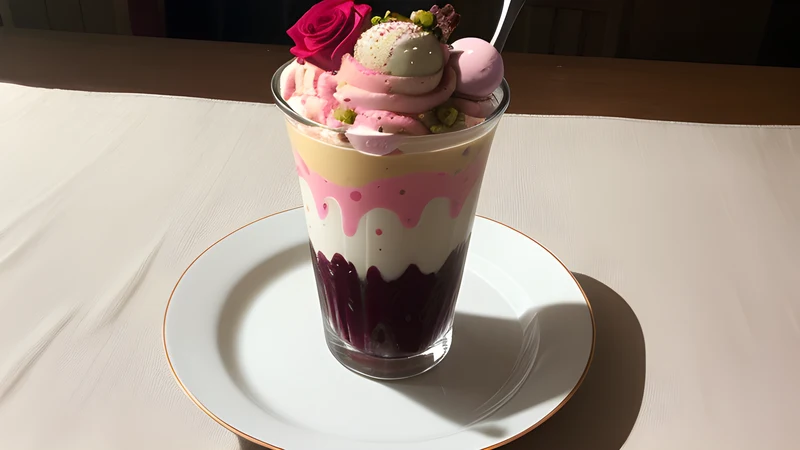
↓ Jump to recipeFalooda is the most extravagant thing you can drink through a straw, and one of the few drinks that genuinely asks for a spoon as well. Build it in a tall glass and you get strata: a slick of rose syrup at the base, a spoonful of jelly-coated basil seeds, a tangle of translucent vermicelli, crushed ice, cold cardamom-scented milk, and a melting scoop of ice cream crowning the lot. It is part drink, part dessert, part edifice, and it is the grandest thing on any subcontinental sweet-shop menu. My twist is to infuse the milk properly with cardamom rather than pouring it in plain, which threads a warm, aromatic spice through every layer.
That cardamom milk is what lifts a homemade falooda above the sugary sludge you sometimes get. Steeping crushed pods in warm milk, then chilling it hard, gives you a fragrant, faintly resinous backdrop that stops the whole thing from being merely sweet and pink. It is the same soft, spiced perfume that runs through my cardamom kulfi with pistachio, and if you top your falooda with a scoop of exactly that, you have a drink and a dessert singing in the same key.
Falooda with Rose, Basil Seed and Vermicelli
Ingredients
- 2 tbsp basil seeds (sabja/tukmaria)
- 50g falooda sev (fine cornflour vermicelli) or plain rice vermicelli
- 500ml whole milk
- 4 green cardamom pods, lightly crushed
- 2 tbsp caster sugar, or to taste
- 6 tbsp rose syrup (shop-bought Rooh Afza, or homemade)
- 4 scoops good vanilla or kulfi ice cream
- 2 tbsp chopped pistachios and slivered almonds, to serve
- A few dried rose petals, optional, to serve
- Plenty of crushed ice
Method
- Soak the basil seeds. Put them in a small bowl and cover with about 150ml cold water. Leave for 20 to 30 minutes until each seed swells into a translucent grey jelly-coated bead. Drain off any excess water.
- Cook the vermicelli. Boil falooda sev or rice vermicelli in plenty of water for 3 to 5 minutes until soft, then drain and rinse thoroughly under cold running water to stop the cooking and wash off starch. Snip into shorter lengths with scissors and keep in cold water until needed.
- Make the cardamom milk. Warm the milk with the crushed cardamom pods and sugar over a medium heat, stirring, until the sugar dissolves and it barely reaches a simmer. Take off the heat and leave to infuse for 15 minutes, then strain out the pods and chill the milk completely, ideally over an ice bath or in the fridge for an hour.
- Build each glass in this order: spoon 1.5 tbsp rose syrup into the bottom, add a spoonful of soaked basil seeds, then a tangle of drained vermicelli. Add a handful of crushed ice.
- Pour the cold cardamom milk over the ice to nearly fill the glass. Top with a scoop of ice cream, a drizzle more rose syrup, the chopped nuts and a scatter of rose petals. Serve at once with a long spoon and a fat straw.
A drink that travelled the Silk Road
Falooda’s ancestry runs straight back to Persia, to a chilled dish called faloodeh, thin starch vermicelli set in a semi-frozen syrup of rose water and lime, eaten in the searing summers of cities like Shiraz for centuries. As Persian culture and cuisine spread eastward, carried by trade and by the Mughal courts, the dish travelled with it and transformed. In India it met milk, ice cream and the region’s own sweet-shop imagination and became the towering, layered falooda known today across India, Pakistan, Bangladesh and beyond, with variants stretching to Burma and the Arab world.
The Mughal connection is the crucial one. The Mughal emperors brought Persian court cooking to the subcontinent, along with a taste for rose water, saffron, cardamom and, famously, ice, hauled down from the Himalayas to chill the royal sherbets. Falooda belongs to that lineage of cooled, perfumed, luxurious drinks devised to make the ferocious Indian summer bearable for those who could afford them. What began as an aristocratic indulgence became, over centuries, a beloved staple of Muslim sweet shops and Ramadan tables, where a glass of falooda after the fast is a small act of restoration.
Each component earns its place. The basil seeds and vermicelli give texture and the pleasure of chewing a drink; the rose syrup gives colour and flowery sweetness; the milk gives richness and body; the ice cream gives the final, melting luxury. Assembled together they are more than the sum of their parts, a study in contrast that has kept the drink popular for the better part of a thousand years.
The two textures that make it
Two ingredients define falooda, and both are worth understanding.
Basil seeds, sold as sabja or tukmaria, are the tiny black seeds of sweet basil, and they perform a small piece of kitchen magic when soaked. Within twenty minutes in cold water each seed swells and wraps itself in a translucent grey jelly, ballooning to several times its size, with a soft, poppable bead at the centre. The texture is close to that of a very fine tapioca or a soft frogspawn, if that does not put you off, and it is oddly addictive. They must be soaked, never used dry; a dry basil seed swelling in your throat is genuinely unpleasant, so give them their full soak until every one is fat and jellied. They have a faint, cooling, herbal quality and are eaten across India as a body-cooling food in summer, which is partly why they belong here.
Falooda sev is the vermicelli, traditionally made from cornflour or wheat starch, extruded into fine threads and dried. It cooks in minutes into soft, slippery, near-transparent strands. If you cannot find the proper falooda sev, fine rice vermicelli is the standard substitute and works well; the key is to cook it until fully soft, then rinse it thoroughly in cold water to wash away the surface starch that would otherwise cloud the milk and clump the strands. Snip the cooked noodles into shorter lengths so they sit in neat tangles and are easy to draw up a straw.
Building the glass
Falooda is architecture as much as cookery, and the order of building matters both for looks and for how it drinks. Start with the rose syrup at the very bottom, where it pools in a jewel-red layer beneath everything. Rooh Afza, the iconic rose-and-herb cordial found in every subcontinental household, is the classic choice and gives the authentic flavour; a homemade rose syrup works beautifully too, and if you have made the rose syrup for my bandung: rose syrup and condensed milk you already have exactly the right thing in the fridge.
Over the syrup go the soaked basil seeds, then the drained vermicelli, then a good handful of crushed ice. Crushed ice, rather than cubes, is worth the effort of bashing some in a tea towel or blitzing it, because it chills faster and lets the straw move freely through the glass. Pour the cold cardamom milk over the ice to nearly fill the glass; it should cascade down through the layers, milky and fragrant, half-mixing as it goes. Crown with a scoop of ice cream, a final drizzle of rose syrup bleeding pink into the white, and a shower of chopped pistachios and almonds. A few dried rose petals on top are pure vanity and entirely justified.
Serve it the moment it is built, while the ice cream is still holding its shape and the layers are distinct. Hand over both a long spoon and a wide straw, because eating a falooda is a two-tool business: you spoon the ice cream and the jellied seeds, and you draw the milk and vermicelli up the straw.
Get-ahead, storage and variations
Falooda is an assembly job, and every component can and should be prepared in advance, which makes it far less daunting than its towering appearance suggests. Soak the basil seeds, cook and rinse the vermicelli, and infuse and chill the cardamom milk, all up to a day ahead, keeping each in a covered container in the fridge. Then the actual building takes two minutes a glass, which makes falooda a genuinely practical showstopper for a dinner party or an Eid table. The one thing you cannot do ahead is assemble the glasses, as they collapse into a soupy pink mess within the hour; build them to order.
The variations are half the fun, because falooda is endlessly customisable. Mango falooda swaps or supplements the rose with fresh mango pulp and a scoop of mango ice cream, glorious in high summer. A saffron and pistachio version steeps a pinch of saffron in the warm milk alongside the cardamom for a golden, festive drink. Some shops set a layer of soft rose or grass jelly into the glass for yet more texture, the same spoonable-drink pleasure at the heart of a good coconut sago pudding with palm sugar. And for a lighter take, skip the ice cream and lean on the cold cardamom milk alone, which makes a refreshing, elegant thing to sip rather than a full dessert.
Whichever way you build it, falooda is a drink that makes an occasion of itself. It is pink and layered and topped with a melting scoop, it rewards the person who takes ten minutes to prep its parts, and it carries a thousand years of Persian and Mughal luxury up a straw. Made with properly cardamom-scented milk, it tastes like the very best version of the sweet-shop original, and it turns an ordinary summer evening into something worth dressing the table for.
Related Content