Ethiopian Misir Wot: Berbere Lentils Worth the Spice Hunt
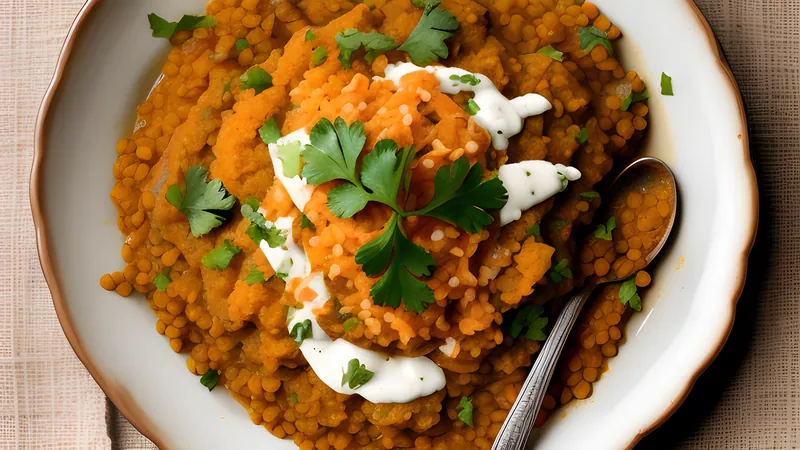
Red lentils simmered slow in berbere and niter kibbeh, scooped up with torn injera
Contents
↓ Jump to recipeMisir wot is the dish that converts people to Ethiopian food who didn’t know they needed converting. It’s just red lentils, technically, the same humble pulse that turns up in a hundred kitchens worldwide as a quick weeknight dal or soup. What happens to them here — a long, patient onion base, a spice blend built from more than a dozen components, butter infused with its own aromatics — turns something plain into one of the most purely satisfying stews I know, vegetarian or not.
The obstacle for most home cooks outside Ethiopia isn’t the technique. It’s the spice hunt. Berbere and niter kibbeh aren’t things you can substitute your way around convincingly with a supermarket spice rack, and the first time I tried, I learned that the hard way with a version that tasted like chilli-dusted lentils rather than misir wot. Once you’ve tracked down the real ingredients — and they’re not actually hard to find, just unfamiliar — this becomes one of the easiest genuinely impressive things you can put on a table.
Ethiopian Misir Wot: Berbere Lentils Worth the Spice Hunt
Ingredients
- 2 medium red onions, finely chopped
- 3 tbsp niter kibbeh (Ethiopian spiced butter), or substitute below
- 4 tbsp berbere spice blend, plus more to taste
- 4 garlic cloves, grated
- 1 thumb-sized piece fresh ginger, grated
- 3 tbsp tomato paste
- 300g split red lentils, rinsed until the water runs clear
- 750ml water or vegetable stock, plus more as needed
- 1 tsp fine salt, or to taste
- 1/4 tsp ground fenugreek (the twist)
- Injera or flatbread, to serve
Method
- Cook the chopped onions in a dry, wide pot over medium-low heat for 15-20 minutes, stirring often, until they've softened, collapsed and turned deep golden-brown with no added fat. This dry-fry step is traditional and builds real sweetness.
- Add the niter kibbeh and stir until melted and the onions look glossy.
- Stir in the berbere and cook for 1-2 minutes, stirring constantly, until it darkens slightly and smells toasted rather than raw.
- Add the garlic, ginger and tomato paste and cook for 2 minutes, stirring, until the paste darkens and separates slightly from the fat.
- Tip in the rinsed lentils and stir to coat them thoroughly in the spiced onion base.
- Pour in the water or stock, add the salt, and bring to a simmer.
- Simmer uncovered, stirring occasionally and adding a splash more liquid if it looks too thick, for 25-30 minutes until the lentils have completely broken down into a thick, spoonable stew.
- Stir in the ground fenugreek in the final 5 minutes of cooking.
- Taste and adjust salt and berbere — it should taste deeply savoury with a heat that builds slowly rather than searing.
- Serve hot, spooned onto or alongside torn injera, with extra injera for scooping.
What misir wot actually is
Misir means lentil in Amharic, and wot (or wat) is the general term for Ethiopian stew — the category that also includes doro wot, the famous berbere-spiced chicken stew, and countless other slow-simmered dishes built on the same onion-and-spice foundation. Misir wot is the vegetarian, lentil-based member of that family, and it holds a particular importance in Ethiopian Orthodox Christian households, where roughly half the calendar year involves periods of fasting (tsom) that exclude meat and dairy. Misir wot made without butter, using oil instead, is a fasting-day staple, while the butter-enriched version is the everyday or celebratory one. Both versions are eaten constantly, spooned onto a shared platter of injera, the spongy, slightly sour flatbread that serves as both plate and utensil across the country.
The dish reflects Ethiopia’s much older relationship with spice than most Western cooks assume. Ethiopia sat on ancient trade routes connecting the Red Sea to inland Africa, and its cuisine absorbed chilli after the plant arrived from the Americas via Portuguese traders in the sixteenth century, then built an entire spice culture around it that rivals anything from India or the Middle East for complexity. Long before chilli arrived, Ethiopian and Eritrean cooking already relied on a distinctive base of butter, garlic and native spices like korarima and long pepper — the framework berbere was eventually built into once chilli became available, rather than a tradition invented from scratch around it. That’s part of why Ethiopian spicing tastes so different from other chilli-forward cuisines: the heat arrived relatively late and was absorbed into an already sophisticated, centuries-old spice system rather than defining it from the start.
Berbere: the blend that carries the dish
Berbere is a spice blend rather than a single spice, typically built from dried chillies, garlic, ginger, basil, korarima (Ethiopian cardamom), rue, ajwain, nigella and fenugreek, among others, depending on whose family recipe you’re using. It’s warm and savoury as much as hot, closer in complexity to a good garam masala than to plain chilli powder, and it’s the backbone flavour of most Ethiopian stews.
Making your own from scratch the first time you cook Ethiopian food is a genuinely large undertaking — a dozen-plus spices, several of which (korarima, long pepper, rue) aren’t stocked at an ordinary supermarket. My honest advice for a first attempt is to buy a good-quality pre-made berbere from an Ethiopian or East African grocer, or online from a specialist spice seller, rather than trying to assemble it yourself immediately. Once you know what a proper one tastes like, making your own becomes a project worth doing, but there’s no shame in buying it the first several times, the way most people buy garam masala rather than grinding twelve spices for a Tuesday curry.
Every Ethiopian household reportedly has its own berbere recipe, guarded and adjusted the way an Italian grandmother guards a ragù, and the blend varies noticeably between regions and even between shops in the same market — some lean hotter, some lean toward the sweeter warmth of cinnamon and clove, some are cut with a fair amount of paprika to soften both the heat and the price. Buy a small quantity the first time from wherever you can find it, taste it plain before you cook with it, and adjust the quantity in this recipe up or down based on how hot and how salty that particular batch turns out to be — commercial berbere brands vary enough in intensity that following a recipe’s quantity blindly, without tasting first, is the single easiest way to end up with a stew that’s either underwhelming or unpleasantly fierce.
Niter kibbeh, and a workable substitute
Niter kibbeh is Ethiopian spiced clarified butter, infused during clarification with garlic, ginger, and warm spices like fenugreek, cardamom and cinnamon. It’s what gives misir wot and other wots their particular aromatic backbone, doing a similar job to ghee in South Asian cooking but with a completely different spice signature. If you can find it at a specialist grocer, buy a jar — it keeps for months in the fridge and earns its place in the door alongside anything else you reach for often.
If you can’t find it, a reasonable substitute is ordinary ghee or clarified butter, warmed gently with a smashed garlic clove, a slice of ginger and a pinch each of ground fenugreek and cardamom for five minutes, then strained. It won’t be identical, but it gets you most of the way there for a dish where the berbere is doing most of the flavour work regardless.
Why the onions get cooked dry
The dry-frying step — cooking the chopped onions in a bare pot with no oil or butter for fifteen to twenty minutes before anything else goes in — looks like a typo the first time you read an Ethiopian recipe, but it’s deliberate and it matters. Onions release their own moisture as they cook, and cooking them dry first, stirring often so they don’t catch, concentrates their natural sugars and builds a level of sweetness and depth that adding fat from the start actually mutes, because fat coats the onion pieces and slows the moisture evaporation that drives the browning. Only once the onions have collapsed and turned a deep golden-brown does the niter kibbeh go in, at which point it’s there to carry flavour rather than to cook the onions.
Keep the heat at medium-low and stir regularly during this stage. It’s tempting to rush it with higher heat, but that scorches the onions in patches before the centre has softened, and scorched onion is a flavour that lingers unpleasantly through the whole finished stew.
The clever bit: fenugreek stirred in at the end
Ground fenugreek is already one of berbere’s many components, cooked in from the start along with everything else, so adding more near the end might sound redundant. It isn’t. Fenugreek has a bittersweet, almost maple-like top note that survives long cooking poorly — an hour of simmering mellows it into something warm and background, which is exactly what you want from the version cooked into the berbere itself. Stirring in an extra quarter-teaspoon in the final five minutes reintroduces that sharper, more aromatic fenugreek character right at the point of serving, so the finished stew carries both the deep, cooked-in warmth and a fresher aromatic lift on top. It’s a small move, borrowed from how I season dal at the very end with a fresh tempering, and it makes the dish taste more layered without adding a single new ingredient to the shopping list.
Tomato paste’s small, specific job
The three tablespoons of tomato paste cooked in with the garlic and ginger aren’t there to make this taste like a tomato-based stew — there’s nowhere near enough for that. Cooking tomato paste in fat for a couple of minutes before any liquid goes in, the same technique that opens most good bolognese or curry bases, breaks down the paste’s raw, slightly metallic edge and concentrates its natural glutamates, the compounds responsible for savoury depth. What you get isn’t a tomato flavour so much as a rounder, more savoury backbone underneath the berbere, the kind of effect you’d only notice by making the dish once without it and comparing the two side by side.
Getting the texture right
Split red lentils cook fast and break down completely, which is exactly what you want here — misir wot should be thick, smooth-ish and spoonable rather than a soup with lentils floating in it. Rinse them well before cooking; red lentils shed a fair amount of starchy dust that otherwise clouds the stew unpleasantly. If your stew looks too thick partway through simmering, add water in small splashes rather than all at once — you can always loosen it, but a stew that’s gone too thin takes much longer to cook back down.
Serving and keeping
Misir wot is traditionally served scooped onto or alongside injera, the sour, spongy flatbread, with everyone tearing pieces to pick up the stew directly. If injera isn’t available, any soft flatbread will do the job of transport, though you’ll miss the tang injera’s fermentation brings, which cuts nicely against berbere’s warmth. It keeps beautifully in the fridge for four to five days and the flavour genuinely improves overnight, the same way it does with Doro Wat with Berbere and Slow-Caramelised Onion — both dishes share the same onion-and-berbere foundation, and cooking one soon after the other is a good way to use up a big batch of berbere before it loses its punch.
If you already cook a lot of lentil dishes and want to see how differently a similar pulse behaves under a different spice tradition, put this next to Dal Tadka with a Ghee-Cumin Tempering on the same table. Both are essentially spiced, broken-down lentils finished with warmed fat and aromatics, and tasting them side by side is a genuinely good way to understand what each spice tradition is actually doing.
Related Content