Empire Biscuits with Jam and Icing
Two shortbread rounds, raspberry jam, and a sharp lemon glacé icing
Contents
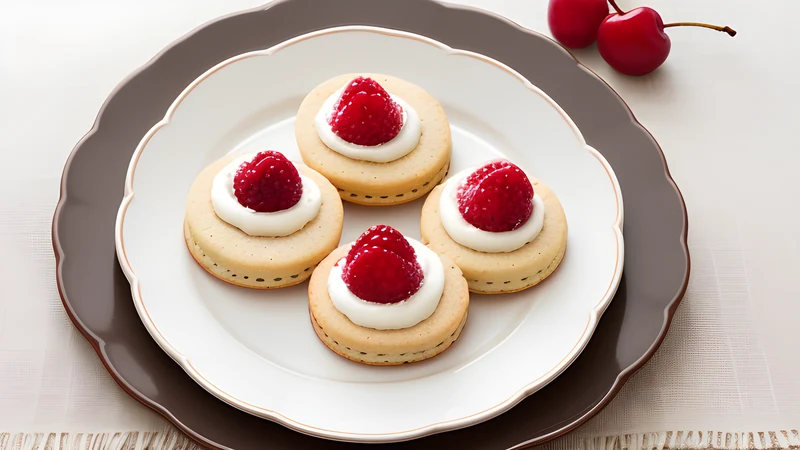
↓ Jump to recipeEvery Scottish baker’s shop has them, lined up behind the glass in neat rows: two pale shortbread rounds glued together with raspberry jam, topped with a slick of white glacé icing and a single glacé cherry set dead centre. Empire biscuits are teatime made solid, the biscuit you were given as a child to keep you quiet on a rainy afternoon. The classic icing is plain white and relentlessly sweet, and my one adjustment is to sharpen it with the juice and zest of a whole lemon. That lemon does the same job for the icing that salt does for caramel, cutting through the sugar so you taste the biscuit and the jam underneath rather than a wall of sweetness.
Empire Biscuits with Jam and Icing
Ingredients
- 175g unsalted butter, softened
- 100g caster sugar
- 1 egg yolk
- 1 tsp vanilla extract
- 250g plain flour
- 1/4 tsp fine sea salt
- 8 tbsp raspberry jam
- 200g icing sugar (for the glacé icing)
- 3 to 4 tsp lemon juice
- finely grated zest of 1 lemon
- 10 glacé cherries or jelly sweets, to finish
Method
- Beat the softened butter and caster sugar together until pale and creamy, then beat in the egg yolk and vanilla.
- Sift in the flour and salt and mix to a smooth dough. Shape into a disc, wrap and chill for 30 minutes.
- Preheat the oven to 170C fan and line two trays with parchment.
- Roll the dough out to 4mm thickness on a lightly floured surface and stamp out twenty 6cm rounds, re-rolling the scraps.
- Arrange on the trays and bake for 10 to 12 minutes until the edges are just pale gold. Cool completely on a rack.
- Spread raspberry jam over the flat side of half the biscuits and sandwich with the remaining biscuits.
- Mix the icing sugar with the lemon zest and enough lemon juice to make a thick but spreadable icing.
- Spoon icing onto the top of each biscuit and spread almost to the edge, letting it settle into a smooth flat surface.
- Top each with a glacé cherry or jelly sweet and leave for an hour until the icing sets firm.
A biscuit with a complicated name
The empire biscuit has been through more name changes than almost any other British bake, and the history is a small lesson in how food carries politics. In its earliest recorded form, in the late nineteenth century, it seems to have been known as a Linzer biscuit or a Deutsch biscuit, reflecting its clear debt to central European jam-sandwich confections like the Austrian Linzer cookie. When the First World War made anything German unspeakable in Britain, the biscuit was hurriedly rechristened, first as the Belgian biscuit, in solidarity with occupied Belgium, and then as the empire biscuit, wrapping it in patriotic imperial colours. In parts of Scotland older bakers still call it a German biscuit or a Belgian biscuit, and the layers of naming sit on top of each other like sediment. The recipe itself barely changed through all this; only the label kept moving to suit the times.
Structurally it is a very simple thing: two rounds of enriched shortbread, a layer of jam, and glacé icing on top. What lifts it above a plain sandwich biscuit is the eating contrast, the way the firm, sandy biscuit gives way to the soft, sharp jam and the sweet, brittle-then-yielding icing. Raspberry jam is traditional and correct, because its tartness is doing real structural work against all that sugar, and a bland strawberry or apricot jam leaves the whole biscuit flat. The glacé cherry on top started as a simple decoration to mark the biscuit as finished and fancy, though a jelly sweet or a smartie has always been the more child-friendly alternative in a busy home kitchen.
The dough: enriched shortbread
The biscuit here is not quite pure shortbread. Where true shortbread is only flour, butter and sugar, the empire biscuit’s dough carries an egg yolk and a little vanilla, which makes it slightly richer, easier to roll and stamp, and a touch more robust so it can be handled and sandwiched without shattering. The yolk brings fat and a small amount of protein that binds the dough and gives the baked biscuit a fine, tender bite that still holds its shape under a layer of jam and icing.
Cream the butter and sugar properly here, since a little air helps the biscuit stay light, then beat in the yolk and vanilla before the flour goes in. Chilling the dough for half an hour before rolling is worth the wait: it firms the butter so the biscuits keep their crisp stamped edges in the oven rather than spreading and blurring, and it relaxes the dough so it rolls without springing back or cracking. Roll to an even four millimetres, because uneven thickness gives you some biscuits that overbake and some that stay pale, and a sandwich only works if both halves match. Bake only to a pale gold at the edges, keeping the tops light, then cool the biscuits completely before you go anywhere near them with jam, or the warmth will melt the jam to a runny mess.
The twist: lemon in the glacé icing
Glacé icing is the simplest icing there is, just icing sugar loosened with liquid to a thick, pourable paste that dries to a smooth, matte, slightly crisp shell. Made with water, as it usually is, it tastes of pure sugar and nothing else, which is exactly the problem with most shop empire biscuits. Making it with lemon juice instead of water, and stirring in the finely grated zest, transforms it. The acid in the juice cuts the sweetness so the icing tastes bright and clean, and the zest carries the aromatic oils that give a real, rounded lemon flavour and a pretty fleck of colour across the white.
The consistency is the thing to watch. You want the icing thick enough to sit proud on the biscuit and spread almost to the edge without running off, which means adding the lemon juice a teaspoon at a time until it just falls from the spoon in a thick ribbon that smooths itself flat after a few seconds. Too thin and it will pour off the sides and take an age to set; too thick and it drags and tears rather than settling smooth. Spread it, then work quickly to place the cherry before a skin forms. If you love the lemon idea, my lemon and elderflower celebration cake runs the same sharp-sweet balance through a whole cake, and the jam-and-shortbread pleasure here is a close cousin of my plainer Scottish petticoat tails, which share the same butter-and-sugar bones without the jam and icing.
What can go wrong
The most common disappointment is a biscuit that has spread in the oven and lost its neat round; this is warm dough, so chill it properly and, on a hot day, chill the stamped rounds on their tray for ten minutes before baking. Icing that never sets and stays tacky was made too thin, with too much juice, so add the liquid cautiously and err on the stiff side. Jam that oozes out of the sides when you press the sandwich together means either too much jam or too little chilling of the biscuits, so use a restrained teaspoon or two and make sure the biscuits are stone cold. And if the icing slides off the top rather than gripping, the biscuit surface may be greasy or domed, so choose the flattest biscuit of each pair to be the top.
Make it yours
The empire biscuit takes well to small changes as long as you keep the jam-icing-biscuit logic intact. Swap raspberry jam for blackcurrant, which is even sharper and holds its own against the icing, or use a homemade jam if you have one, since the biscuit is a fine showcase for good preserves. A scrape of almond extract in the dough, in place of some of the vanilla, nods to the biscuit’s Linzer roots and marries beautifully with the raspberry. For a Christmas version, ice with a little mulled-spice sugar and top with a sliver of glacé ginger instead of the cherry. If you want to make them properly child-friendly, a jelly tot or a chocolate button sinks into the wet icing more happily than a cherry and disappears faster.
Storage and getting ahead
Empire biscuits keep surprisingly well, which is part of why they were a staple of the home baking tin and the church sale table. Once assembled and set, they hold in an airtight container for three to four days; the biscuit softens very slightly as the jam’s moisture works into it, which many people, myself included, actually prefer, since a day-old empire biscuit has a mellower, more melting texture than a fresh one. Keep them somewhere cool but not the fridge, which can make the icing sweat and go dull. The unbaked dough freezes well for up to two months, and the baked, unfilled biscuits freeze even better, so you can bake a batch, freeze them flat, and sandwich and ice them fresh whenever you need a plateful in a hurry. For a bigger jam-and-almond hit in the same central European tradition, my bakewell tart with frangipane and raspberry is where this biscuit’s Linzer ancestry leads.
Related Content