Embracing Freedom: The Enduring Tradition of Juneteenth

Contents
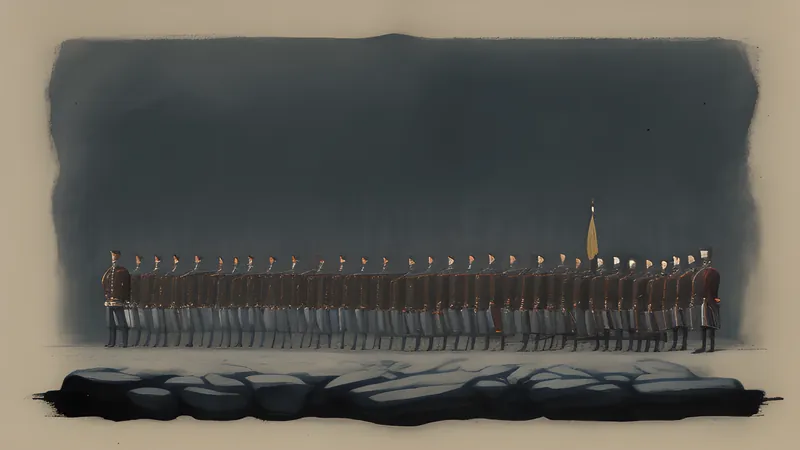
On 19 June 1865, Major General Gordon Granger stood in Galveston, Texas, and read aloud a document known as General Order No. 3. Its opening lines informed the people of Texas that “all slaves are free.” The Civil War had effectively ended in April with Robert E. Lee’s surrender at Appomattox, and Abraham Lincoln’s Emancipation Proclamation had declared enslaved people in the rebelling states free on 1 January 1863 — two and a half years earlier. Juneteenth exists because of that gap: the day marks not the granting of freedom but the moment its news finally arrived at the far western edge of the Confederacy, carried by 2,000 Union troops to a place that had been, until then, largely beyond the war’s reach.
Why the news took so long
The delay was not a simple failure of the postal service. The Emancipation Proclamation was a wartime measure; it freed enslaved people only where the Union had the power to enforce it, and for most of the war the Union had almost no military presence in Texas. Slaveholders across the South, and particularly in remote Texas, had every incentive to withhold the news, and many did — some deliberately keeping people enslaved through the 1865 harvest. Granger’s arrival in Galveston with Union soldiers was the point at which enforcement, not merely proclamation, reached the state. This is the crucial distinction that gives Juneteenth its weight: a right that cannot be enforced is a right in name only, and freedom in Texas became real not when it was written but when troops arrived to make it stick.
The first celebrations
The formerly enslaved people of Texas did not wait for permission to mark the day. The first organised Juneteenth celebrations appeared in 1866, one year on, and they blended prayer, feasting, music, and the reading aloud of General Order No. 3 and the Emancipation Proclamation. In 1872, a group of Black community leaders and formerly enslaved ministers in Houston — among them the Reverend Jack Yates — pooled 800 dollars to purchase ten acres of land specifically so that Juneteenth could be celebrated on ground the community owned. That parcel became Emancipation Park, still in use today, a direct and unbroken thread connecting the modern holiday to the people who first observed it within living memory of slavery.
From Texas to the nation
For most of the twentieth century Juneteenth remained largely a Texan observance, carried outward by the Great Migration as Black families moved north and west and brought the tradition with them. Its national profile grew unevenly. Texas made Juneteenth a state holiday in 1980, the first state to do so, thanks in large part to the campaigning of state legislator Al Edwards. Recognition then spread state by state over the following decades. The decisive shift came in June 2021, when President Joe Biden signed the Juneteenth National Independence Day Act into law, making it a federal holiday — the first new federal holiday since Martin Luther King Jr. Day was established in 1983. A woman named Opal Lee, a retired teacher from Fort Worth then in her nineties who had walked symbolic miles to campaign for the recognition, stood beside him and became known as the “grandmother of Juneteenth.”
Why the day still matters
Juneteenth is easy to misread as a tidy anniversary of a problem solved. The history resists that reading. The freedom announced in Galveston in 1865 was followed by the collapse of Reconstruction, by the rise of Jim Crow segregation, and by a century of legal and social barriers that the Civil Rights Movement of the 1950s and 1960s was still dismantling. Holding those facts together — that emancipation was real and that its promise took a further century to begin approaching — is precisely what the day is for. It commemorates an achievement without pretending the work it began was finished, which is a rarer and more honest thing for a holiday to do than most.
How it is celebrated
The traditions that grew up around Juneteenth are specific and deliberate. Red food and drink are a recurring theme — red velvet cake, watermelon, strawberry soda, and above all red hibiscus and red drinks — a colour widely understood to symbolise the blood shed and the resilience of the enslaved. Barbecues, family reunions, parades, and gospel and blues performances anchor community gatherings, particularly across Texas and the broader American South. In Galveston itself, the birthplace of the observance, the reading of General Order No. 3 remains part of the ceremony, tying the celebration each year back to the exact words spoken on the docks in 1865. Museums, churches, and universities host lectures and reenactments, treating the day as an occasion for education as much as festivity — an impulse it shares with commemorations built around consequential American lives, such as the reflection that surrounds the legacy of John F. Kennedy.
A summer holiday of light and freedom
Falling on 19 June, Juneteenth sits within days of the summer solstice, and the two share more than a place on the calendar. Both are, in different registers, festivals of light and of turning points — one marking the sun at its height, the other marking a moment when a long darkness in American history was, at last, officially declared over. That the celebration falls in the fullness of summer, amid long days and outdoor gatherings, is part of why its public rituals — the barbecues, the parades, the parks — took the warm, communal shape they did.
The words that were actually read
It is worth dwelling on the text of General Order No. 3 itself, because it captures the complicated reality of that first day. After declaring all slaves free, the order continued with a striking passage: it advised the freed people “to remain quietly at their present homes and work for wages,” and stated that they would “not be allowed to collect at military posts.” Freedom, in other words, arrived hedged with instructions from the same authority that granted it. The order reflected the anxieties of a military government facing a sudden social upheaval, and it foreshadowed the labour arrangements — sharecropping, tenant farming, and worse — that would keep many formerly enslaved people bound to the same land and the same landowners for generations. Reading those lines today complicates the tidy image of unqualified liberation, and this is precisely why the tradition of reading the order aloud each year matters: it preserves not a sanitised anniversary but the actual, contradictory words spoken on the Galveston docks, freedom and constraint delivered in the same breath.
Symbols and their meanings
Beyond the red foods, Juneteenth has acquired a flag of its own, designed in 1997 by activist Ben Haith and later refined by illustrator Lisa Jeanne Graf. Its central image is a bursting star, meant to represent both Texas — the Lone Star State — and the freedom of all Black Americans, set against an arc dividing red and blue that echoes the American flag while asserting a distinct story within it. The date 19 June 1865 is sometimes stitched into the design. Each element is a deliberate act of authorship: a people writing their own emblem for a freedom that others had been slow to acknowledge in words.
Fun facts
- Juneteenth is a portmanteau — a blend of “June” and “nineteenth” — and the name was coined by the community itself rather than by any official body.
- Emancipation Park in Houston, bought in 1872 specifically for Juneteenth celebrations, is one of the oldest public parks in Texas and remains in use today.
- The Juneteenth flag deliberately uses red, white, and blue, framing the holiday as an American story rather than a story apart from the United States.
- Opal Lee, the retired teacher who campaigned for federal recognition, walked 2.5-mile stretches — symbolising the two and a half years between the Proclamation and the news reaching Texas — to make her case.
- Juneteenth became a federal holiday in 2021 with only one senator voting against the bill; it passed the Senate unanimously by voice vote before that lone House objection.
- General Order No. 3 was General Granger’s third order issued that day in Galveston; the emancipation announcement shared its date with routine military housekeeping, a mundane frame for one of the most consequential sentences read aloud in American history.
A closing reflection
There is a particular kind of freedom that arrives late, after the papers have been signed and the war declared over, and it teaches something the neat version of history tends to hide: that a right announced in a capital and a right lived on the ground can be separated by years, by miles, and by the will of the people who profit from delay. Juneteenth honours the moment that gap finally closed in Texas — and in doing so it quietly asks, every year, where such gaps might still be open, and who is waiting on the far side of them for the news to arrive.
Related Content