Elote: Street Corn with Lime and Cotija
Char first, then let the mayo and cotija do the rest
Contents
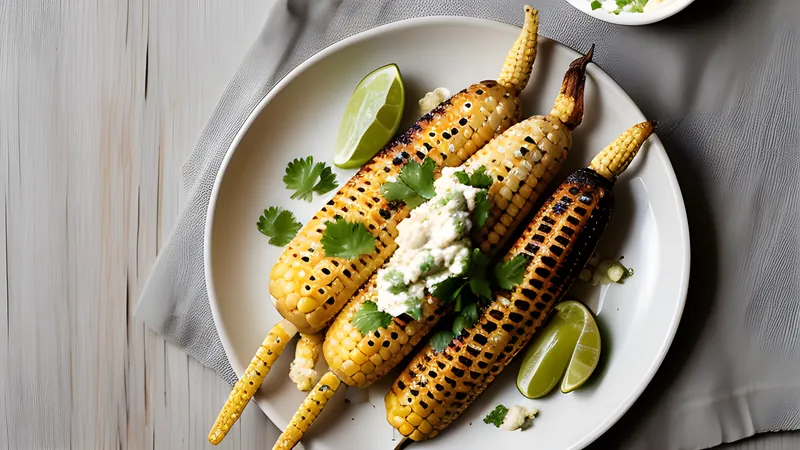
↓ Jump to recipeElote is street corn cooked hot enough to blister and char, then dressed while it is still too hot to hold comfortably, so the chilli-lime mayo half-melts into the kernels and the cotija sticks in a crumbly, salty crust. The char is not optional garnish here; it is the flavour the whole dish is built around, and this version leans into it hard, with a proper high-heat grill rather than a gentle boil.
Elote: Street Corn with Lime and Cotija
Ingredients
- 4 corn cobs, husks and silk removed
- 1 tbsp neutral oil, for the grill
- 60g mayonnaise
- 60g crema mexicana or sour cream
- 1 clove garlic, finely grated
- Zest and juice of 1 lime, plus extra lime wedges to serve
- 1 tsp chilli powder (ancho, tajín, or piquín), plus extra for dusting
- 80g cotija cheese, finely crumbled (or feta as a substitute)
- A small handful of coriander leaves, roughly chopped
- Flaky salt, to finish
Method
- Heat a griddle pan, barbecue or grill to high heat and lightly oil the corn cobs all over.
- Grill the corn, turning every 2 to 3 minutes, for 12 to 15 minutes total, until deeply charred and blistered in patches on all sides.
- While the corn cooks, whisk the mayonnaise, crema, grated garlic, lime zest and juice, and chilli powder together in a shallow dish until smooth.
- As soon as the corn comes off the heat, brush or roll each hot cob generously in the mayo mixture so it melts slightly into the kernels.
- Roll the coated cobs in the crumbled cotija so it sticks all over, pressing gently to help it adhere.
- Dust with extra chilli powder, scatter over the chopped coriander, and finish with a pinch of flaky salt and a squeeze of fresh lime just before serving.
The corn cart, and the corn before it
Corn has been central to Mexican food for over eight thousand years, since the domestication of teosinte in the Balsas River valley of what is now southern Mexico, and elote — the Nahuatl-derived word for a fresh corn cob — sits at the modern, street-food end of a very long relationship between people and maize. Corn on the cob, grilled over coals and sold from carts, has been a Mexico City staple for generations, and the elotero pushing a steaming or smoking cart through a plaza, cob in one hand, jar of crema in the other, is one of the most recognisable street-food images the country exports.
There is an important cousin worth knowing about: esquites, the same flavour combination served as loose kernels in a cup rather than on the cob, eaten with a small spoon rather than gnawed off a stick. Esquites is arguably the more practical version for a crowd, and it is worth trying once you have mastered elote, since the two share a base but solve different serving problems — elote for a handheld street snack, esquites for something you can eat sitting down without corn stuck between your teeth.
Traditional elote is more often boiled or steamed than grilled, particularly from carts that need to keep dozens of cobs hot and ready over hours rather than cooking to order. A cart elotero typically keeps a deep pot of corn simmering gently over a low flame, sometimes with a few dried corn husks or a stick of cinnamon added to the water for a faint sweetness, then finishes each cob to order with mayonnaise, crema, cheese, chilli and lime as the customer waits. It is a genuinely good version of the dish, built for volume and speed rather than maximum flavour.
The grilled, blackened version below is closer to what you get from a backyard asador or a taco stand with a live flame, and I prefer it for one simple reason: char adds a flavour that boiling water cannot, and it is the flavour that makes elote worth cooking at home rather than settling for boiled corn with butter. Both versions carry the same essential dressing — mayonnaise, crema, cotija, chilli, lime — and that combination is what makes elote recognisably itself. Get the dressing right and either cooking method will taste like the dish; get it wrong and even a perfect char will taste like plain grilled corn with toppings.
Why the char is the flavour
Corn kernels are full of natural sugars, and when they hit a hot, dry surface — a grill grate, a ridged griddle, or the direct flame of a gas hob — those sugars caramelise and undergo the Maillard reaction well before the kernel itself is in any danger of overcooking. The result is a nutty, faintly smoky, deeply savoury note layered on top of corn’s natural sweetness — a real flavour difference, felt on the tongue rather than just seen on the surface. Boiling corn cooks it gently and evenly but leaves every one of those sugars untouched, which is why boiled corn always tastes flatter next to a grilled cob.
Getting a good char without drying out the kernels means working on high heat for a relatively short time and turning often. Corn is already cooked through — or close to it — by the time you buy it fresh, so the grilling stage is really about building colour and flavour on the surface rather than cooking the interior from raw. Fifteen minutes on a hot grill, turned every couple of minutes so no one side burns while the others stay pale, gets you patches of genuine black char alongside plenty of golden-brown kernel — a light, flavour-building char rather than a full blackening.
The second technique worth understanding is timing the dressing. The mayo-crema mixture is brushed onto the corn the instant it comes off the heat, while the cob is still almost too hot to hold. That residual heat softens the mayonnaise and crema just enough that they seep slightly into the gaps between kernels rather than sitting as a thick coat on the surface, carrying the lime and chilli flavour down into the corn itself. Let the corn cool first and dress it afterwards, and the sauce just sits on top as a separate layer — still good, but a noticeably lesser version of the dish.
The recipe
Serves 4.
Remove the husks and silk from 4 corn cobs and heat a griddle pan, barbecue, or overhead grill to high heat. Lightly oil the cobs all over with about a tablespoon of neutral oil, then grill them, turning every 2 to 3 minutes, for 12 to 15 minutes total, until you see genuine dark char in patches across all sides. Do not walk away — corn can go from charred to burnt in under a minute on real heat.
While the corn cooks, whisk together 60g mayonnaise, 60g crema mexicana (or sour cream), 1 finely grated garlic clove, the zest and juice of 1 lime, and 1 teaspoon of chilli powder in a shallow dish until smooth. Taste it — it should be tangy, a little garlicky, and only gently spiced, since more chilli goes on at the end.
As soon as the corn comes off the grill, while it is still very hot, brush or roll each cob generously through the mayo mixture, then immediately roll it in 80g of finely crumbled cotija cheese, pressing gently so the cheese sticks in a rough, salty crust. Dust with a little extra chilli powder, scatter over a small handful of chopped coriander, and finish with a pinch of flaky salt and a fresh squeeze of lime. Serve immediately, with extra lime wedges alongside.
Tips, substitutions and storage
Cotija is a hard, salty, crumbly Mexican cow’s milk cheese, aged enough that it does not melt so much as soften and cling. If you cannot find it, feta is the closest widely available substitute — similarly salty and crumbly, though tangier — and a hard, aged Pecorino Romano in a pinch, used sparingly since it is saltier still. Crema mexicana is thinner and slightly tangier than sour cream; if using sour cream, thin it with a teaspoon of milk to get closer to crema’s pourable consistency.
Elote is very much a make-and-eat-immediately dish; the appeal is entirely in the contrast of hot, charred corn against cold-ish sauce and crumbly cheese, and it does not hold well once assembled. If you are cooking for a crowd, char all the cobs ahead and keep them warm loosely wrapped in foil, but dress and cheese them only just before serving. The mayo-crema-lime mixture itself keeps in the fridge for up to three days, so making that part ahead is a genuine time-saver.
No grill or griddle at home? A dry, ridged frying pan on the highest heat your hob allows gets close, though a gas flame turned to high with the cob held directly over it on tongs, turning constantly for 6 to 8 minutes, gives the most authentic char of any indoor method. An oven grill (broiler) on its highest setting also works: sit the oiled cobs on a wire rack as close to the element as your oven allows and turn every 3 minutes for 12 to 15 minutes total, watching closely since broiler elements vary enormously in strength and a few seconds of inattention is the difference between char and cinder.
Buy the freshest corn you can find rather than the cheapest. Corn’s sugars begin converting to starch the moment it is picked, so a cob that has sat in a shop for a week will taste noticeably starchier and less sweet than one bought within a day or two of harvest, no matter how well you char it — the grilling can add flavour on top, but it cannot put sweetness back into old corn.
Variations
For esquites, the cup version, cut the charred kernels off the cob with a sharp knife once cooled slightly, and stir them straight into the mayo-crema mixture in a bowl rather than rolling a whole cob — top with cotija, chilli powder and coriander the same way, and eat with a spoon. A chipotle-mayo elote swaps the plain chilli powder for a teaspoon of adobo sauce from a tin of chipotle chillies, adding a smoky, deeper heat that suits a backyard barbecue spread. For a lighter, dairy-free version, skip the mayo-crema mix entirely and dress the hot corn with a garlic-lime butter instead, finishing with a vegan cheese alternative or simply extra chilli and lime.
Elote earns its place on a bigger Mexican spread — set it out alongside tacos al pastor or chicken fajitas for a full backyard grill night, and pour something cold and citrus-forward to go with it, like a michelada with a chilli-salt rim, which shares the same chilli-lime backbone.
Related Content