Egusi Soup with Ground Melon Seed and Greens
A thick, savoury West African soup thickened with toasted ground melon seed and dark bitter greens
Contents
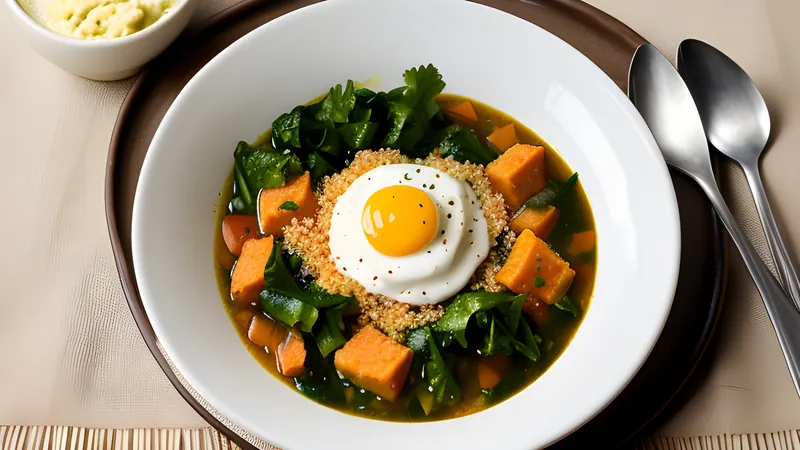
↓ Jump to recipeEgusi soup is one of West Africa’s great thick soups, built on ground melon seed rather than flour or cornstarch, toasted until nutty and cooked into soft, savoury dumplings that swell and thicken the whole pot. This version leans hard into that toasting step, because a properly dry-toasted egusi is the difference between a soup that tastes of raw seed and one that tastes genuinely rich, and it balances the richness of palm oil and meat against a good weight of dark, slightly bitter greens, which is how the dish is meant to eat: substantial rather than heavy, and never one-note.
Egusi Soup with Ground Melon Seed and Greens
Ingredients
- 500g beef shin or oxtail, cut into chunks
- 200g goat meat or stewing beef (optional, for variety)
- 1 onion, roughly chopped, plus 1 finely chopped
- 2 stock cubes, crumbled
- 1 litre water, plus more as needed
- 200g ground egusi (melon seed)
- 150ml red palm oil
- 2 tbsp tomato purée
- 2 to 3 scotch bonnet chillies, blended or finely chopped
- 1 thumb fresh ginger, grated
- 4 garlic cloves, crushed
- 150g smoked fish or stockfish, cleaned and flaked
- 100g dried crayfish, ground
- 300g bitter leaf, washed thoroughly, or 300g pumpkin leaf, roughly chopped
- 100g spinach, roughly chopped
- Salt, to taste
- Pounded yam, fufu or rice, to serve
Method
- Season the beef and goat meat with the finely chopped onion, a crumbled stock cube and a little salt, cover with water in a large pot and simmer for 45 minutes until tender, topping up the water as needed.
- Meanwhile, toast the ground egusi in a dry frying pan over a low-medium heat for 6 to 8 minutes, stirring constantly, until it turns pale gold and smells nutty rather than raw.
- Tip the toasted egusi into a bowl and mix with just enough cold water to form a thick, mouldable paste, then set aside.
- Once the meat is tender, remove it with a slotted spoon and set aside, reserving the cooking stock in the pot.
- Heat the red palm oil in a separate large pot over a medium heat until it becomes fluid and starts to shimmer, but does not smoke.
- Add the roughly chopped onion and fry for 4 minutes until soft, then stir in the tomato purée and cook for 2 minutes.
- Add the scotch bonnet, ginger and garlic and fry for 2 minutes until fragrant.
- Drop in tablespoon-sized dollops of the egusi paste, arranging them in the pot without stirring, then pour over enough of the reserved meat stock to just cover them.
- Cover and simmer undisturbed for 10 minutes, allowing the egusi dollops to firm up and steam through before breaking them apart.
- Break up the egusi with a wooden spoon, stir well, then add the cooked meat, smoked fish, stockfish and ground crayfish.
- Simmer uncovered for 15 minutes, stirring occasionally and adding more stock or water if the soup is too thick, until the egusi has cooked through and thickened the soup properly.
- Stir in the bitter leaf or pumpkin leaf and spinach, season with salt, and simmer for a final 5 minutes until the greens are just wilted.
- Serve hot with pounded yam, fufu or rice for scooping.
What egusi actually is
Egusi refers to the seeds of certain varieties of squash, melon and gourd, dried and hulled to reveal a flat, cream-coloured kernel that is ground into a coarse, protein-rich meal. It is not the seed of the sweet melon you would eat for breakfast; the specific varieties grown for egusi across Nigeria, Ghana, Sierra Leone and much of West Africa are cultivated purely for their seeds, since the flesh of the fruit itself is often too bitter to eat. The seeds are high in fat and protein, which is exactly why they work so well as a thickener: when ground and cooked, they release oils and proteins that bind with the surrounding liquid into a soft, slightly grainy, deeply savoury base, closer in effect to a nut-thickened mole than to a simple starch-bound gravy.
The soup itself is eaten across a huge swathe of West Africa under regional variations, and in Nigeria specifically it is one of the most common soups served at home, cooked in Yoruba, Igbo and Hausa households alike with their own particular touches: some versions include ground crayfish and stockfish as standard, others lean more heavily on assorted meats, and the choice of greens shifts by region and season. What stays constant is the method of building the soup around toasted, cooked-through egusi rather than flour, and the practice of serving it alongside a starchy swallow, most traditionally pounded yam or fufu, torn into small pieces and used by hand to scoop up the soup rather than eaten with a spoon.
Why the egusi has to be properly toasted
Raw ground egusi tastes flat and slightly grassy, with an unpleasant rawness that no amount of seasoning fully disguises once it is cooked into the pot. Dry-toasting the ground seed before it goes near any liquid changes that completely. As the natural oils in the seed heat up in the dry pan, they undergo their own version of the Maillard reaction, the same browning chemistry that turns raw flour into toasted flour or raw nuts into roasted nuts, and the flavour shifts from grassy to genuinely nutty within a few minutes over a gentle heat. Go too far and the natural oils will start to scorch, turning bitter fast, so the target is a pale gold colour and a smell like roasting sesame or peanuts, not a deep brown.
Toast the ground egusi over a low to medium heat, never higher, and keep it moving constantly with a wooden spoon or spatula; because it is already ground fine, it has a huge surface area exposed to the pan and can go from perfectly toasted to burnt within thirty seconds of inattention. This is not a step to multitask through. Once toasted, mixing the warm egusi with just enough cold water to form a thick, mouldable paste, similar in consistency to wet sand, sets it up for the next stage of cooking, where it goes into the pot in spoonfuls rather than being stirred in loose.
Why the egusi goes in as dollops
Most recipes for thickened soups tell you to whisk the thickener straight into the liquid, but egusi soup traditionally does the opposite, and there is good reason for it. Dropping tablespoon-sized dollops of the toasted egusi paste into the hot, oily broth and leaving them undisturbed under a lid for ten minutes lets each dollop firm up and gently steam through on its own, forming a soft, slightly dumpling-like texture rather than dissolving instantly into a thin, grainy liquid. If you stir the paste straight in from the start, the egusi tends to break down unevenly into small, gritty specks suspended in an oily broth, rather than binding properly into a cohesive, thick soup. Letting it set first, then breaking the dollops apart with a spoon once they have firmed, gives you far better control over the final texture, and it is closer to how the dish is traditionally made in a Nigerian kitchen.
Getting the thickness right afterwards is best done with stock rather than more egusi. If the soup looks too thick and paste-like once you have broken the dollops apart, loosen it gradually with the reserved meat stock rather than adding more raw egusi, which would only make it grittier. If it looks too thin, a longer, gentler simmer, uncovered, will reduce it down to the right consistency, which should be thick enough to coat the back of a spoon generously and hold its shape a little on a piece of pounded yam.
Egusi versus ogbono, and other thickened soups
Egusi belongs to a family of Nigerian soups thickened by a specific starring ingredient rather than a general-purpose flour, and it is worth knowing where it sits among its relatives if you plan to cook further into this style. Ogbono soup, made from ground wild African mango seeds, has a distinctive stretchy, almost gelatinous texture, quite different from egusi’s softer, more granular body, and a deeper, earthier flavour that some newcomers find easier to like than bitter leaf’s edge. Okra soup, thickened with fresh grated okra, is lighter and more mucilaginous again, often eaten alongside egusi rather than instead of it, since many households cook the two together in a single pot for a soup that carries both textures at once. None of these are interchangeable in a recipe; each thickener behaves differently under heat, so a straight swap of ground egusi for ground ogbono in this method will not work, since ogbono wants to be stirred in gradually over a lower heat rather than dropped in as dollops.
Palm oil, greens and the rest of the pot
Red palm oil is not optional in a properly traditional egusi soup; its colour and slightly resinous, fruity flavour are part of what the dish is meant to taste like, and swapping it for a neutral oil will make the whole pot flatter and paler than it should be. Heat it just until it turns fluid and starts to shimmer rather than letting it smoke, since palm oil can turn acrid at high heat the same way any oil can. The meat base, usually a mix of beef and a second protein such as goat, tripe or offal depending on what the household prefers, is simmered separately first until properly tender, and the resulting stock becomes the liquid that loosens the soup later, carrying real depth into the pot rather than diluting it with plain water.
Bitter leaf, the traditional green, needs thorough washing, usually several changes of water, to draw off some of its natural bitterness before it goes in the pot, though a controlled amount of that bitterness is exactly what the dish is named for and expected to carry. If bitter leaf is hard to find, pumpkin leaves or a mix of pumpkin leaf and spinach make a very reasonable substitute, giving good body and colour with a much gentler flavour, which is the version most easily built from a British greengrocer’s shelf. Whatever green you use, add it right at the end and simmer only until just wilted; overcooked greens turn dull and lose the fresh, slightly mineral note that balances the richness of the palm oil and meat.
Protein swaps and a pescatarian version
The meat combination here is flexible, and most Nigerian households vary it according to what is available and what the family prefers. Oxtail gives a particularly rich, gelatinous stock that makes the finished soup glossier, though it needs a longer simmer, closer to an hour and a half, to become properly tender. Tripe and shaki, a type of beef stomach, are traditional additions that bring a distinctive chewy texture some cooks specifically look for; if you are new to offal, starting with beef shin and skipping these is a perfectly reasonable way in.
For a pescatarian version, drop the beef and goat entirely and build the base instead from a well-flavoured fish or vegetable stock, then add the smoked fish and stockfish as the main protein along with a handful of prawns stirred in for the final few minutes of cooking. The soup will be lighter in body without the long-simmered meat stock, so compensate by toasting the egusi slightly darker than usual, just short of scorching, to build extra depth through the seed itself rather than through the meat. Vegetarian versions are harder to make properly traditional, since stockfish and crayfish are both fairly central to the flavour, but a good mushroom stock, a splash of soy sauce and extra toasted egusi get you a respectable, genuinely savoury result if that is the constraint you are cooking within.
Serving and getting ahead
Egusi soup is properly eaten with a starchy swallow rather than rice, though rice is a perfectly good weeknight compromise if pounded yam or fufu are not to hand. Traditionally, a small piece of the swallow is pinched off, rolled briefly between the fingers, and used to scoop up a mouthful of soup directly, without chewing the swallow itself much, letting the soup carry the flavour. If you are new to eating this way, a spoon works fine too; nobody at the table is going to mind.
This is a genuinely good soup to make ahead, since like most thick, meat-based West African soups it improves over a day or two in the fridge as the flavours settle further into the egusi. It keeps for three days chilled in an airtight container and freezes well for up to two months, though the greens soften further on freezing, so some cooks prefer to freeze the base without the final leaves and add fresh greens when reheating. If you are building out a West African spread at home, this sits very naturally alongside a pot of jollof rice with a smoky party bottom for a milder, starchy counterpoint, or a batch of suya with a peanut-spice crust if you want something to grill while the soup simmers. For another example of how a ground seed or nut can thicken a whole pot rather than just flavouring it, my sweet potato and peanut stew, West African style works the same principle with peanut butter instead of egusi, and makes a useful comparison if you want to taste the family resemblance between the two techniques.
Related Content