Wok-Charred Egg Fried Rice
The takeaway classic, properly smoky at home
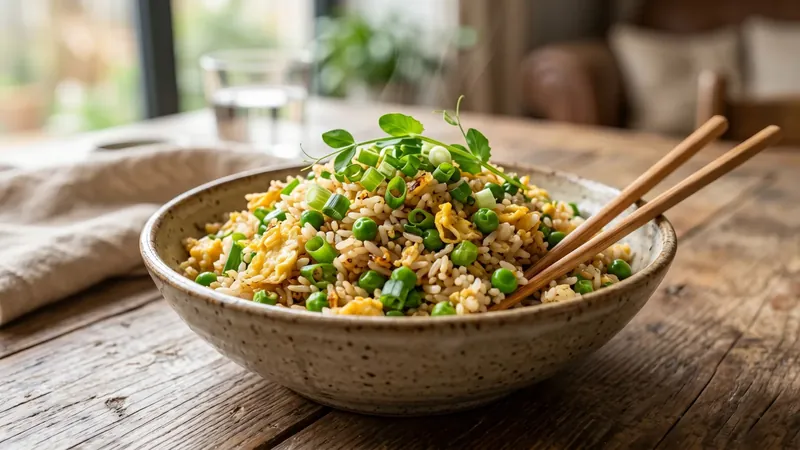
There is a reason takeaway egg fried rice tastes the way it does, and it is not magic — it is heat. The twist here is double: cold, day-old rice that fries up in separate, springy grains, plus a properly screaming wok that scorches the rice for that elusive smoky note the Cantonese call wok hei. Spring onion, light and dark soy, and a whisper of sesame finish it. Twenty minutes, two pans dirtied, and a bowl far better than the foil tub.
Wok-Charred Egg Fried Rice
Ingredients
- 350g cooked long-grain rice, cold (ideally day-old)
- 3 large eggs, lightly beaten
- 3 tbsp groundnut or vegetable oil
- 4 spring onions, whites and greens separated, sliced
- 2 garlic cloves, finely chopped
- 1 tbsp light soy sauce
- 1 tsp dark soy sauce
- 1 tsp toasted sesame oil
- 0.5 tsp caster sugar
- 0.25 tsp white pepper
- Pinch of salt
Method
- Break up the cold rice with your fingers so there are no clumps; set aside.
- Mix the light soy, dark soy, sesame oil, sugar and white pepper in a small bowl.
- Heat a wok over the highest flame until it just begins to smoke, then add 1 tbsp oil and swirl.
- Pour in the beaten eggs, let them puff for a few seconds, then scramble until just set and scoop out.
- Add the remaining 2 tbsp oil, then the spring onion whites and garlic; stir for 20 seconds until fragrant.
- Tip in the rice and press it against the hot wok, leaving it untouched for 30 seconds at a time to char before tossing.
- Return the egg, pour in the sauce mixture and a pinch of salt, and toss hard to coat every grain.
- Throw in the spring onion greens, give one final toss, and serve straight away.
3 The Story
Fried rice exists across Asia as a thrifty answer to the same question: what to do with yesterday’s pot of rice. In southern China it became a Cantonese speciality, and the grandest version, Yangzhou fried rice, carries char siu, prawns and egg. The humble egg-only edition is the everyday cousin — the thing cooks make for themselves at the end of service.
The defining flavour of a good Cantonese fried rice is wok hei, usually translated as “breath of the wok”. It is the faintly smoky, almost charred aroma that comes from cooking over a very high flame in a carbon-steel wok, where droplets of oil and stray grains briefly ignite and the food sears rather than steams. Restaurant ranges roar at a heat domestic hobs cannot match, which is why takeaway rice often tastes more vivid than home attempts. The workaround is to get your wok as hot as it will go, cook in small batches so the pan never cools, and resist the urge to stir constantly — letting the rice sit against the metal is what builds the char.
The other half of the trick is the rice itself. Freshly cooked rice is moist and soft, so it clumps and turns to mush when fried. Rice that has been cooled and ideally left overnight in the fridge dries out at the surface, the starch firms up, and the grains separate and fry rather than stew. This is not a chef’s affectation; it is the practical reason fried rice was a leftovers dish in the first place.
Soy sauce here does two jobs. Light soy, thin and salty, seasons; dark soy, thicker and aged longer with a touch of molasses, lends colour and a rounder savoury depth. A pinch of sugar balances the salt, white pepper adds a gentle floral heat distinct from black pepper, and sesame oil is added off the heat so its delicate aroma survives. Keep the additions restrained — egg fried rice is meant to taste of rice, egg and the wok, not of a bottle.
Related Content