Devilled Eggs with a Smoked-Paprika Backbone
Bloomed smoked paprika oil folded into the filling, not just dusted on top as an afterthought
Contents
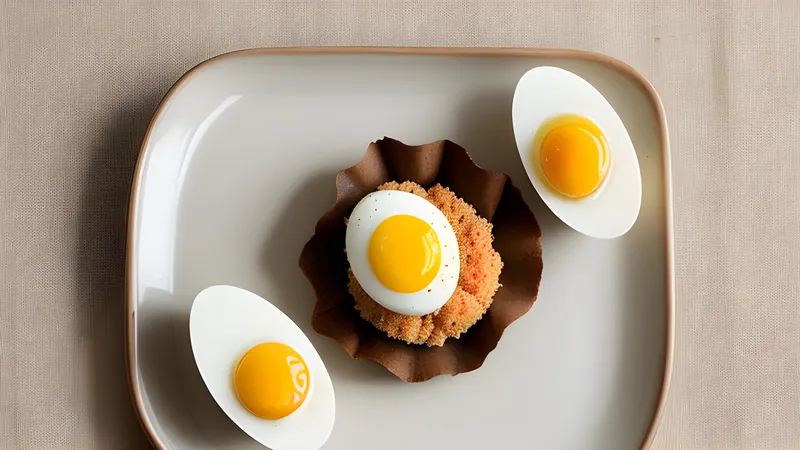
↓ Jump to recipeDevilled eggs earn their name from the heat that used to sit in the filling — mustard, cayenne, a slap of vinegar — back when “devilled” meant a dish sharpened until it bit. Most versions since have gone soft, a dusting of paprika on top for colour and not much else. This one puts the smoke back to work: bloomed in warm oil for less than a minute, so it perfumes the whole filling instead of sitting on the surface as a garnish nobody actually tastes.
Devilled Eggs with a Smoked-Paprika Backbone
Ingredients
- 6 large eggs
- 3 tbsp neutral oil (vegetable or light olive)
- 2 tsp sweet smoked paprika, plus extra for garnish
- 1/4 tsp hot smoked paprika (or a pinch of cayenne)
- 3 tbsp mayonnaise
- 1 1/2 tsp Dijon mustard
- 1 tsp cider vinegar
- 1/4 tsp fine salt, plus more to taste
- Black pepper, to taste
- 2 tbsp finely snipped chives
- 2 tbsp crispy fried shallots (optional, for crunch)
Method
- Place the eggs in a single layer in a saucepan, cover with cold water by 2cm, and bring to a full boil.
- The moment the water boils, cover the pan, take it off the heat and let the eggs sit for 11 minutes exactly.
- Drain and transfer immediately to a bowl of iced water for at least 5 minutes to stop the cooking and loosen the shells.
- Warm the oil in a small pan over low heat, stir in both paprikas and cook for 30-45 seconds, swirling constantly, until the oil turns deep red and smells toasted rather than raw. Remove from the heat straight away and let it cool.
- Peel the cooled eggs, halve lengthways, and scoop the yolks into a bowl, keeping the whites intact on a serving plate.
- Mash the yolks to a fine crumb with a fork, then work in the mayonnaise, Dijon, cider vinegar, salt and about two-thirds of the cooled paprika oil until smooth.
- Taste and adjust salt, vinegar or paprika oil, then spoon or pipe the filling back into the egg whites, mounding it slightly above the rim.
- Drizzle the remaining paprika oil over the filled eggs, scatter with chives and crispy shallots if using, and finish with a light dusting of smoked paprika and black pepper.
The story: a Victorian verb that lost its teeth
“Devilled” is a cooking term with a specific, documented meaning, and it predates the eggs entirely. English and American cookbooks from the early 1800s used “devil” as a verb for food cooked or dressed with a sharp excess of mustard, pepper or cayenne — devilled kidneys, devilled ham, devilled crab, all built on the same idea of deliberate, aggressive heat. The eggs came later, folded into that tradition once mayonnaise-bound yolk fillings became a fixture of American church-supper and picnic tables through the early twentieth century, and the name stuck even as the heat, in most kitchens, quietly dialled itself down to a shake of paprika for colour.
That drift matters because paprika is doing almost no work in the average devilled egg beyond looking the part. Ground sweet paprika, uncooked, is mostly sweet pepper flavour with barely any pungency — it was never meant to carry heat on its own, and dusted raw over mayonnaise it mostly just sits there, a red freckle that photographs well and tastes of very little. Real Hungarian and Spanish cooking never treats paprika this way: it goes into hot fat first, briefly, because paprika’s flavour compounds are fat-soluble and heat-activated, and a few seconds in warm oil pulls out a smokiness and depth that raw paprika simply doesn’t have sitting in a jar.
That’s the whole logic behind the twist here. Warming smoked paprika (pimentón, in its Spanish form, usually oak-smoked over slow fires for weeks) in oil for well under a minute blooms the compounds the same way tempering spices in ghee does for a dal tadka or an Indian curry base — a small technique, borrowed from a completely different cuisine, applied here to a very American picnic staple. Once that oil is folded through the yolk filling rather than only dusted on top, the smoke stops being a garnish and becomes a backbone running through every bite, with the dusting on top there only to repeat the note, not carry it alone.
Not all smoked paprika is equal, and the label is worth reading before it goes near the oil. Pimentón de la Vera, from Extremadura, is dried over oak fires and comes in three grades — dulce (sweet), agridulce (bittersweet) and picante (hot) — and it’s the genuine smoked article, with a deep, almost bacon-like aroma from weeks of slow curing. A lot of supermarket “smoked paprika” is closer to sweet paprika with liquid smoke flavouring added, which works fine here but gives a thinner, more one-note result. If a tin lists La Vera or Denominación de Origen on the label, use slightly less of it than the recipe states, since it runs more concentrated than the generic version.
Getting the egg right, which is most of the job
Devilled eggs live or die on the boil. A properly cooked yolk for this dish should be fully set but not chalky — no grey-green ring at the edge, no crumbling dryness when mashed. The most reliable route to that is starting the eggs in cold water, bringing the pan to a full rolling boil, then killing the heat entirely, covering the pan, and letting the residual heat finish the job for exactly 11 minutes. This avoids the violent, prolonged boil that toughens whites and pushes sulphur compounds to the yolk’s surface, which is what causes that unappetising grey-green ring — a reaction between iron in the yolk and hydrogen sulphide released from an overcooked white, sped up by high heat and long cooking times.
The ice bath afterwards isn’t optional either. Plunging the eggs straight from hot water into ice water does two jobs at once: it stops residual cooking dead, so the yolks don’t keep firming up as they sit, and it shrinks the egg white slightly away from the shell membrane, which is what makes fresh-ish eggs (a week or two old, not literally fresh from the coop) peel cleanly instead of tearing chunks out of the white. Skip the ice bath and you’ll fight the shells for every single egg.
Older eggs peel more easily than very fresh ones, incidentally, because the whites of a fresh egg cling tightly to the shell membrane, while a slightly aged egg has lost a little carbon dioxide through the shell, raising its pH and loosening that grip. If devilled eggs are on the menu, eggs that have been in the fridge a week or so are a genuine advantage, not a compromise. Buying the eggs several days ahead of the day you plan to cook them is a small piece of planning that pays off directly in how many whites come out of their shells intact.
The recipe
Makes 12 halves, serves 4-6 as a snack. Prep 20 minutes, cook 12 minutes.
For the eggs: 6 large eggs.
For the paprika oil: 3 tbsp neutral oil, 2 tsp sweet smoked paprika, 1/4 tsp hot smoked paprika (or a pinch of cayenne).
For the filling: the cooked yolks, 3 tbsp mayonnaise, 1 1/2 tsp Dijon mustard, 1 tsp cider vinegar, 1/4 tsp salt, black pepper.
To finish: 2 tbsp chives, 2 tbsp crispy fried shallots (optional).
- Cover the eggs with cold water by 2cm in a saucepan and bring to a full boil.
- Cover, remove from the heat, and let sit for 11 minutes exactly.
- Drain and plunge into iced water for at least 5 minutes.
- Warm the oil with both paprikas over low heat for 30-45 seconds, swirling, until deep red and toasted-smelling. Cool.
- Peel the eggs, halve lengthways, and scoop the yolks into a bowl.
- Mash the yolks fine, then mix in the mayonnaise, mustard, vinegar, salt and two-thirds of the cooled paprika oil.
- Taste, adjust seasoning, and pipe or spoon the filling back into the whites.
- Drizzle with the remaining paprika oil, scatter with chives and shallots, and dust lightly with more smoked paprika.
Tips, substitutions and storage
If piping the filling, push it through a fine-mesh sieve first with the back of a spoon — this catches any stray bits of overcooked yolk and gives a genuinely smooth, restaurant-style finish that a fork-mashed filling won’t match. A sandwich bag with one corner snipped off works exactly as well as a piping bag if that’s what’s in the kitchen.
Mayonnaise can be swapped in part for Greek yoghurt (up to half the quantity) for a tangier, lighter filling, though the texture will be looser, so hold back a little of the paprika oil until you’ve checked the consistency. For real crunch on top, crispy fried shallots do more than the classic paprika dusting alone, and they’re a trick worth borrowing for other cold dishes too, in the same way toasted rice adds crunch to a nam tok beef salad.
Filled eggs keep in the fridge, covered, for up to 2 days, though the whites soften slightly and the paprika oil dulls a touch as it sits — a fresh dusting just before serving brings it back. Unfilled boiled eggs, still in their shells, hold for 3-4 days chilled, so par-cooking the eggs a day ahead and filling just before guests arrive is the sensible make-ahead order. Don’t fill and refrigerate more than a few hours before a party if you can help it; the mustard and vinegar in the filling slowly soften the surface of the whites over a long stretch in the fridge, and the eggs lose some of their clean bite.
Leftover paprika oil, if any survives the piping, keeps in a sealed jar in the fridge for a couple of weeks and is worth having around beyond this recipe — it’s genuinely good drizzled over hummus, stirred through scrambled eggs, or finishing a bowl of white bean soup.
Variations
Bacon fat stirred into the paprika oil in place of some of the neutral oil adds a savoury depth that plays well against the smoke — render two rashers, strain the fat, and use it in place of a tablespoon of the oil. For something closer to a Basque pintxo, top each half with a sliver of piquillo pepper and a single caper instead of chives. A little grated aged cheddar folded into the filling turns the eggs into something closer to a Southern-style pimento cheese cousin, and works particularly well with the hot smoked paprika turned up slightly.
For a little more crunch and richness alongside a spread of picnic snacks, a bowl of sharp, well-browned mac and cheese is the natural companion dish — same table, same appetite for backbone over blandness.
Get the smoke into the filling, not just on the surface, and the rest of the dish looks after itself.
Related Content