Croque Monsieur with Dijon Bechamel
The ultimate grilled cheese, French-style
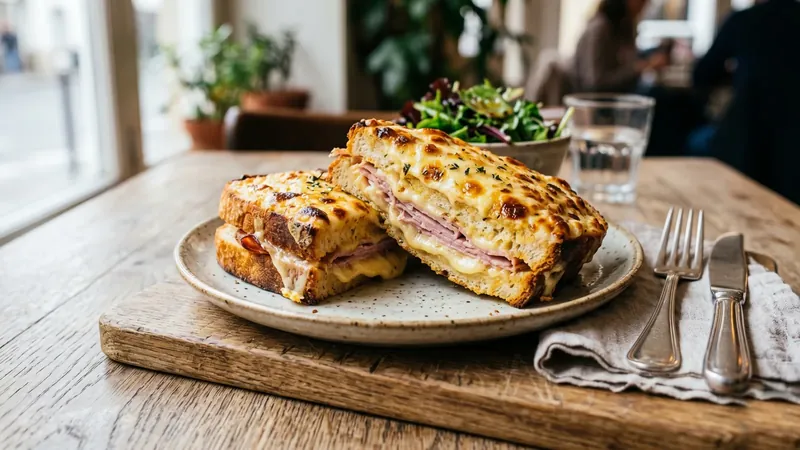
A croque monsieur is grilled cheese elevated to an art form: ham and Gruyere pressed between buttered bread, then blanketed in bechamel and grilled until bubbling and burnished. The twist is a generous spoonful of Dijon stirred through that white sauce, lending a quiet mustardy warmth that cuts the richness beautifully. It is unapologetically indulgent, the kind of thing French cafes have served as a lunchtime staple for generations. Best eaten hot, with a knife and fork.
Croque Monsieur with Dijon Bechamel
Ingredients
- 4 thick slices of good white bread
- 25g unsalted butter, plus extra for the bread
- 25g plain flour
- 250ml whole milk, warmed
- 1 tbsp Dijon mustard
- 100g Gruyere, grated
- A pinch of freshly grated nutmeg
- 4 slices of good cooked ham
- Salt and black pepper
Method
- Melt the butter in a small saucepan, stir in the flour and cook for 1-2 minutes to a smooth paste.
- Gradually whisk in the warm milk and cook, stirring, until thickened and smooth.
- Remove from the heat and stir in the Dijon mustard, half the Gruyere and the nutmeg. Season to taste.
- Lightly butter the bread on one side and lay two slices butter-side down on a baking tray.
- Spread a little of the bechamel over the upturned faces, then top each with two slices of ham and a scattering of Gruyere.
- Close the sandwiches with the remaining bread, butter-side up.
- Spoon the remaining bechamel generously over the top of each sandwich and scatter with the last of the Gruyere.
- Grill under a medium-high grill for 5-7 minutes until the top is bubbling and deep golden.
- Rest for a minute, then serve hot.
3 The Story
The croque monsieur is a fixture of French cafe and bistro culture, the kind of hot sandwich that has anchored lunch menus for well over a century. Its name comes from the French verb croquer, meaning to crunch or bite, paired with monsieur, and it speaks to the sandwich’s defining quality: a crisp, golden exterior giving way to molten cheese and ham within. By most accounts the dish first appeared in Parisian cafes in the early years of the twentieth century, where it offered a quick, hot and substantial bite for workers and passers-by.
A close cousin, the croque madame, adds a fried egg perched on top, said to resemble a lady’s hat and giving the variation its name. Beyond that, countless versions have emerged over the years, but the essential template endures: bread, ham, cheese, and crucially a sauce that lifts it above an ordinary toasted sandwich. That sauce is where this recipe takes its small liberty.
The classic croque monsieur is finished with a bechamel, the foundational French white sauce built from a roux of butter and flour loosened with milk. It is one of the so-called mother sauces of French cuisine, a base from which a whole family of other sauces is derived, and its job here is to add a creamy, savoury richness and to brown into a glorious bubbling crust under the grill. The twist is to whisk a spoonful of Dijon mustard into that bechamel. Dijon, the sharp, smooth mustard named for the city in Burgundy, brings a gentle heat and acidity that balances the richness of the cheese and butter, stopping the whole sandwich from feeling too heavy.
Gruyere is the traditional cheese of choice, prized for the way it melts into long, savoury strands and for its nutty depth. Using it both inside the sandwich and on top, blended into the bechamel, ensures cheese in every layer. The final flourish is the grill: spooning the sauce over the top before it goes under the heat is what gives the croque monsieur its signature lacquered, blistered surface. It is comfort food with a Gallic accent, simple in its parts yet far greater than their sum.
Related Content