Extra-Crispy Roast Potatoes with Rosemary Salt
Shatteringly crisp, fluffy within
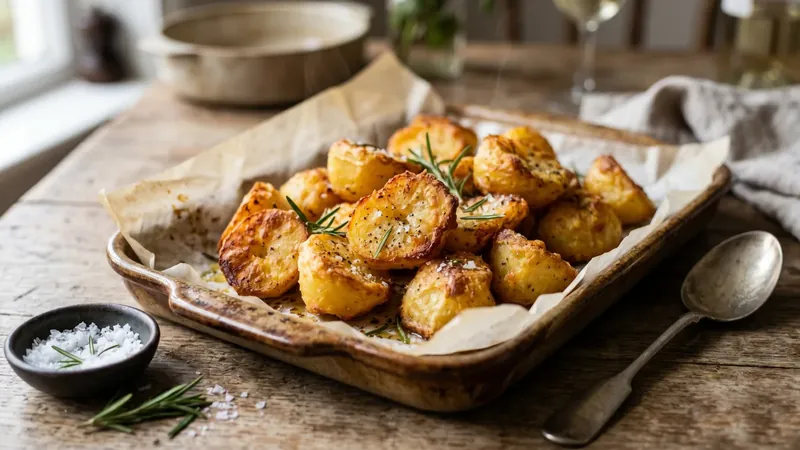
The secret to a truly crunchy roast potato is a rough, starchy exterior, and a tablespoon or two of semolina does the job better than flour ever could. Shaken over the parboiled potatoes, it forms a craggy crust that fries to a brittle, golden shell in screaming-hot fat, while the inside stays light and fluffy. A scattering of homemade rosemary salt at the end adds a fragrant, savoury finish. These are the roasties that vanish first from the table.
Extra-Crispy Roast Potatoes with Rosemary Salt
Ingredients
- 1.5kg Maris Piper potatoes
- 2 tbsp fine semolina
- 5 tbsp goose fat or sunflower oil
- 2 sprigs of rosemary
- 2 tbsp flaky sea salt
- 1 tbsp olive oil
Method
- Heat the oven to 200C fan. Peel the potatoes and cut into large, even chunks.
- Put the potatoes in a large pan of cold salted water, bring to the boil and simmer for 8-10 minutes until the edges are just turning soft.
- Meanwhile, put the goose fat or oil into a sturdy roasting tin and place it in the oven to heat until smoking hot.
- Drain the potatoes well, then return them to the dry pan and sprinkle over the semolina. Put the lid on and shake firmly to roughen up the edges and coat them in the floury starch.
- Carefully tip the potatoes into the hot fat, turning each one to coat, and spread them out so none are touching.
- Roast for 25 minutes without disturbing, then turn them over and roast for a further 20-25 minutes until deep golden and crisp all over.
- While they cook, strip the rosemary leaves and chop them finely. Warm them in the olive oil for a minute, then pound or mix with the sea salt to make rosemary salt.
- Lift the potatoes onto kitchen paper for a moment, then tip into a warm bowl and scatter generously with the rosemary salt before serving.
3 The Story
The roast potato occupies an almost sacred place at the British table, the non-negotiable centrepiece of the Sunday roast and the dish over which families happily argue. Its appeal is textural above all: the contrast between a crisp, shattering crust and a soft, steaming interior is what separates a great roast potato from a merely adequate one. Achieving that contrast reliably is the whole challenge, and generations of cooks have developed tricks to tilt the odds in their favour.
The most important is the parboil. Simmering the potatoes until their edges just begin to soften, then roughing them up, creates a layer of broken, fluffy starch on the outside of each piece. That ragged surface is what crisps so dramatically in the oven, offering far more area to brown than a smooth-cut potato ever could. Maris Piper, a floury maincrop variety bred in Britain in the mid-twentieth century, is ideal because its dry, fluffy flesh roughens easily and turns light inside; waxier potatoes resist the treatment and stay dense.
The semolina is this recipe’s twist, though it follows the same logic. Semolina is coarsely milled durum wheat, the same hard wheat used for pasta, and its slightly gritty texture clings to the damp parboiled potatoes and crisps into an even rougher, more brittle coating than the potato’s own starch alone. A little flour does something similar, but semolina gives a particularly sandy, crunchy shell. Shaking the potatoes in the pan with the lid on, rather than stirring, distributes it well while battering the edges into the right ragged state.
Fat and heat finish the job. The fat must be genuinely hot before the potatoes go in, so that the surface sears immediately rather than absorbing grease; goose fat gives a rich flavour, though a neutral oil with a high smoke point works perfectly well. Spacing the potatoes out matters too, since crowding traps steam and softens the crust. The rosemary salt is the final flourish, made by chopping the herb finely and working it through flaky sea salt with a little oil to release its aromatic resins. Scattered on at the very end, after the potatoes leave the oven, it perfumes each one without scorching, delivering that classic pairing of rosemary and potato in its freshest form.
Related Content