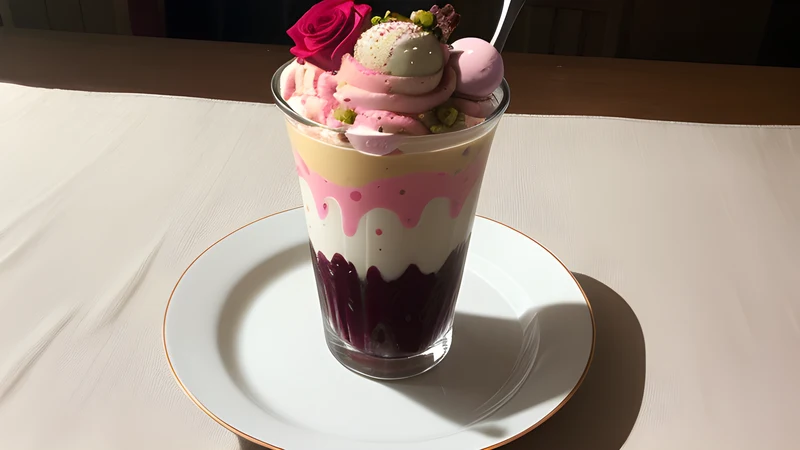
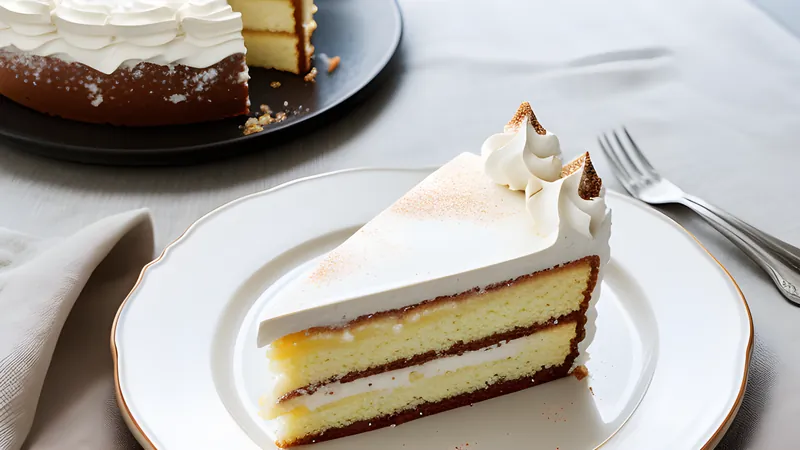
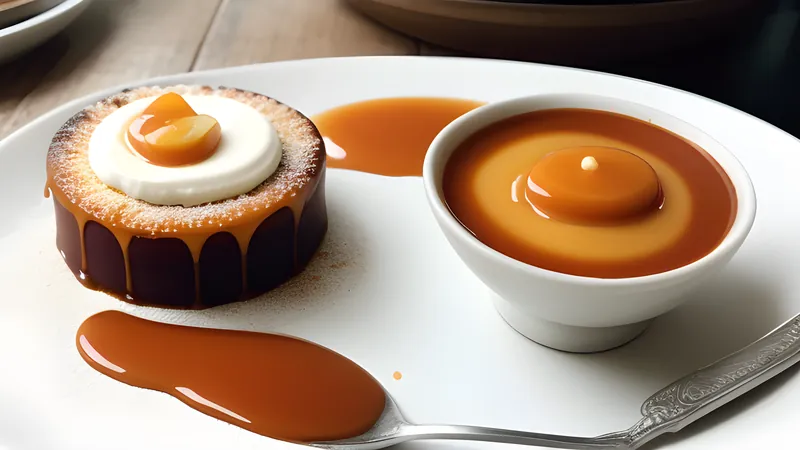
Crème Caramel (Flan) with a Dark Caramel
A trembling baked custard, a bay-scented cream, a bitter amber pool
Contents
↓ Jump to recipeCrème caramel is the dessert I trust to end almost any dinner. It costs pennies, it is made entirely from things already in the fridge, and it must be made the day before, which means the host gets to sit down. A good one trembles when you set the plate down and floods amber caramel across the plate as you lift the ramekin away. A bad one is rubbery, riddled with bubbles, and tastes of sweet scrambled egg. The whole distance between the two is temperature.
My twist is a pair of fresh bay leaves steeped in the warm cream. Bay in a pudding sounds strange until you try it; it gives the custard a gentle, resinous, almost vanilla-adjacent perfume that people notice without being able to name. Paired with a caramel taken darker than most recipes dare, right to the edge of bitter, it turns a nursery pudding into something quietly sophisticated.
Crème Caramel (Flan) with a Dark Caramel
Ingredients
- 200g caster sugar, for the caramel
- 60ml water, for the caramel
- 400ml whole milk
- 200ml double cream
- 2 fresh bay leaves
- 1 tsp vanilla bean paste
- 3 large eggs
- 2 large egg yolks
- 90g caster sugar, for the custard
- pinch of fine salt
Method
- For the caramel, heat 200g sugar with 60ml water in a pan over medium heat without stirring until it turns a deep amber, just short of smoking, about 6 to 8 minutes.
- Working quickly, divide the caramel between six ramekins, tilting each to coat the base. Set aside to set hard.
- Warm the milk, cream, bay leaves and vanilla until steaming, then remove from the heat and leave to infuse for 20 minutes. Discard the bay.
- Whisk the whole eggs, yolks, 90g sugar and salt just until combined, avoiding froth.
- Pour the warm infused milk over the eggs, whisking gently, then strain through a fine sieve into a jug.
- Divide the custard between the caramel-lined ramekins. Sit them in a deep roasting tin and pour in hot water to come halfway up the sides.
- Bake at 150C fan for 35 to 45 minutes, until just set with a faint wobble in the centre.
- Lift the ramekins from the water and cool, then chill for at least 4 hours or overnight.
- To serve, run a knife around each edge, invert onto a plate and lift the ramekin so the caramel floods out.
One dessert, many names
Depending on where you are standing, this is crème caramel, flan, or crème renversée. In France and Britain it is crème caramel; across Spain, Latin America and the Philippines it is flan, a word that in Spain confusingly also once meant a savoury tart. The Italians call a firmer version crème caramella and the Japanese adore purin, a bouncy custard beloved of convenience stores and grandmothers alike. All of them descend from the medieval European habit of baking eggs and milk together, a technique that spread with Roman cooking and never left.
What unites the family is the trick of the caramel poured into the mould first. As the custard bakes and then chills, the hard caramel slowly liquefies against the moisture of the custard, so that when you turn it out a day later you have a ready-made sauce. It is one of those bits of kitchen cleverness that feels almost like a magic trick the first time it works, and it costs you nothing but a little sugar.
The caramel, and being brave with it
Put the 200g of sugar and the water in a clean, heavy pan over a medium heat. Let the sugar dissolve, then stop stirring entirely; from here, agitation encourages crystallisation and a grainy caramel. Swirl the pan gently instead if the colour is going unevenly. It will bubble, then the bubbles will slow and the syrup will start to colour at the edges.
This is where most people lose their nerve. A pale golden caramel is sweet and one-dimensional. You want to take it further, to a deep russet amber that is just beginning to smell toasty and faintly bitter, right on the cusp of catching. Dark caramel carries a savoury, coffee-like depth that stands up to the sweet custard instead of disappearing into it. The window between perfect and burnt is only a few seconds, so have your ramekins lined up and your oven glove on, and the moment the colour is right, take it off the heat and pour.
Work fast, dividing the caramel between the ramekins and tilting each one to coat the base before it sets, which it does almost immediately. If the caramel in the pan seizes up before you finish, a few seconds back over the heat will loosen it. Do not be tempted to taste it or touch it: molten caramel is the hottest thing in a home kitchen and it sticks.
A custard that stays silky
Warm the milk and cream together with the bay leaves and vanilla until it just steams, then pull it off the heat and let it infuse for twenty minutes. This gentle steeping is where the bay does its work; boiling it hard would turn the perfume medicinal. Fish out and discard the leaves before you go on.
In a separate bowl, whisk the whole eggs, the extra yolks, the 90g of sugar and the salt together until just combined. The instruction here is to whisk gently, because froth is your enemy. Every bubble you beat in now becomes a little hole in the finished custard, spoiling that dense, silky set. Pour the warm infused milk over the eggs in a slow stream, stirring rather than whisking, then pass the whole lot through a fine sieve into a jug. Straining catches any stray cooked egg and the chalaza, and gives you a flawless texture.
Pour the custard into the caramel-lined ramekins. Let any surface bubbles rise and pop, or draw a cocktail stick across to burst them, before they bake in.
Why the water bath matters
Sit the ramekins in a deep roasting tin and pour hot water around them until it reaches halfway up their sides. This bain-marie is not optional. Egg custard sets at around 80C and curdles not far above; the surrounding water buffers the heat so the custards cook gently and evenly, never exceeding the temperature of the water around them. Bake straight on a hot oven shelf and the edges will scramble long before the middle sets.
Bake at a low 150C fan for thirty-five to forty-five minutes. You are looking for a custard that is set at the edges but still has a distinct wobble in the very centre, like a jelly, when you nudge the tin. It will firm up further as it cools and chills, so a custard baked until completely solid is already overdone. Lift the ramekins out of the water straight away, cool them, then chill for at least four hours and ideally overnight, which gives the caramel time to melt into its sauce.
Turning out, and troubleshooting
To serve, run a small knife carefully around the edge of each custard. Place a plate on top, invert the whole thing in one confident movement, and lift the ramekin. The custard should slide free with the dark caramel pooling around it. If it clings, a brief dip of the ramekin base in hot water for ten seconds loosens the caramel.
If your finished custard is full of little holes, it either had bubbles beaten in or was baked too hot; go gentler on both. If it is rubbery and dense, it overcooked, so pull it while it still wobbles next time. And if the caramel stayed set and refused to make a sauce, the custards did not chill long enough for it to dissolve, so give them the full overnight rest.
Once you are comfortable with a baked custard and the bain-marie, a good deal of the dessert world opens up. The same care with eggs and gentle heat sits behind the custard in a proper millefeuille with vanilla crème pâtissière, and if you enjoy the contrast of crisp and creamy, the filled shells of profiteroles with warm chocolate sauce are a natural next project. Make this the night before, forget about it, and let the caramel do the showing off.
Make ahead and variations
This is a dessert that positively demands to be made in advance, which is half its charm at a dinner party. It keeps happily in the fridge, covered, for up to three days, the caramel deepening into an ever more generous sauce the longer it sits. Turn them out only at the last minute, as the custards look their best the moment they are unmoulded and the caramel is still glossy.
The bay is the twist I keep coming back to, but the infused-cream idea is endlessly adaptable. A wide strip of orange or lemon zest steeped alongside the bay gives a citrus lift that suits a summer table; a split cardamom pod or a short cinnamon stick nudges it towards something warmer and more autumnal. For a Spanish flan, use half milk and half evaporated milk for a firmer, sweeter, more caramel-forward set. And if you want to make one large custard rather than six small ones, use a single dish, extend the baking time to around an hour, and check for that same faint central wobble before you trust it. However you flavour it, keep the caramel dark and the oven low, and it will reward you every time.
Related Content