Crema Catalana with a Torched Sugar Crust
Spain's stovetop custard, scented with cardamom under a glass shatter of sugar
Contents
↓ Jump to recipeEvery year on 19 March, in Catalonia and across much of Spain, families sit down to a lunch for the feast of Sant Josep, and at the end of it somebody cracks the sugar on a crema catalana. It is the traditional dessert of the day, so bound to it that the pudding is often called crema de Sant Josep, and that link to a spring saint’s day is one of the reasons Catalans get quietly irritated when the rest of the world assumes their custard is a knock-off of the French crème brûlée. If anything the timeline runs the other way. A recognisable crema catalana appears in Catalan cookbooks as far back as the medieval period — versions turn up in fourteenth-century manuscripts — centuries before the earliest printed French brûlée in the 1690s. Whether either truly copied the other is unprovable, but the Catalan claim to seniority is a good deal stronger than most people assume.
The two puddings are cousins, and the differences are the interesting part. Crème brûlée is a baked custard, set in the oven in a water bath, thickened by eggs alone and enriched with cream. Crema catalana is a stovetop custard, thickened partly with cornflour, made with milk rather than cream, and flavoured with citrus zest and cinnamon rather than vanilla. The result is lighter, looser, more fragrant and far quicker, because there is no oven, no water bath, and no anxious wait to see whether the middle has set. For a home cook without ramekins and a roasting tin, this is the friendlier of the two by a distance, and I would argue the more interesting to eat. There is a homeliness to it that the restaurant polish of brûlée has partly lost: this was a pudding cooked in ordinary Catalan kitchens on saints’ days and Sundays, thickened with whatever the household had, and it still tastes like that — generous, fragrant and unfussy.
Crema Catalana with a Torched Sugar Crust
Ingredients
- 500ml whole milk
- 1 cinnamon stick
- 1 strip lemon zest, pared with a peeler
- 1 strip orange zest, pared with a peeler
- 4 green cardamom pods, lightly crushed
- 5 large egg yolks
- 100g caster sugar, plus 4 tbsp for the crust
- 25g cornflour
Method
- Pour the milk into a pan with the cinnamon, lemon and orange zest and crushed cardamom. Bring just to a simmer, then take off the heat and leave to infuse for 15 minutes.
- Whisk the egg yolks, 100g caster sugar and cornflour in a bowl until smooth and pale.
- Strain the warm infused milk into the yolks, whisking constantly, then return everything to the pan.
- Cook over a medium-low heat, stirring without stopping, until the custard thickens enough to coat the back of a spoon and hold a line, about 5 minutes. Do not let it boil hard.
- Divide between 4 shallow dishes, press cling film onto the surface, and chill for at least 3 hours until set.
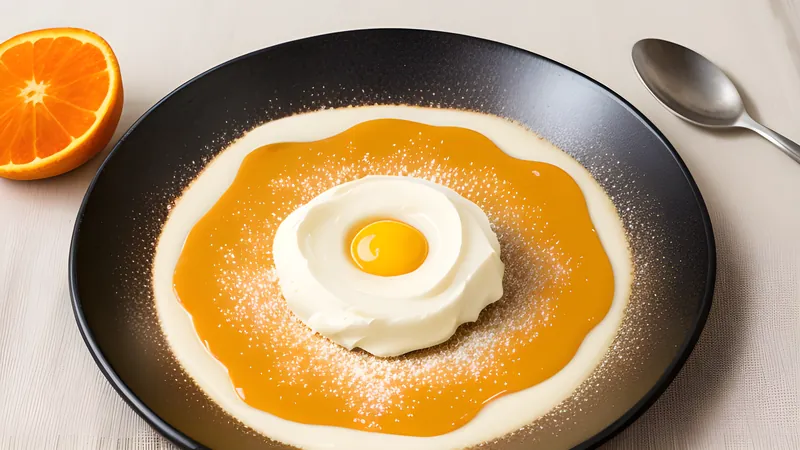
- Just before serving, sprinkle a tablespoon of caster sugar evenly over each and torch until amber and bubbling, or blast under a very hot grill.
- Wait 2 minutes for the crust to set hard, then serve.
Cornflour is the safety net, and the character
The cornflour does two jobs. The obvious one is insurance. A pure egg custard cooked on direct heat is a nervous business — a few degrees too far and the proteins seize into sweet scrambled egg — but cornflour raises the temperature at which the eggs curdle and gives you a wide, forgiving window. You can bring a cornflour-thickened custard almost to a simmer without it splitting, which is exactly why this recipe survived as everyday home cooking for centuries. The less obvious job is texture. Cornflour gives crema catalana its particular set: soft and spoonable, holding its shape but never rubbery, quite unlike the wobble of a set brûlée. It is thickened at 500ml of milk with 25g of cornflour and five yolks, and that ratio is worth trusting. The same patient, gentle approach to a stirred custard rewards you in a proper trifle with sherry custard and raspberry, where a split custard would ruin the whole assembly.
The cardamom, which is the twist
Tradition says lemon zest and cinnamon, and I would never leave either out — they are the smell of the dish. But I crush four green cardamom pods into the milk alongside them, and it does something quietly transformative. Cardamom is faintly citrusy and floral with a resinous, almost eucalyptus edge, and it sits behind the lemon and cinnamon like a note you can’t quite name, warming the whole custard and making people ask what’s in it. The trick is to infuse and strain, so you get the perfume without ever biting into a pod. Use green cardamom, not the smoky black kind, and crush the pods just enough to split them and free the seeds. If cardamom appeals, it is the same warm-spice logic behind cardamom kulfi with pistachio, where it carries a frozen milk pudding just as well, and it plays happily alongside the citrus without ever shouting over it.
The crust, and the tool that makes it
The lid of caramelised sugar is the theatre of the thing — that first tap of the spoon through a sheet of glassy amber into the cool custard beneath. Traditionally it was cracked with a hierro, a round iron disc heated over the flame until glowing and pressed onto the sugar to scorch it. Almost nobody has one now, and a small kitchen blowtorch does the job better and with far more control. Sprinkle a thin, even tablespoon of caster sugar over each cold custard — the custard must be properly chilled and set, because a warm one melts under the flame and the crust sinks — and play the torch across the surface until the sugar melts, bubbles and turns deep amber. Keep the flame moving so no patch burns black and bitter. If you have no torch, a grill turned as hot as it goes will work, set the dishes near the element and watch them like a hawk, though you sacrifice a little of the crisp precision.
Method, step by step
Pour 500ml of whole milk into a pan and add a cinnamon stick, a pared strip each of lemon and orange zest, and four lightly crushed green cardamom pods. Use a peeler for the zest so you take the fragrant coloured skin and leave the bitter white pith behind. Bring the milk just to a simmer, then pull it off the heat, cover, and let it sit for 15 minutes so the aromatics steep. This infusion is where the flavour is made, so don’t rush it.
Meanwhile, whisk five egg yolks with 100g of caster sugar and 25g of cornflour in a bowl until smooth, pale and slightly thickened. Strain the warm milk into the yolks in a steady stream, whisking all the while so the eggs temper gently rather than cook on contact, then tip the whole lot back into the pan. Set it over a medium-low heat and stir constantly, reaching into the corners of the pan, until the custard thickens noticeably and coats the back of a spoon so a drawn finger leaves a clear line — about five minutes. Let it bubble gently for a few seconds to cook out the cornflour’s rawness, but never let it boil hard.
Divide the custard between four shallow dishes; shallow is better than deep here, because you want a high ratio of crust to custard. Press cling film directly onto the surface of each to stop a skin forming, and chill for at least three hours, or overnight. When you’re ready to serve, sprinkle a tablespoon of caster sugar evenly over each and torch until amber, then wait a couple of minutes for the crust to set to a hard sheet before serving.
Getting ahead, and what to watch
This is a genuinely good make-ahead pudding. The custards can be made, covered and chilled up to two days before you need them, which makes crema catalana a gift when you’re cooking for people. The one rule is to caramelise the sugar at the last minute — within half an hour of serving at the outside — because a torched crust is a fleeting thing that slowly draws moisture from the custard and softens back to a syrup. A crust made too early goes tacky and loses its shatter, which is the whole joy.
If your custard does catch and turn grainy, all is not lost: pass it through a sieve while still warm, or give it a quick blitz with a stick blender, and it will come back smooth enough to save. Keep the heat gentle and your spoon moving and it shouldn’t come to that. As for the sugar, caster gives the cleanest, most even crust; granulated works but caramelises less uniformly, and demerara brings a molasses note some people love. For a version closer to its French cousin, stir a splash of double cream into the milk and you edge toward the richness of a set brûlée — though by then you’ve half-abandoned what makes the Catalan original quicker, lighter and, to my mind, more worth making on a Tuesday.
Related Content