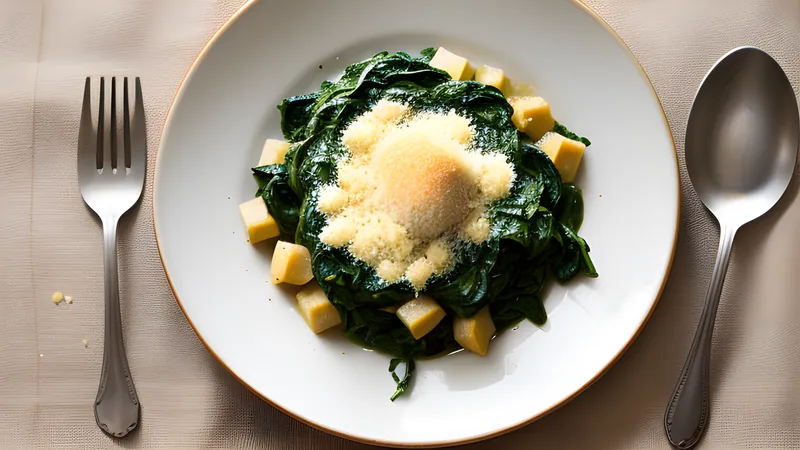
Creamed Spinach with Nutmeg and Parmesan
Silky, savoury greens with a whisper of brown butter
Contents
↓ Jump to recipeCreamed spinach is the quiet triumph of the steakhouse side order, the dish that turns a leafy green almost nobody gets excited about into something rich, savoury and faintly luxurious that people fight over the last spoonful of. Done badly, it is a watery, grey-green sludge; done well, it is silky and glossy, the spinach suspended in a nutmeg-scented cream sauce with a savoury edge of Parmesan and, in this version, a nutty spoonful of brown butter stirred through at the end. It takes about half an hour and turns a bag of spinach into the best thing next to a steak.
An American steakhouse classic with German roots
Creamed spinach is most closely associated with the American steakhouse, where it has been a fixture of the menu since the grand chophouses of the late nineteenth and early twentieth centuries. Alongside a wedge of iceberg and a mountain of hash browns, a dish of creamed spinach was, and remains, one of the defining sides of the genre, its richness a deliberate counterpoint to a plate of char-grilled beef. The tradition runs deep enough that some of the oldest steakhouses in New York still serve a version barely changed in a century.
Its roots, though, reach back to the creamed vegetables of central European cooking, brought to America by German immigrants in the nineteenth century. German Rahmspinat, spinach cooked down and bound in a creamy white sauce, is the direct ancestor, and the technique of enriching a vegetable with a béchamel is a cornerstone of that culinary tradition. The nutmeg that so defines the dish is a German fingerprint too, the spice appearing again and again in the region’s creamed and dairy-based dishes. What the American steakhouse added was scale and confidence: more cream, more richness, and a place of honour on the plate. The dish that results sits in the same comforting family as a good gratin dauphinois, where a vegetable is transformed by patient cooking in dairy.
Creamed Spinach with Nutmeg and Parmesan
Ingredients
- 800g fresh spinach, or 500g frozen leaf spinach, thawed
- 40g butter
- 1 small onion, finely chopped
- 2 garlic cloves, finely chopped
- 25g plain flour
- 300ml whole milk
- 100ml double cream
- 40g Parmesan, finely grated
- A generous grating of nutmeg
- Salt and black pepper
- 15g butter, for browning
- Squeeze of lemon (optional)
Method
- If using fresh spinach, wilt it in batches in a dry hot pan or with a splash of water until collapsed, then tip into a colander and cool slightly. Squeeze the wilted or thawed spinach very firmly, in handfuls, to remove as much water as possible, then chop roughly.
- Melt the 40g butter in a wide pan over a medium-low heat. Add the onion with a pinch of salt and cook gently for 6 to 8 minutes until soft, then add the garlic and cook for another minute until fragrant.
- Stir in the flour and cook for 2 minutes to form a pale roux, stirring constantly.
- Add the milk gradually, whisking smooth after each addition, then stir in the cream. Simmer for 3 to 4 minutes until thick and glossy.
- Stir in the chopped spinach and warm through for 2 to 3 minutes. Off the heat, stir in the Parmesan and a generous grating of nutmeg, and season well with salt and black pepper.
- In a small pan, melt the 15g butter over a medium heat until it foams, smells nutty and turns golden brown, about 2 minutes, then stir it through the spinach.
- Taste, adjust the seasoning, add a squeeze of lemon if you like, and serve at once.
Squeeze the spinach like you mean it
If there is one step that decides whether your creamed spinach is glossy or watery, this is it. Spinach is mostly water, and it holds on to a startling amount of it even after wilting. Any liquid left in the leaves will leach into the sauce as the dish sits, thinning your carefully made cream into a pale, weepy puddle at the bottom of the dish. The fix is simple and slightly brutal: once the spinach is wilted or thawed and cool enough to handle, take it in fistfuls and squeeze as hard as you physically can over the sink. You will be amazed how much water comes out, and the difference in the finished dish is total.
Frozen leaf spinach is genuinely excellent here and worth defending. It is picked and frozen at its peak, it is already cooked down so there is no bulk to wilt, and once squeezed dry it gives a consistent, concentrated result for a fraction of the price of fresh. Whether you use fresh or frozen, chop the squeezed spinach roughly so it distributes evenly through the sauce rather than clumping into ropey tangles. The same squeeze-it-dry discipline is what saves a bubble and squeak from going soggy, and it is one of those small habits that quietly improves half the vegetable cooking you do.
The small clever twist: brown butter at the end
The Parmesan and nutmeg are traditional, and they do a great deal: the Parmesan adds a savoury, salty depth that stops the dish tasting merely of cream, and the nutmeg lends that warm, aromatic note that makes creamed spinach taste distinctly of itself. My one addition is a spoonful of brown butter stirred through right at the end, and it lifts the whole thing.
Browning a little butter until its milk solids toast to deep gold gives it a nutty, toffee-edged aroma, the result of the same Maillard browning that flavours toast and roast meat. Stirred into the finished spinach, it adds a layer of savoury, roasted depth underneath the cream that makes the dish taste richer and more considered, echoing and amplifying the nuttiness of the Parmesan. It is a thirty-second job with an outsized payoff, and once you start finishing greens this way it is hard to stop. Watch the butter carefully, because the line between brown and burnt is only a few seconds, and tip it out of the hot pan the moment it smells nutty and looks golden.
Getting the consistency right
The ideal creamed spinach is thick enough to hold its shape on the spoon while still tasting light and fresh rather than gluey and heavy. The béchamel base gives you control over this: cook the roux properly for a couple of minutes so the flour loses its raw taste, and add the milk gradually with a whisk to keep it lump-free. If the finished dish feels too thick, loosen it with a splash of milk; if it is too loose, let it simmer a minute longer to reduce, or you have probably not squeezed the spinach dry enough. Adding the Parmesan off the heat keeps it from turning stringy, and a final grating of nutmeg just before serving keeps its aroma bright, since it fades with cooking. Season assertively, because spinach and cream both need a confident hand with the salt and pepper to taste of anything at all.
Serving, make-ahead and variations
Creamed spinach is the classic partner to a good steak, where its richness stands up to charred beef and its greenness cuts the fat, but it is far more versatile than that role suggests. It is lovely under a roast chicken, alongside grilled or roasted white fish, or spooned beneath a poached or fried egg for a rich vegetarian supper with good bread. It also makes a fine base for baked eggs: press hollows into a dish of it, crack in eggs and bake until the whites are just set.
It reheats well, gently, in a pan over a low heat with a splash of milk to loosen it, which makes it a genuinely useful make-ahead side for a dinner where oven space is tight. Prepare it up to two days ahead and keep it covered in the fridge, holding back the brown butter to stir in fresh when you reheat, so its aroma stays lively. For variations, a handful of grated Gruyère in place of some of the Parmesan gives a nuttier, more Alpine flavour; a pinch of cayenne or a rasp of horseradish adds a gentle warmth that suits it well; and a spoon of crème fraîche stirred in at the end brings a welcome tang against all that richness. However you serve it, this is the dish that finally makes spinach the thing people ask for seconds of, and pairs beautifully with a plate of charred hispi cabbage with anchovy butter for a table of properly good greens.
Related Content