Cranberry Sauce with Port and Orange
The Christmas classic given depth with ruby port and orange, cooked just enough to keep the fruit bright
Contents
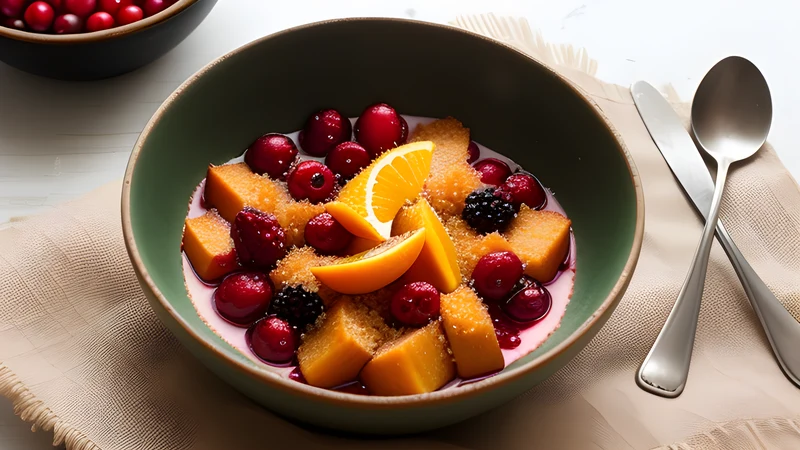
↓ Jump to recipeCranberry sauce is the one condiment on the Christmas table with a genuine job to do. Turkey is a lean, mild bird, the gravy is savoury, the stuffing is rich, and into all that comes a spoonful of something sharp, fruity and jewel-bright that cuts through the whole plate and wakes it up. Made from a bag of fresh cranberries in about fifteen minutes, it embarrasses the wobbling cylinder of jellied sauce that slides out of a tin, and it is one of the easiest things you can make ahead. This version deepens the classic with a good glug of ruby port and plenty of orange, and — the small twist that matters — cooks the berries only just enough, so they keep their tartness and their bite instead of collapsing into a uniform jam.
Cranberry Sauce with Port and Orange
Ingredients
- 300g fresh or frozen cranberries
- 120g caster sugar, plus more to taste
- 1 large orange, zest and juice (about 80ml juice)
- 80ml ruby port
- 1 cinnamon stick
- 2 whole cloves
- 1 small strip of orange peel
- Pinch of fine salt
Method
- Put the sugar, orange juice, half the orange zest, the cinnamon stick, cloves, orange peel strip and a pinch of salt into a medium saucepan. Warm over low heat, stirring, until the sugar has fully dissolved.
- Add the cranberries and bring to a gentle simmer. Cook for 8 to 10 minutes, stirring occasionally, until most of the berries have popped and burst but some still hold their shape.
- Pour in the port and simmer for a further 3 to 4 minutes, until the sauce is glossy and lightly thickened and the raw alcohol has cooked off. It will still look loose — it sets as it cools.
- Take off the heat, fish out the cinnamon stick, cloves and peel strip, and stir in the remaining orange zest for a fresh, fragrant lift.
- Taste while warm. Cranberries vary in tartness — add a little more sugar, a teaspoon at a time, if it makes you wince, but keep it on the sharp side to cut through rich food.
- Cool to room temperature, then transfer to a jar or bowl. Chill for at least a few hours; it thickens to a soft, spoonable set.
Where cranberry sauce comes from
The cranberry is a North American native, a small, hard, intensely sour berry that grows on low trailing vines in boggy ground, and the sauce is bound up with the story of the American Thanksgiving. Whether it was on the table at the first Plymouth harvest feast in 1621 is doubtful — sugar was scarce and expensive — but the pairing of wild cranberries with roast fowl was established in New England cookery by the eighteenth century, and by the 1800s cranberry sauce was a fixture. The commercial jellied version, set firm enough to hold the ridges of the can, was developed in the early twentieth century and became an American icon in its own right, tin-shape and all.
In Britain the sauce arrived properly in the twentieth century and attached itself to the Christmas turkey, where it now sits as immovably as the bread sauce and the pigs in blankets. British cooks tend to make it looser and chunkier than the American jelly, and the addition of port is a very British flourish — the fortified wine that also turns up in the Seville orange marmalade tradition and on the cheeseboard beside the quince membrillo. Cranberries are unusually high in natural pectin, the setting agent, which is why the sauce thickens to a soft set with no help beyond its own cooking, and why it has always been the fruit of choice for a quick, reliable sauce.
Why you should not overcook it
The commonest mistake with cranberry sauce is to cook it until every berry has burst and the whole pan has turned to a smooth, dark purée. Do that and you lose two things: the fresh, mouth-puckering tartness that is the entire point of the sauce, and the texture. Cranberries are dramatic in the pan — they pop audibly as the skins split and the pectin floods out — and it is tempting to keep going until it looks like jam. Pull it off the heat while a good third of the berries are still whole or only half-collapsed, and you get a sauce with body: some smooth, some in soft bursting pieces, sharp and lively rather than sweet and dull. It is the same principle that keeps a compote interesting.
The other reason to keep the cooking short is colour. Overcooked cranberries turn a muddy brownish-red; a briefly cooked batch stays a vivid, translucent ruby that looks like Christmas on the plate. As soon as the sauce is glossy and the berries have mostly popped, it is done.
Building the flavour
The port and orange do the real work here. Ruby port brings a warm, grapey sweetness and a little tannic grip that stands up to the sourness of the fruit, and cooking it for a few minutes at the end burns off the raw alcohol while keeping the flavour. The orange — both juice in the pan and fresh zest stirred in at the end — brings a fragrant citrus lift that flatters the cranberry and echoes the traditional pairing of the two fruits. Stirring half the zest in raw, right at the finish, keeps its aromatic oils bright; if you cook all of it, the perfume cooks away.
The cinnamon stick and cloves add a gentle warmth appropriate to the season, and the pinch of salt is the quiet hero: it sharpens the fruit and stops the sugar from tasting flat. Fish out the whole spices before serving so nobody bites into a clove, which is a small, sharp misery.
Fresh, frozen and getting the sweetness right
Fresh cranberries appear in the shops from about November and freeze beautifully, so buy a couple of extra bags in season and keep them in the freezer for the rest of the year. Frozen berries go straight into the pan with no need to thaw; they may take a minute or two longer to pop. Cranberries vary a good deal in how sour they are, so treat the sugar as a starting point and taste as you go. The sauce wants to stay firmly on the tart side — it is there to cut richness, so if you sweeten it up to the level of jam it stops doing its job. Add sugar a teaspoon at a time until it is bracing but no longer painful.
Getting the set right
Cranberries carry more natural pectin than almost any other fruit, which is why this sauce needs no jam sugar and no long boil to thicken. The pectin is released as the skins burst, and it sets the sauce as it cools, so a batch that looks alarmingly loose in the warm pan will firm to a soft, spoonable jelly in the fridge. Resist the urge to keep simmering to thicken it — that only overcooks the fruit and dulls the colour. If, once cold, your sauce is looser than you like (the exact set varies with how ripe the berries were), simply return it to the pan and reduce for a couple of minutes, then chill again. If it has set too stiff, a spoon of orange juice stirred through loosens it back to a soft drop. The same forgiving, self-setting quality makes cranberries the fruit of choice for a cook in a hurry, and it is worth understanding so you can trust the pan and take it off the heat at the right moment.
Make-ahead and storage
This is the great virtue of homemade cranberry sauce: it wants to be made ahead. It keeps happily in the fridge for up to two weeks in a sealed jar, and the flavours round out and deepen over the first few days as the port and spice settle into the fruit. Making it three or four days before Christmas takes one job off the cook’s hands on the day and leaves the sauce better than it was fresh. It also freezes well for up to three months, so a double batch in November sees you through the season. Serve it cold or at room temperature, never hot.
Its uses run well past the turkey. A spoonful transforms a cold-cuts sandwich the day after — turkey and stuffing and cranberry between two slices of bread is one of the finest things about Christmas. It is very good with a wedge of sharp cheddar or a slice of baked brie, alongside a caramelised onion marmalade on the same board, and it lifts a plate of sausages or a pork pie. Warm the leftovers gently with a splash more port and it becomes a glaze for ham or duck. A little jar of it, ribbon round the lid, is also a thoroughly welcome thing to hand over at a Christmas visit.
Variations
For a spiced, mulled character, add a star anise and a few crushed cardamom pods with the cinnamon. For extra texture and a festive note, stir a handful of coarsely chopped toasted pecans or walnuts through the cooled sauce just before serving. If you would rather keep it alcohol-free, replace the port with the same quantity of pomegranate juice or extra orange juice and a splash of balsamic for depth — the sauce loses the fortified warmth but keeps its brightness. And for a grown-up, sharper edge, add the finely grated zest of a clementine and a squeeze of lemon at the end.
Related Content