Crab Cakes with Old Bay and Remoulade
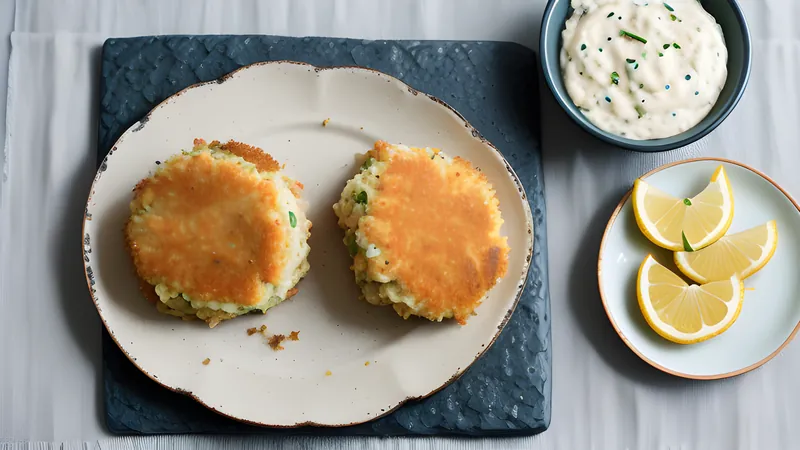
Mostly crab, barely bound, fried until the edges catch
Contents
↓ Jump to recipeThe best crab cake I ever ate was on a paper plate on a wooden dock, and it was almost entirely crab. That is the whole secret, and it is a secret only because so many restaurants ignore it. A crab cake should be an excuse to eat a great pile of sweet crab meat that happens to have been shaped and fried, with just enough binder to stop it collapsing and not one crumb more.
Get that ratio right and the rest is easy. Get it wrong, pad the mix out with fistfuls of breadcrumb and mashed potato until it goes stiff and beige, and you have made an expensive fishcake with delusions. We are not doing that.
Crab Cakes with Old Bay and Remoulade
Ingredients
- 450g fresh white crab meat (ideally lump), picked over
- 1 large egg
- 3 tbsp mayonnaise
- 1 tbsp Dijon mustard
- 1 tsp Worcestershire sauce
- 1.5 tsp Old Bay seasoning
- 1 tsp finely grated lemon zest
- 1 tbsp finely chopped chives
- 1 tbsp chopped flat-leaf parsley
- Juice of 1/2 lemon
- 25g fresh white breadcrumbs, plus a little extra if needed
- 3 tbsp neutral oil, for frying
- 20g butter
- For the remoulade: 6 tbsp mayonnaise, 1 tbsp Dijon, 1 tbsp chopped capers, 1 tbsp chopped gherkin, 1 chopped spring onion, 1 tsp smoked paprika, squeeze of lemon
Method
- Make the remoulade: stir together the mayonnaise, Dijon, capers, gherkin, spring onion, smoked paprika and a squeeze of lemon. Chill.
- In a bowl, whisk the egg, mayonnaise, Dijon, Worcestershire, Old Bay, lemon zest, herbs and lemon juice until smooth.
- Gently fold in the crab meat and breadcrumbs, keeping the lumps as intact as possible. The mix should just hold; add a little more breadcrumb only if it is truly wet.
- Divide into 4 and shape into fat, loose patties about 3cm thick. Chill for at least 30 minutes to firm up.
- Heat the oil and butter in a non-stick frying pan over medium heat until foaming.
- Fry the cakes for 3-4 minutes each side, turning once, until deep golden and crisp, basting the tops with the pan butter.
- Rest for a minute on kitchen paper, then serve with the remoulade and lemon wedges.
A Chesapeake dish with a temper
The crab cake as we know it belongs to Maryland and the Chesapeake Bay, the great estuary that pushes up the eastern side of the United States and, for a long time, produced blue crabs in almost unimaginable numbers. The blue crab, Callinectes sapidus, gave its Latin name a nudge from the man who classified it: sapidus means savoury, or tasty, and whoever chose it clearly had eaten one.
Marylanders take crab seriously enough to argue about it. The genuine article, sometimes called a Maryland-style or lump crab cake, uses very little filler and no fussy vegetables cluttering the mix, because the point is the crab. Restaurants advertise “jumbo lump” cakes to signal that they have not skimped, using the largest, whitest muscles from the back of the crab. Some old Baltimore recipes bind with nothing more than a cracker crumb and a spoon of mayonnaise, then broil rather than fry; the frying tradition comes down the coast from the Carolinas and the Gulf.
Down in Louisiana, cooks lean towards a spicier, more Creole style with a remoulade alongside, and it is that remoulade I have borrowed here, because a cool, tangy sauce is the ideal foil to the hot, sweet cake. The word remoulade is French, and the sauce began life as a herby, anchovy-spiked mayonnaise in France before the cooks of New Orleans reinvented it with mustard, paprika and pickle into the ruddier, punchier thing served with fried seafood across the American South.
Then there is Old Bay, the ochre-coloured seasoning invented in Baltimore in the 1940s by a German immigrant named Gustav Brunn. It is a blend built around celery salt, paprika and a warm rumble of spice, and along the Chesapeake it is shaken over crabs, prawns, chips and sweetcorn with abandon. A cake without it can be lovely; a cake with it tastes unmistakably of that particular stretch of American coast.
Buy the best crab you can
This recipe lives or dies at the fishmonger. Fresh white crab meat, picked over for shell, is what you want, and lump meat, the large flakes from the body, gives the finest texture. Brown meat is delicious but far too rich and soft for cakes; save it for potted crab or a pasta sauce. Frozen picked white crab, fully defrosted and squeezed of excess water, is a perfectly good fallback in winter.
Whatever you buy, pick through it with your fingers on a pale plate before you start. Even the best-handled crab hides the occasional splinter of shell or fragment of cartilage, and one crunch at the table undoes all your care. Take two minutes over this.
Do not, whatever you do, buy the cheap “crab sticks” of surimi. They are pollock and flavouring, and they belong to a different, sadder dish.
The mix, and the discipline of restraint
Everything except the crab and breadcrumbs goes into a bowl first: egg, mayonnaise, Dijon, Worcestershire, Old Bay, lemon and a shower of chopped chives and parsley. Whisk that into a smooth, seasoned custard. Only then do you add the crab and the breadcrumbs, folding with a light hand so the beautiful lumps stay whole. Overwork the mix and you shred the crab into stringy fluff, losing the meaty texture you paid for.
How much breadcrumb? As little as possible. Twenty-five grams for 450g of crab is my starting point, and often it is enough. The mix should look barely held together and feel slightly precarious, holding its shape when you cup it in your palm but threatening to relax if you poke it. If it is genuinely soupy, add a spoonful more breadcrumb, but resist the urge to keep going until it feels “safe”. A safe-feeling mix makes a stodgy cake.
Shape into four fat, loose patties about three centimetres thick, then, and this step is not optional, chill them for at least half an hour. Cold cakes hold together in the pan; warm ones fall apart the moment you try to turn them. This is the single most useful thing I can tell you, and it is the step everyone skips when they are hungry.
Frying for a proper crust
I fry rather than bake, because a crab cake wants a deep, craggy, golden crust against its soft interior, and only a pan gives you that. Use a non-stick frying pan, a mixture of neutral oil and butter, and medium heat; the oil carries the heat, the butter carries the flavour and browning. Too hot and the outside scorches before the middle warms through, which with pre-cooked crab is a real risk. Too cool and the cake sits and steams and never crisps.
Give each side three to four minutes, turning only once, and spoon the foaming butter over the tops as they cook. Resist the temptation to press down with the spatula or nudge them about; every prod is a chance for them to break. When you lift them, the crust should be the colour of an old penny. Rest them for a minute on kitchen paper, then serve at once, hot, with the chilled remoulade and a wedge of lemon.
The remoulade
The sauce takes two minutes and lifts the whole plate. Mine is a quick Creole-leaning version: mayonnaise loosened with Dijon, sharpened with chopped capers and gherkin, freshened with spring onion, and warmed with a little smoked paprika and lemon. Make it first so the flavours settle while the cakes chill. It keeps in the fridge for three days and is excellent on a fish finger sandwich, which is where the leftovers usually go in my house.
Tips, swaps and make-ahead
- My clever twist. A teaspoon of finely grated lemon zest folded into the crab, alongside the juice, brightens everything and stops the richness turning heavy. It is subtle and worth it.
- Gluten-free. Swap the breadcrumbs for the same weight of crushed plain rice crackers or gluten-free crumbs; the binding behaves the same way.
- Get ahead. Shape the cakes up to a day in advance and keep them covered in the fridge. They fry straight from cold.
- Freezing. Uncooked, chilled cakes freeze well on a tray, then bagged. Fry from frozen over slightly lower heat, adding a couple of minutes a side.
- Serving. A sharp, undressed leaf salad and good chips is all they need. For a starter, make eight small cakes instead of four large. A cold beer or a glass of dry riesling does more for them than anything fancier.
Crab cakes belong to the same happy category of quick, buttery seafood suppers as garlic-butter prawns with sourdough, and if you like the smoky, spiced edge that Old Bay brings you will feel right at home with Cajun blackened salmon. For a Chinese cousin in the crisp-fried, dip-it-in-something-tangy tradition, try sesame prawn toast.
Make these once and you will stop ordering the padded, bready versions forever. Almost all crab, barely bound, fried until the edges catch: that is the whole idea, and it is more than enough.
Related Content