Cornbread with Brown Butter and Honey
Skillet-baked, barely sweet Southern-style cornbread, brushed hot with a brown-butter honey glaze
Contents
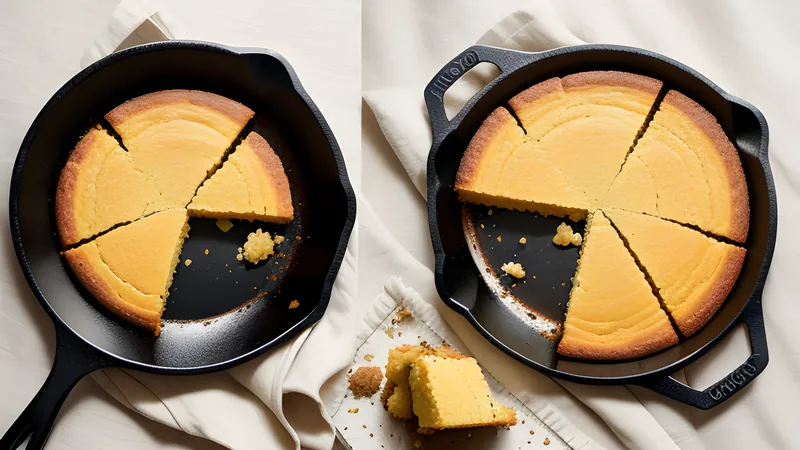
↓ Jump to recipeSouthern cornbread and the sweet, cakey squares sold under the same name further north are, in practice, two different foods that happen to share a batter list. This version sits firmly on the Southern side of that divide: barely sweetened, dense with real corn flavour, baked in a screaming-hot cast iron skillet so the crust comes out deep brown and faintly crisp, and finished with a brush of honey stirred into brown butter rather than folded, sugary, into the batter itself. It is the difference between cornbread that tastes like corn and cornbread that tastes like cake with corn in it.
Cornbread with Brown Butter and Honey
Ingredients
- 300g fine cornmeal, preferably stone-ground
- 60g plain flour
- 1.5 tsp baking powder
- 0.5 tsp bicarbonate of soda
- 1 tsp fine salt
- 480ml buttermilk
- 2 large eggs
- 100g unsalted butter
- 1 tbsp neutral oil or bacon fat, for the skillet
- 3 tbsp honey
Method
- Place a 25cm cast iron skillet in the oven and heat the oven to 220°C fan (240°C conventional / Gas 9). Let the skillet heat for at least 10 minutes once the oven reaches temperature.
- Melt the butter in a small, light-coloured saucepan over medium heat. Swirl as it foams, then keep cooking until the foam subsides and the butter turns deep amber and smells nutty, about 5 minutes. Pour immediately into a heatproof bowl to stop it cooking further.
- Spoon 20g of the hot brown butter into a small bowl, whisk in the honey, and set aside for the glaze.
- Whisk the buttermilk and eggs into the remaining brown butter until combined; the cold buttermilk may make the butter re-solidify into small flecks, which is fine and will melt back in the oven.
- In a separate large bowl, whisk together the cornmeal, flour, baking powder, bicarbonate of soda and salt.
- Pour the wet ingredients into the dry and stir until just combined — small lumps are fine, do not overmix.
- Carefully remove the hot skillet from the oven and add the oil or bacon fat, swirling to coat the base and lower sides; it should shimmer and faintly smoke.
- Pour the batter into the skillet immediately — you should hear it sizzle audibly at the edges — and return the skillet to the oven at once.
- Bake for 18 to 20 minutes, until deep golden-brown, the edges have pulled away slightly from the sides of the skillet, and a skewer inserted in the centre comes out clean.
- Brush the hot cornbread generously with the brown-butter honey glaze the moment it comes out of the oven.
- Rest in the skillet for 10 minutes before slicing into wedges and serving.
Corn pone, ash cake, and a genuine regional fault line
Cornbread’s roots run back to Indigenous corn-based breads made across the Southeast and eastern woodlands long before European settlement — corn pone and ash cake among them, simple mixtures of ground corn, water and salt cooked directly in the embers of a fire or on a hot stone, with no wheat flour, sugar or leavening at all, because none of those were available or, in the case of corn itself as a New World crop, even known to European cooking yet. Enslaved cooks and Indigenous communities across the American South kept those techniques alive and adapted them as new ingredients — buttermilk, baking soda, cast iron skillets themselves — became available through the eighteenth and nineteenth centuries, and it is that lineage, built on cornmeal as the primary ingredient rather than a flavouring, that gives Southern cornbread its defining character: savoury, coarse-textured, and only lightly sweetened if sweetened at all.
The sweeter, cakier “Yankee cornbread” found across much of the North and in packaged mixes nationwide is a later development, generally traced to New England baking traditions that treated cornmeal as one grain among several rather than the whole point, and which added enough sugar and flour to produce something closer to a corn-flecked cake. The two styles have argued past each other for well over a century — Southern cooks have been known to call the sweeter version “cornbread cake” with a certain amount of good-natured scorn — and while there is no single correct answer, a cornbread built mostly from cornmeal with only a honey glaze brushed on at the very end, rather than sugar creamed into the batter, sits squarely and deliberately on the savoury side of that line.
Why the skillet has to be screaming hot
Heating the cast iron skillet empty in the oven before the batter goes anywhere near it is not a flourish — it is the step that produces cornbread’s single most recognisable feature, the thick, deep-brown, almost fried-tasting bottom crust. Cast iron holds heat exceptionally well and, once truly hot, transfers it to batter far faster and more evenly than a room-temperature tin ever could; pouring batter into a cold or lukewarm skillet gives you a soft, pale base that cooks through slowly from the outside in, where a properly preheated skillet sears the batter on contact. That audible sizzle when the batter hits the pan is the sound of the leavening agents reacting instantly with the heat and the fat in the skillet already crisping the outer layer of batter before the centre has even begun to set, which is exactly the contrast you want: a crisp, almost fried shell around a tender, custardy interior.
The fat added to the skillet just before the batter matters just as much as the heat. A thin layer of oil or, traditionally, bacon fat, heated until it shimmers, does two things: it stops the batter sticking to the cast iron, and it gets hot enough itself to shallow-fry the very bottom layer of the cornbread, which is where that distinctive crackling crust comes from. Butter alone can work but burns more easily at this temperature because of its milk solids, which is why a neutral oil or rendered fat, alone or blended with a little butter, is the more reliable choice for greasing at this stage — the butter’s job here is inside the batter, not in the pan.
The brown butter and honey glaze
Brown butter does the same work here that it does anywhere else it is used: cooking the milk solids in the butter past the point of simple melting drives off water and lets those solids toast, turning the butter’s flavour from mild and creamy to deeply nutty, caramelised, almost like toffee. Splitting the brown butter two ways — most of it whisked into the batter itself, a smaller portion held back and mixed with honey for a glaze brushed on after baking — means that toasted flavour shows up twice, once worked all the way through the crumb and once as a glossy, faintly sticky finish on the crust that a plain butter-and-honey brush would not deliver with the same depth.
Brushing the glaze on while the cornbread is still hot from the oven matters for a simple reason: hot cornbread has an open, still-slightly-steaming surface that readily absorbs a thin glaze rather than letting it sit as a separate sticky layer on top, so the honey and brown butter soak fractionally into the crust rather than merely coating it. Wait until the bread has cooled and the same glaze will mostly sit on the surface instead, which still tastes good but loses some of that absorbed, all-the-way-through richness.
Getting the batter right
Buttermilk’s acidity is doing real leavening work alongside the baking powder and bicarbonate of soda, reacting with the bicarbonate the moment the wet and dry ingredients meet, which is part of why the batter should go into the hot skillet promptly rather than sitting around — you lose some of that lift the longer it waits. Stir only until the dry ingredients disappear into the wet; cornbread batter that gets worked too hard develops gluten from the small amount of plain flour in the mix and turns tough and bready rather than staying tender and slightly crumbly, which is the texture you actually want from a good Southern cornbread.
Stone-ground cornmeal, coarser and less processed than the fine, shelf-stable degerminated cornmeal sold in most supermarkets, gives noticeably better flavour and a pleasant, slightly gritty texture, because it retains more of the corn germ and its natural oils. It is worth seeking out from a wholefood shop or online if your usual cornmeal feels powder-fine; if all you have is fine cornmeal, the bread will still work, just with a smoother crumb and slightly less corn character.
Reading doneness without guessing
A skewer coming out clean from the centre is the standard test, but cornbread gives a few other reliable signals worth checking alongside it, since cornmeal batter can look deceptively set on top before the middle has fully cooked through. The edges should have visibly pulled away from the sides of the skillet by a couple of millimetres, leaving a thin gap you can see rather than just feel; the surface should look matte and slightly cracked rather than wet or glossy; and if you nudge the skillet, the centre should feel firm and spring back rather than wobble. Because cast iron holds so much residual heat, pull the cornbread at the first moment all three signs are true rather than waiting for extra insurance — a few more minutes in a hot skillet, even out of the oven, can dry out the crumb.
If you do not own a cast iron skillet, a heavy ovenproof frying pan or a 23cm round cake tin will work, though neither holds heat quite as well, so preheat it for slightly longer and expect a less pronounced bottom crust; a lighter tin will also cook a few minutes faster; start checking at 15 minutes rather than 18.
Tips, substitutions and storage
No buttermilk to hand: stir 1.5 tablespoons of lemon juice or white vinegar into 480ml of ordinary milk, leave for 10 minutes to curdle slightly, and use as a direct substitute. Cornbread is best the day it is baked, still faintly warm, but leftover wedges keep well wrapped at room temperature for 2 days, or in the fridge for up to 5; reheat in a low oven or a dry skillet rather than the microwave, which turns the crust soft. It freezes well, wrapped tightly, for up to 2 months — thaw at room temperature and warm through before serving.
Wash the skillet while it is still warm, using hot water and a stiff brush rather than soap if it is well seasoned, then dry it thoroughly and rub a thin film of oil over the cooking surface before it is put away; a seasoned cast iron skillet cared for this way only gets better at exactly this kind of high-heat baking over years of use, developing an increasingly non-stick surface that a new pan does not yet have.
Variations
A jalapeño-cheddar version, folding 100g grated sharp cheddar and 2 finely diced, deseeded jalapeños through the batter just before it goes into the skillet, is a very common and very good Southern variation, and it takes well to the same brown-butter honey glaze on top. For a smokier version, render a few slices of bacon in the skillet before it goes into the oven to preheat, then use that rendered fat in place of the neutral oil for greasing. Cornbread’s natural home is beside a long-simmered pot: a wedge is the traditional accompaniment to Louisiana chicken and andouille gumbo, where it does the job of soaking up gravy at the rim of the bowl, and it sits just as well alongside a big pot of chilli con carne for the same reason — something plain, hot from the pan, built to be broken apart by hand.
Related Content