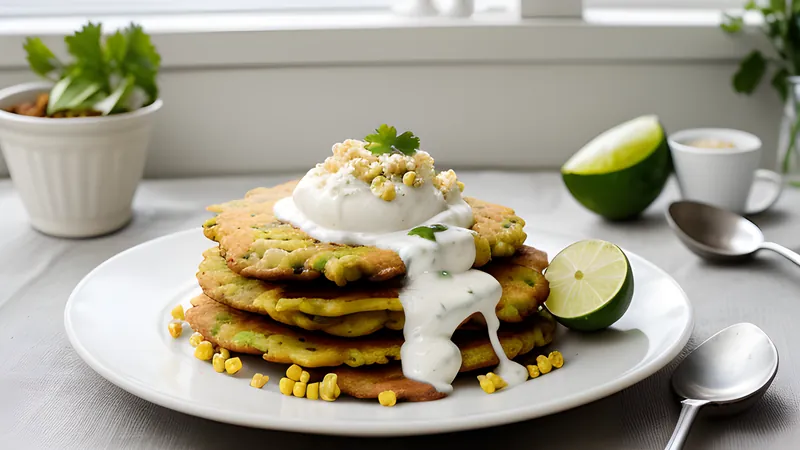
Corn and Courgette Fritters with Lime Yoghurt
Charred sweetcorn, squeezed-dry courgette, a cool tangle of lime
Contents
↓ Jump to recipeThere is a version of this dish in every kitchen I have ever cooked in, and most of them are damp. The batter goes in confident and comes out sulking, pale and heavy, defeated by the water hiding inside the courgette. The fix is not a secret ingredient. It is two minutes of squeezing and a hot, dry pan for the corn, and once you have done both you will never make a soggy fritter again.
My small twist here is to char the sweetcorn before it goes anywhere near the batter. Kernels dry-toasted in a scorching pan until they blister and pop take on a smoky, almost popcorn depth that raw or boiled corn simply cannot give you. It is the difference between a fritter that tastes green and one that tastes like it spent an afternoon over coals.
Corn and Courgette Fritters with Lime Yoghurt
Ingredients
- 2 corn cobs (about 300g kernels), or 300g frozen/tinned sweetcorn
- 2 medium courgettes (about 400g)
- 1 tsp fine salt, for the courgette
- 2 spring onions, finely sliced
- 1 red chilli, deseeded and chopped
- small bunch coriander, chopped
- 2 large eggs
- 100g plain flour
- 1 tsp baking powder
- 1/2 tsp ground cumin
- 50g feta, crumbled
- zest of 1 lime
- sunflower oil, for frying
- 150g Greek yoghurt
- zest and juice of 1 lime
- 1 small garlic clove, finely grated
Method
- Grate the courgettes coarsely, toss with 1 tsp fine salt and leave in a sieve for 15 minutes. Gather into a clean tea towel and wring hard over the sink to remove as much water as possible.
- If using cobs, strip the kernels. Heat a heavy dry frying pan over high heat, add the corn and leave until it blisters and pops with deep golden-brown spots, 2 to 3 minutes, shaking occasionally. Tip onto a plate to cool.
- Whisk the 2 eggs in a large bowl. Fold in the squeezed courgette, cooled charred corn, spring onions, chilli, coriander, lime zest, cumin and crumbled feta.
- Sift over the flour and baking powder and fold just until no dry streaks remain. The batter should hold a rough heap on the spoon; add a little more flour if it slackens.
- Stir the Greek yoghurt with the lime zest and juice, grated garlic and a pinch of salt. Taste and add more lime if needed.
- Heat 2 tbsp sunflower oil in a wide non-stick pan over medium heat until a crumb of batter sizzles at once.
- Drop in heaped tablespoons, flatten each to about 1cm thick, and fry in batches without crowding for about 3 minutes a side, until deep golden and set through.
- Drain on kitchen paper and keep warm on a rack in a low oven. Serve hot, topped with the lime yoghurt and extra coriander.
Where the fritter comes from
Frying vegetables bound in a loose batter is one of those ideas that humans keep inventing independently, wherever there is a cheap glut of something and a pan of hot fat. Sweetcorn fritters as most British cooks know them arrived through American cooking, where corn is king and the “corn oyster” was a nineteenth-century supper-table staple, so named because a spoonful of the batter in hot fat supposedly tasted of fried oysters. It did not, particularly, but the name stuck.
Travel east and the same instinct produces Thailand’s tod man khao pod, bound with red curry paste and lime leaf and eaten with a sweet chilli dip. In Indonesia it becomes perkedel jagung, spiked with garlic, coriander root and a little turmeric. Colombia has arepas de choclo, closer to a griddled cake; the American South has hush puppies and their sweeter cousins. What all of them share is the understanding that corn is at its best when a little heat concentrates its sugars, and that a bright, sharp thing alongside stops the whole plate feeling like a lullaby.
Courgette is the newer addition, and a sensible one. High summer hands most gardeners more of it than they know what to do with, and grating it into a corn fritter is one of the kindest things you can do with a marrow that got away from you. It brings moisture and a grassy softness that plays against the corn’s sweetness. It also brings its problem, which is that a courgette is roughly ninety-five per cent water and every drop of it wants to end up in your batter.
The two rules that matter
Salt the courgette first. Grate it coarsely, toss it with a teaspoon of fine salt, and leave it in a sieve for fifteen minutes while you get on with everything else. Then gather it into a clean tea towel and wring it hard over the sink. You will be genuinely startled by how much liquid comes out, sometimes the best part of a small cupful. That water is the enemy of crispness, and the salt has already seasoned the vegetable from the inside, so you lose nothing by letting it go.
Char the corn dry. Put a heavy frying pan over a high heat with no oil, tip in the kernels, and leave them alone. After a minute or two they will start to blister and jump; give the pan a shake and let them catch again until you have plenty of deep golden-brown spots. This is the flavour that makes people ask what you did. Tip them onto a plate to cool before they meet the eggs, or you will scramble the batter.
Everything after that is assembly. Whisk the eggs, fold in the squeezed courgette, the cooled charred corn, spring onions, chilli, coriander, lime zest, cumin and crumbled feta. Sift over the flour and baking powder and fold just until there are no dry streaks. The batter should be thick enough to hold a rough heap on the spoon. If it slackens as it stands, which it can, add a tablespoon more flour.
Frying them well
Heat a couple of tablespoons of sunflower oil in a wide non-stick pan over a medium heat. It needs to be properly hot before the first fritter goes in: flick in a crumb of batter and it should sizzle at once. Drop in heaped tablespoons, flatten each gently to about a centimetre thick, and give them room. Crowding the pan drops the temperature and steams the fritters, and steamed is exactly what we have worked to avoid.
Fry for around three minutes a side, until deep golden and set through the middle. Resist the urge to flip early or fuss; a fritter turned before its underside has formed a crust will tear and stick. Lift them onto kitchen paper and, if you are cooking in batches, keep them warm on a rack in a low oven so the bases stay crisp rather than sweating on a plate.
While they cook, stir the yoghurt together with the lime zest and juice, the grated garlic and a pinch of salt. Grate the garlic on a fine Microplane so it disappears into the yoghurt as a whisper rather than raw hot bites; a clove that is too coarse will bully everything around it. The finished sauce should be loose enough to spoon and sharp enough to make you sit up. Taste it and add more lime if it is shy.
What can go wrong
If the fritters brown before they cook through, the pan is too hot and the oil is scorching the outside while the centre stays raw and eggy. Drop the heat and be patient. If they fall apart when you turn them, the batter was too wet, meaning either the courgette was not squeezed hard enough or there was too little flour to bind. And if they taste flat despite everything, it is almost always salt: fritters need more than you think, and the lime yoghurt is doing half the seasoning job, so make it punchy.
For the crispest possible result, shallow-fry in a slightly deeper pool of oil, around half a centimetre, so the edges frill and go lacy. It is more indulgent and undeniably better, and the extra oil drains off cleanly onto paper once they are lifted.
Make ahead and variations
The batter is happiest fried straight away, but you can prep every component an hour or two ahead: squeeze the courgette, char and cool the corn, chop the aromatics, and combine only when you are ready to fry, because baking powder starts working the moment it meets moisture. Cooked fritters reheat well in a hot oven for six or seven minutes and crisp up almost like new; they do not love the microwave, which turns them limp.
Swap the feta for a sharp grated cheddar, or leave the cheese out and add a spoon of grated parmesan to the batter instead. A teaspoon of smoked paprika deepens the charred note further. For a heartier plate, stack them with a poached egg and a spoon of the lime yoghurt, or serve alongside a halloumi and vegetable traybake with harissa for a summer spread. If you are feeding a crowd, they sit happily next to stuffed peppers with rice, feta and herbs, both of them cheerful, generous, sunshine food that reheats without complaint.
Pile them up, crown each stack with the pale green yoghurt, scatter over the last of the coriander and an extra pinch of lime zest, and eat them hot enough that the feta is still soft. This is a plate that rewards the small effort you put in, and once you have squeezed one courgette in anger you will do it forever.
Related Content