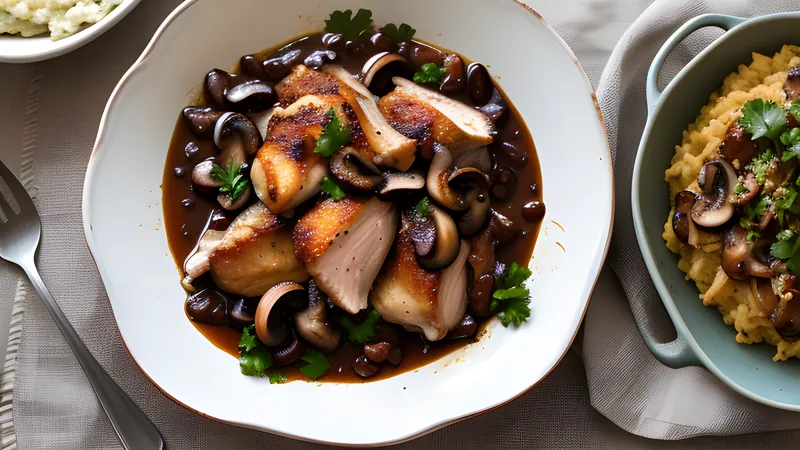
Coq au Vin with Lardons and Pearl Onions
A Burgundian braise, deepened with a spoonful of dark chocolate
Contents
↓ Jump to recipeThere is a version of coq au vin that arrives at the table apologising for itself: pale chicken, thin wine gravy, a scatter of tired mushrooms. And there is the other kind, the one that makes the whole kitchen smell of Sunday, where the sauce clings to the back of a spoon and tastes of far more than the sum of a bottle of red and a bird. The difference is never a fancier ingredient. It is patience, a proper browning, and one small trick I picked up years ago and have never abandoned.
Coq au Vin with Lardons and Pearl Onions
Ingredients
- 8 bone-in, skin-on chicken thighs (about 1.2kg)
- 150g smoked lardons or thick-cut streaky bacon, diced
- 250g pearl onions or small shallots, peeled
- 250g chestnut mushrooms, halved
- 3 garlic cloves, crushed
- 2 tbsp plain flour
- 750ml red Burgundy or other dry red wine
- 300ml chicken stock
- 2 tbsp brandy (optional)
- 1 tbsp tomato purée
- 1 square (10g) dark chocolate, 70% cocoa
- 2 bay leaves
- 4 sprigs thyme
- 30g cold butter
- 2 tbsp neutral oil
- Salt and black pepper
- Chopped flat-leaf parsley, to finish
Method
- Pat the chicken thighs dry and season well with salt and pepper. Heat the oil in a large casserole over medium-high heat and brown the chicken skin-side down for 5 minutes until deep golden, then turn for 2 minutes more. Work in batches; remove and set aside.
- Lower the heat to medium. Add the lardons and fry for 5 minutes until the fat renders and they crisp. Add the pearl onions and mushrooms and cook for 8 minutes until browned. Stir in the garlic and tomato purée and cook for 1 minute.
- Scatter over the flour and stir for 2 minutes to cook it out. Pour in the brandy, if using, and let it bubble away. Add the wine and stock, scraping the base clean, then return the chicken and any juices.
- Tuck in the bay and thyme, bring to a gentle simmer, cover and cook over low heat for 1 hour, or in a 160C fan oven, until the chicken is tender.
- Lift out the chicken and vegetables. Boil the sauce hard for 10 minutes to reduce by a third. Whisk in the chocolate, then the cold butter, off the heat, until glossy. Return everything to warm through, taste for salt, and finish with parsley.
Where the dish comes from
Coq au vin belongs to Burgundy, the wine country of eastern France, and its name tells you the original story plainly: rooster in wine. The old birds — retired cockerels, too tough and sinewy for roasting — needed hours of slow braising in acidic wine to become edible at all. The wine was the tenderiser, the long cook was the mercy, and the dish was thrift dressed up for the table. Every farmhouse had a version, and the wine in the pot was whatever the region drank, which in Burgundy meant Pinot Noir.
The dish we cook now is a domesticated cousin. We use chicken thighs, which are forgiving and rich, and we no longer need three hours to break down a working rooster’s muscles. What survives from the old recipe is the architecture: a browned bird, smoky pork, sweet little onions, earthy mushrooms, and a wine sauce built to be scraped up with bread. Julia Child put coq au vin in front of American home cooks in 1961 and gave it a second life, and it has been a benchmark of home braising ever since. If you like this kind of slow, wine-dark cooking, it sits on the same shelf as braised short ribs in red wine and shares its bones with the lighter chicken chasseur with mushroom and tarragon.
The clever twist
Here is my one indulgence: a single square of dark chocolate, whisked in at the very end. It sounds like a stunt. It is anything but sweet. Ten grams of 70% chocolate melting into a reduced red-wine sauce does something to the bitterness and the body that a spoonful of sugar or a knob of butter alone cannot manage. It rounds the tannins, deepens the colour to that proper mahogany, and adds a background note that people taste without being able to name. Mexican mole cooks have known this for centuries; a Burgundian braise takes to it just as happily. Use good chocolate, use it sparingly, and nobody will ever guess.
Browning is the whole game
The single biggest mistake with coq au vin is rushing the brown. Colour on the chicken skin and the vegetables is where most of the flavour is made, through the Maillard reaction, and you cannot get that colour back later. So take the time. Pat the thighs bone dry — wet skin steams rather than browns — season them properly, and lay them into hot oil skin-side down. Then leave them alone. If you fidget and lift them every thirty seconds, the skin tears and never crisps. Five minutes without touching gives you a sheet of deep gold. Do it in batches; a crowded pan drops in temperature and the chicken poaches in its own juices.
The lardons matter for the same reason. Let them render slowly so the fat runs out and the meat crisps, because that rendered pork fat is the medium the onions and mushrooms will brown in. When the mushrooms go in, resist the urge to stir constantly. Give them a few minutes flat against the hot pan to take on colour before you toss them.
Building and braising the sauce
Once everything is browned, the flour goes in to coat the vegetables and cook out its raw taste — two minutes of stirring is enough to lose the pastiness. This is what thickens the sauce later, so it needs to toast a little. The brandy, if you use it, deglazes and adds a warm spirit note; stand back and let it bubble hard for a few seconds.
Then the wine. Use something you would actually drink — a dry red with a bit of structure, Pinot Noir if you are being faithful to Burgundy, though a Côtes du Rhône or a decent Merlot works well. Cooking wine from the corner shop will give you a harsh, thin sauce. As you pour it in, drag your spoon across the base of the pan to lift every scrap of caramelised fond; that brown crust is pure flavour and it dissolves into the liquid.
Cover and cook it low and slow, on the hob or in a 160C fan oven, for an hour. You are looking for chicken that yields when you press it and pulls easily from the bone. Bone-in thighs are ideal here because the collagen in and around the bone melts into the sauce and gives it that lip-sticking body.
The finish
Do not skip the reduction. Lift out the chicken and vegetables so they do not overcook, then boil the sauce hard for ten minutes until it has reduced by about a third and coats a spoon. Now the chocolate goes in, whisked until it vanishes, followed by the cold butter off the heat. Adding butter away from the boil, a technique the French call monter au beurre, emulsifies it into the sauce for a glossy shine that stays stable and never splits. Taste, adjust the salt, and only then return everything to the pot to warm through.
Tips and troubleshooting
- Sauce too thin? Your reduction was too gentle or too short. Fish out the chicken and boil harder. A slurry of a teaspoon of cornflour in cold water is a last resort, but a proper reduction tastes better.
- Sauce too bitter? Very cheap wine or over-reduction can leave it sharp. The chocolate and butter soften this; a pinch of sugar helps in a genuine emergency.
- Peeling pearl onions is tedious. Drop them into boiling water for 60 seconds, then into cold; the skins slip off. Frozen peeled pearl onions are an honest shortcut.
- Skin gone soft after braising is normal — it is a braise. If you want crisp skin, brown the thighs again under a hot grill for a couple of minutes before serving.
Make-ahead, storage and what to serve
Coq au vin is a dish that improves overnight. Make it a day ahead, cool it, and keep it in the fridge; the flavours marry and deepen, and any excess fat sets on top so you can lift it off. Reheat gently on the hob. It freezes well for up to three months.
For the table, you want something to catch the sauce. Buttery mashed potato is traditional and hard to beat, but a heap of soft polenta or plain boiled new potatoes works, and so does a torn hunk of crusty bread. A few buttered leeks with thyme and breadcrumbs alongside keep it green. Pour the same red you cooked with.
Variations
Swap the chicken thighs for a whole jointed bird if you want a mix of white and dark meat, adding the breast pieces later so they do not dry out. For a smokier pot, use double the lardons and a smoked bacon. And if you find yourself with a bottle of white Burgundy instead, make coq au vin blanc: the same method with dry white wine and a splash of cream at the end, gentler and just as good on a summer evening.
Cook it once with proper attention to the browning and the reduction, and it will earn its place in your winter rotation for good.
Related Content