Cochinita Pibil in Banana Leaf
Achiote-and-bitter-orange pork, roasted low in banana leaf until it falls apart under a fork
Contents
↓ Jump to recipeCochinita pibil is pork cooked the way it’s been cooked in the Yucatán for longer than anyone can date precisely: rubbed with a brick-red achiote paste sharpened by bitter orange, wrapped tight in banana leaf, and left to cook low and slow until it collapses at the touch of a fork. The twist that makes this version worth doing properly is the leaf itself — banana leaf isn’t a garnish here, it’s doing real work, steaming the pork in its own juices and lending a faint grassy, tea-like perfume that foil alone can never replicate.
Cochinita Pibil in Banana Leaf
Ingredients
- 2.2kg boneless pork shoulder, cut into 4 large pieces
- 100g achiote (annatto) paste
- 180ml sour orange juice (or 120ml orange juice + 60ml lime juice)
- 6 cloves garlic, peeled
- 1 tsp ground cumin
- 1 tsp dried Mexican oregano
- 1/2 tsp ground allspice
- 1/2 tsp ground black pepper
- 2 tsp fine sea salt
- 60ml pineapple juice
- 4–6 large banana leaves, thawed if frozen, wiped clean
- 2 tbsp neutral oil, for the leaves
- 1 red onion, thinly sliced, for pickling
- 180ml white vinegar
- 1 tsp sugar
- 1 habanero chilli, thinly sliced (optional, for the pickle)
- Warm corn tortillas, to serve
- Fresh coriander leaves, to serve
Method
- Blend the achiote paste, sour orange juice, garlic, cumin, oregano, allspice, black pepper, salt and pineapple juice to a smooth, thick, brick-red marinade.
- Put the pork shoulder pieces in a large bowl or dish and pour the marinade over, working it into every surface with your hands. Cover and refrigerate for at least 4 hours, ideally overnight.
- Pass banana leaves briefly over an open gas flame or a dry hot pan for 10–15 seconds a side, until they turn glossy and pliable and smell faintly toasted. Take care not to scorch or crack them.
- Preheat the oven to 150°C fan (170°C conventional, Gas Mark 3). Lay two overlapping banana leaves in a criss-cross pattern across a large roasting tin lined with foil, leaving plenty of overhang, and brush lightly with oil.
- Pile the marinated pork and all its marinade into the centre of the leaves. Fold the leaves up and over the meat to fully enclose it, adding a second layer of leaves if needed to seal any gaps, then wrap tightly in foil.
- Roast for 3.5 to 4 hours, until the pork is completely tender and shreds apart under light pressure from a fork. Do not open the parcel to check before the 3-hour mark — you'll lose the steam that's doing the cooking.
- While the pork roasts, combine the sliced red onion, vinegar, sugar and 1 tsp salt in a bowl, massaging briefly, and add the habanero if using. Leave to pickle at room temperature for at least 1 hour, turning pink and softened.
- Unwrap the banana leaf parcel over a tray to catch the juices. Shred the pork with two forks directly in its own cooking liquid, discarding any large pieces of unrendered fat.
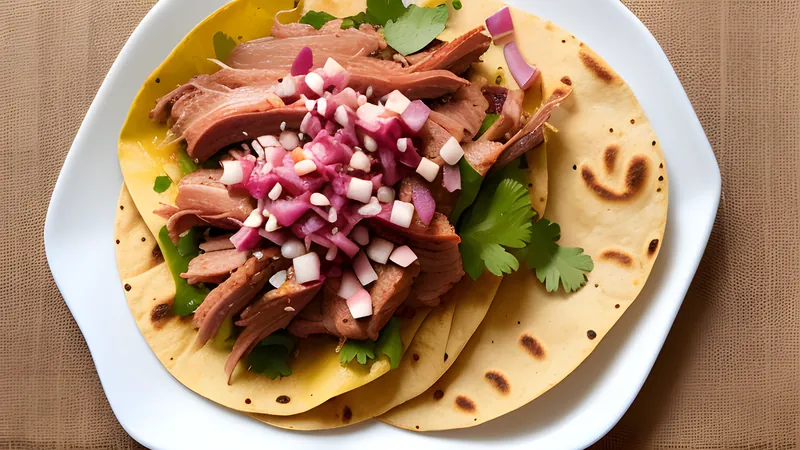
- Serve the pork piled onto warm tortillas, spooning over a little of the reserved cooking juice, topped with the pickled red onion and coriander leaves.
Where it comes from
Pibil comes from the Yucatec Maya word píib, meaning “underground oven” — a pit lined with hot stones where meat, wrapped in banana or plantain leaves, was buried and left to cook slowly under earth and embers, sometimes for the better part of a day. The technique long predates the pig itself in Mesoamerica; deer, and later turkey, were the original meats cooked this way. Pork arrived with Spanish colonisation in the sixteenth century, and the Yucatán, already home to achiote trees and bitter Seville oranges introduced by the Spanish from the Mediterranean, folded the new meat into the old pit-cooking method almost seamlessly.
Achiote paste — a dense block of ground annatto seed, garlic, oregano, cumin and vinegar, sold ready-made as recado rojo — is the ingredient that gives cochinita pibil both its colour and a huge share of its flavour. Annatto itself is nearly flavourless in small amounts but turns everything it touches a deep terracotta red; the actual savoury backbone comes from the garlic, oregano and spices ground alongside it. Bitter orange, naranja agria, is the traditional souring agent, sharper and more aromatic than a regular orange, closer in character to a cross between grapefruit and lime. It’s rarely stocked outside Mexican and Caribbean grocers, so a blend of regular orange juice with a good hit of lime is the standard, entirely acceptable substitute — the acidity does the same job of both flavouring the marinade and gently tenderising the pork.
In the Yucatán today, cochinita pibil turns up everywhere: as a taco filling, piled into a torta sandwich, or served whole at family gatherings, always with a pile of pickled red onion alongside, since the sharp vinegar bite is what cuts through the pork’s richness. It’s also traditionally a Sunday breakfast dish in Mérida and the surrounding towns, sold from stalls before church, which tells you something about how central it is to the region’s everyday eating rather than being reserved for special occasions.
The method, explained
Two things separate a cochinita pibil that tastes like the real thing from one that’s just orange-tinted pulled pork: the marinade actually penetrating the meat over time, and the banana leaf doing genuine steaming work rather than just looking authentic.
The marinade needs time. Achiote paste and citrus juice sitting on the surface of a piece of pork for twenty minutes barely gets past the outer few millimetres — the acid in the citrus needs hours to work its way in and begin breaking down surface proteins, which is what lets the flavour actually travel into the meat rather than just coating it. An overnight marinade, or at minimum four hours, is the difference between pork that tastes seasoned throughout and pork that tastes plain in the middle with a flavourful crust.
Banana leaf matters for a genuinely chemical reason. Wrapped tightly around the meat, it creates a sealed micro-environment where the pork effectively steams and braises in its own rendered fat and marinade juices rather than roasting dry — the leaf itself is close to waterproof once warmed and pliable, so almost nothing escapes. It also contains compounds that impart a faint green, tea-like, slightly vegetal aroma into the meat as it cooks, something foil simply cannot do. Passing the leaves briefly over a flame before use isn’t decorative either: raw banana leaf is stiff and prone to cracking, and the quick heat releases its natural oils and makes it pliable enough to fold tightly around the pork without splitting.
Low, slow heat is non-negotiable. Pork shoulder is full of tough connective tissue — collagen — that only converts into soft, spoonable gelatine somewhere in the 82–96°C range held for hours on end. Rush it at a higher oven temperature and you’ll get pork that’s cooked through but still stringy and resistant, because the collagen hasn’t had time to break down. The four-hour, low-temperature roast is what turns “cooked” into “falls apart.”
The recipe
Blend achiote paste with sour orange juice (or the orange-and-lime substitute), garlic, cumin, oregano, allspice, black pepper, salt and a splash of pineapple juice — the bromelain in pineapple gives the marinade a gentle extra tenderising edge — into a smooth, thick, deep red paste. Rub it generously over four large chunks of pork shoulder, working it into every surface, then cover and refrigerate for at least four hours, and preferably overnight.
Pass your banana leaves briefly over an open flame or a dry hot pan until they turn glossy and pliable. Line a roasting tin with overlapping leaves, pile the marinated pork and all its marinade in the centre, fold the leaves tightly over the top to fully enclose the meat, and wrap the whole parcel in foil for insurance against leaks. Roast at 150°C fan for three and a half to four hours, resisting the urge to peek before the three-hour mark, until the pork shreds effortlessly under a fork.
While the pork cooks, pickle thin slices of red onion in white vinegar with a little sugar, salt and sliced habanero if you want heat — an hour at room temperature is enough to turn the onion bright pink and pleasantly sharp. Once the pork is done, unwrap it over a tray to catch the juices, shred it directly in its own cooking liquid, and serve piled onto warm corn tortillas with a good spoonful of that liquid, the pickled onion, and fresh coriander.
Tips, substitutions, make-ahead and storage
Cochinita pibil is an ideal make-ahead dish — the marinated, unroasted pork keeps well in the fridge for up to two days before cooking, and the cooked, shredded pork in its juices keeps for four days refrigerated or freezes for up to three months. Reheat gently with a splash of water or stock so it doesn’t dry out; the fat that solidifies on top when chilled is worth keeping and stirring back in during reheating rather than discarding.
If banana leaves genuinely aren’t available fresh or frozen (most Asian and Latin American grocers stock frozen ones), a double layer of foil with a splash of orange juice added to the parcel gets you most of the way there, though you’ll miss that grassy aroma. Achiote paste itself has no real substitute for flavour, but in a pinch a mix of sweet paprika, a little turmeric for colour, and extra garlic and oregano will get you a reasonable, if less complex, version.
For a milder version, skip the habanero in the pickle and add a squeeze of extra lime instead. For a smokier finish, char the wrapped parcel briefly on a barbecue lid before it goes into the oven — a nod to the pit-cooking origins that a home oven can’t otherwise replicate.
Variations
A version using chicken thighs instead of pork cuts the cooking time to roughly ninety minutes and is common in home kitchens on a weeknight, though it loses some of the collagen-rich unctuousness that makes the pork version special. Some Yucatán cooks add a layer of thinly sliced tomato and onion beneath the pork before wrapping, which softens into a rough sauce that gets stirred through the shredded meat. And a genuinely traditional touch, if you have the patience: dig a small pit, build a fire down to embers, and bury the wrapped parcel for the afternoon — the flavour difference over an oven is real, if the logistics rarely are.
Serve it the way it’s served across the Yucatán — piled onto warm tortillas with nothing more than that sharp pickled onion for contrast. It pairs naturally with the same chilli-forward pantry as pozole rojo, and if you’re building out a full Mexican spread, tacos al pastor makes a good second protein on the table.
Related Content