Clementine and Almond Cake (Flourless)
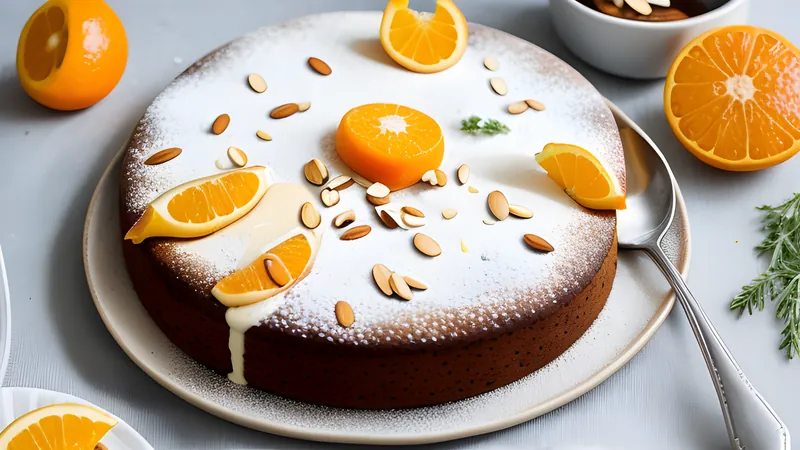
Whole boiled clementines blitzed skin and all into a damp almond cake
Contents
↓ Jump to recipeThere is a version of this cake in nearly every cuisine that grows citrus, and the family argument about who invented it will never be settled. The technique, boiling whole oranges or clementines until soft and blitzing them entire, skin, pith and all, into a nut-based batter, has deep roots in Sephardic Jewish and Middle Eastern kitchens, where a flourless almond cake was both a Passover necessity and a way to use fruit down to the last scrap of peel. It reached a great many British kitchens through Claudia Roden, whose Middle Eastern orange and almond cake became one of those recipes people copy out by hand and pass around, and it deserves every bit of that devotion.
I make it more than any other cake, and for reasons that have nothing to do with it being gluten-free, though that is a genuine bonus. I make it because it is nearly impossible to get wrong, it keeps for days getting better, and it does something no creamed sponge can: it puts the whole fruit into the cake. Zest gives you citrus perfume, juice gives you sharpness, but boiling the fruit whole and blitzing the peel gives you the deep, faintly bitter marmalade note of the pith and skin, which is what makes this cake taste of so much more than orange.
Clementine and Almond Cake (Flourless)
Ingredients
- 4 clementines (about 400g total)
- 6 large eggs
- 250g caster sugar
- 250g ground almonds
- 1 tsp baking powder (gluten-free if needed)
- 1/4 tsp fine salt
- 2 tbsp runny honey (for the glaze)
- 1 tbsp orange blossom water (optional)
- 25g flaked almonds, to finish
Method
- Put the whole clementines in a pan, cover with water, bring to the boil and simmer, partly covered, for 1.5-2 hours until completely soft when pierced. Top up the water as needed. Drain and cool.
- Heat the oven to 160C fan. Butter and line the base and sides of a 23cm springform tin.
- Cut the cooled clementines in half, remove any pips, then blitz the whole fruit (skin, pith and all) to a smooth puree in a processor.
- Whisk the eggs and sugar for 2 minutes until pale and slightly thickened. Add the clementine puree and whisk to combine.
- Fold in the ground almonds, baking powder and salt until you have a loose, homogeneous batter.
- Pour into the tin and bake 55-65 minutes until deep gold, risen and just firm in the centre; a skewer should come out with a few moist crumbs. If it browns too fast, tent with foil at 40 minutes.
- Cool in the tin for 15 minutes. Warm the honey with the orange blossom water and brush over the warm cake. Scatter with toasted flaked almonds. Cool fully before releasing.
Why you boil the fruit whole
The one instruction people balk at is the first: simmer whole clementines for the better part of two hours. It feels like a long time to stand over a pan, though in truth you ignore it entirely while it bubbles away. What the long boil does is tame the peel. Raw citrus pith is aggressively bitter and would ruin the cake; an hour and a half of gentle simmering softens it completely and mellows that bitterness into something warm and complex, the good bitterness of good marmalade rather than the harsh bitterness of raw rind.
Boil them until a knife slides through with no resistance at all. Underdone fruit gives you a batter flecked with tough, acrid bits of skin. You can do this stage days ahead, or in bulk, and freeze the cooked fruit or the finished puree; it is a fine thing to have in the freezer for when you need a cake with almost no effort.
Clementines specifically, rather than the traditional oranges, are my small twist and my strong preference. They have thinner skins, so the pith is milder and the boil is quicker, and they are seedless or nearly so, which saves the fiddly pip-picking. Their perfume is more floral and honeyed than a Seville, closer to a good mandarin. If you only have oranges, use two large ones and boil a little longer.
A cake with more history than it lets on
What looks like a humble everyday bake carries a surprising amount of history in it. Flourless almond cakes were a practical solution long before “gluten-free” was a label on a supermarket shelf: for the eight days of Passover, when leavened grain is forbidden, Jewish cooks across the Mediterranean and Middle East turned to ground nuts and eggs, and the whole-citrus method was a way to waste nothing at a time when fruit was precious. The same logic runs through Spanish and Italian almond tortes, from Santiago to Sicily, all of them descendants of a Moorish tradition of nut-and-honey confectionery that spread across the medieval Mediterranean. When you blitz that peel into the batter you are doing something cooks have done for centuries, and tasting exactly why they kept doing it.
The batter could not be simpler
Once the fruit is soft and blitzed, the cake is almost embarrassingly quick. Whisk eggs and sugar, add the puree, fold in ground almonds, baking powder and a little salt. That is it. No creaming, no rubbing in, no careful folding of meringue. The ground almonds do the work flour would do, but because there is no gluten to develop you cannot toughen it by overmixing, which is a large part of why this cake is so forgiving.
The eggs are the only lift, helped by a single teaspoon of baking powder, so give them a couple of minutes’ whisking to build a bit of volume. The batter will look alarmingly loose when it goes into the tin. Trust it; the almonds absorb liquid as it bakes and it sets into a damp, close, tender crumb that stays moist for a week.
The honey glaze and the twist
Traditionally this cake is left plain or dusted with icing sugar, and it is lovely that way. My addition is a warm honey glaze brushed over the cake the moment it comes out of the oven, with a teaspoon of orange blossom water stirred in. The warm cake drinks the honey straight down into its top, which stays sticky and fragrant, and the orange blossom lifts the whole thing with a floral note that echoes the clementine perfume. A scatter of toasted flaked almonds gives crunch against the damp crumb.
That combination of honey, citrus and almond is one of the oldest in Mediterranean baking, and it turns up in things like florentines with dark chocolate, where honey and almond are caramelised together. Here it stays soft and fresh instead.
Tips, troubleshooting and swaps
Do not skimp on lining the tin. This is a wet, sticky batter, so line the base and the sides of a springform properly or it will cling. A springform makes release far less nerve-racking than turning out.
Check for pips after boiling and before blitzing. Even one or two ground into the puree adds a bitter, gritty note.
If the top browns before the centre sets, tent it loosely with foil around the forty-minute mark. A deep, dark gold is right; burnt is not, and because there is no flour the sugar can catch.
Aim for damp. A skewer with a few moist crumbs clinging is done; batter on the skewer means give it another ten minutes. This cake is meant to be moist, so err toward taking it out a touch early rather than drying it.
Swaps. Lemons make a sharper, brighter version, though you will want to bump the sugar to 275g. Blood oranges when they are in season give a gorgeous rose-tinted crumb. Swap 50g of the ground almonds for ground pistachios and finish with chopped pistachios for a greener, more perfumed cake.
A marmalade version. If you keep a jar of homemade preserve, swap the honey glaze for a couple of tablespoons of warmed, sieved Seville orange marmalade, the bitter classic, brushed over the hot cake. The extra bitterness plays straight into the boiled-peel flavour already in the crumb and makes the whole thing taste more grown-up.
Serving and keeping
Serve it in generous wedges with a spoon of thick Greek yoghurt or crème fraîche and, if you like, a little more citrus alongside. It needs nothing hot or fussy with it. For a dinner party I sometimes serve it with a scoop of something cold and bitter, in the spirit of my affogato with amaretto, the coffee and almond playing off the honeyed citrus beautifully.
Its great virtue is keeping. Wrapped or in a tin, it stays moist for a week and genuinely improves for the first three or four days as the flavours settle and the honey works through. That makes it the cake I bake when I want something in the house all week, or when guests are coming and I have no time on the day. Boil the fruit whenever you have a spare afternoon, keep it in the freezer, and you are never more than an hour from a very good cake.
Related Content