Ciabatta with a Wet Dough and an Open Crumb
The slipper loaf that rewards a very wet hand
Contents
↓ Jump to recipeCiabatta looks like the easiest bread in the world and behaves like the hardest. There is no tricky shaping, no scoring, no lamination. You mix a very wet dough, fold it a few times, cut it into rough rectangles and bake. The trouble is that “very wet” is the whole recipe, and a wet dough is an intimidating thing the first time it sticks itself to every surface in your kitchen, including you.
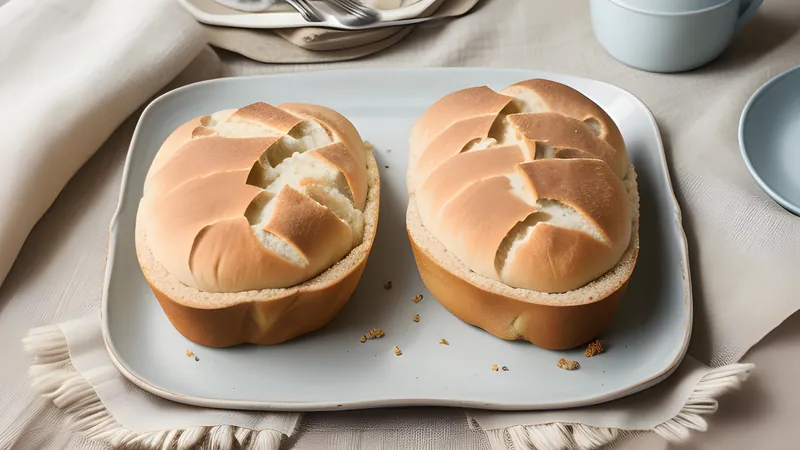
The reward for making friends with the wetness is that open, irregular, glossy crumb: big holes, thin translucent walls, a crust that shatters and a middle that stays custardy and tender. My one small twist is a slug of olive oil worked into the final dough. Classic ciabatta can be lean, but the oil gives the crumb a faint richness and a longer shelf life, and it makes the dough marginally more manageable under a wet hand. It is a Ligurian sort of move, and it suits the bread.
Ciabatta with a Wet Dough and an Open Crumb
Ingredients
- For the biga: 150g strong white bread flour
- 90g water (room temperature)
- 0.5g instant dried yeast (a small pinch)
- For the final dough: all of the biga
- 350g strong white bread flour
- 330g water
- 20g olive oil, plus extra for the tub
- 11g fine salt
- 4g instant dried yeast
- Semolina or flour, for dusting
Method
- The night before, mix the biga ingredients to a stiff dough, cover, and leave at cool room temperature for 12 to 16 hours until bubbly and risen.
- Tear the biga into the final-dough water and squeeze to loosen it. Add the flour and yeast and mix to a rough, sticky mass. Rest 20 minutes.
- Add the salt and olive oil and squelch them through the dough with a wet hand until incorporated.
- Over the next 2 hours, give the dough four sets of stretch-and-folds in the tub, 30 minutes apart, wetting your hand each time.
- After the folds, let the dough bulk-ferment until roughly doubled and domed with visible bubbles, about 1 to 2 more hours.
- Tip the dough gently onto a heavily floured surface, trying not to deflate it. Dust the top.
- Cut into two rectangles with a floured scraper and stretch each gently into a slipper shape.
- Flip each loaf onto a floured couche or tea towel, seam-side up, cover, and proof 45 minutes.
- Heat the oven to 240C fan with a baking stone or heavy tray inside, and a roasting tin below for steam.
- Flip the loaves onto a floured peel or lined tray, slide onto the stone, pour boiling water into the roasting tin, and bake 22 to 25 minutes until deep golden and hollow-sounding. Cool fully on a rack.
A surprisingly modern loaf
Here is the fact that surprises people: ciabatta is younger than sliced bread. It was invented in 1982 by Arnaldo Cavallari, a miller and baker in Adria, in the Veneto, who was alarmed by the flood of French baguettes into Italian sandwich shops and wanted a native loaf to fight back with. He worked out a high-hydration dough using a soft Italian flour, named it ciabatta polesana after the slipper it resembles, and licensed the recipe widely. Within a few years it was everywhere.
So when people talk about ciabatta as an ancient peasant bread, they are romanticising something that is younger than the compact disc. That does not make it less good; it makes it a clever piece of engineering. Cavallari’s insight was that a wetter dough with a preferment gives you a more open, more flavourful crumb, and he productised that insight brilliantly. The name and the shape did a lot of the marketing.
The high hydration is the defining feature, and it is why ciabatta and a wet-dough pain de campagne with a long cold ferment share so much technique even though one is Italian white and the other is French country. Once you can handle a slack dough, a whole category of good bread opens up.
The biga does the flavour
A biga is a stiff Italian preferment: flour, water and a whisper of yeast, left overnight to ferment slowly. It builds acidity and complexity, and it is the difference between a ciabatta that tastes of something and one that tastes of nothing. Half a gram of yeast is genuinely all you need; it works slowly over 12 to 16 hours and you want it bubbly and just past its peak in the morning, smelling faintly winey and sour.
Mix the biga stiff, around 60 per cent hydration, so it ferments slowly and steadily. If your kitchen is warm, lean towards 12 hours; if it is cool, 16 is fine. Do not skip it. A same-day ciabatta made with commercial yeast alone is edible and forgettable.
Building and folding the wet dough
The final dough runs at roughly 80 per cent hydration, which is properly wet, and the trick is that you never really knead it. You develop the gluten through time and folding instead. Squeeze the biga into the water first to loosen it, then bring in the flour and yeast and mix to a shaggy, sticky mess. Rest it 20 minutes; this is an autolyse in all but name, and it lets the flour hydrate so the dough comes together with far less effort.
Then add salt and oil and squelch them in with a wet hand. A wet hand is the single most useful technique for this bread: dough sticks to dry skin and slides off wet skin, so keep a bowl of water beside you and dip constantly. Over the next two hours, give four sets of stretch-and-folds 30 minutes apart, reaching under the dough, stretching it up and folding it over itself, turning the tub a quarter each time. You will feel it change from a sloppy batter to something billowy, strong and alive, holding air.
After the folds, let it bulk-ferment until roughly doubled, domed and visibly bubbled through the sides of a clear tub. Warmth speeds this up; aim for a dough that has clearly grown and jiggles with gas.
Cutting, not shaping
There is no real shaping, which is the beauty of it. Tip the dough onto a heavily, and I mean heavily, floured surface, trying not to knock the air out. Dust the top. Cut it into two long rectangles with a floured scraper in one decisive stroke; sawing tears the gluten and drags out the gas. Stretch each gently into a slipper and flip onto a floured couche or tea towel with the seam up. A 45-minute proof and they are ready.
The gentleness here is everything. Every rough handling costs you a hole. Ciabatta is one of the few breads where clumsy, tentative, minimal handling gives the best result, so resist the urge to tidy the loaves up.
Heat and steam
Ciabatta wants a fierce oven and steam. Get a baking stone or a heavy inverted tray up to 240C fan with a roasting tin on the shelf below. Flip the loaves onto a floured peel or lined tray, slide them onto the stone, and immediately pour a cup of boiling water into the roasting tin to generate a burst of steam. The steam keeps the crust soft long enough for the loaf to spring and expand fully; without it you set the crust too early and choke the oven spring.
Bake 22 to 25 minutes until deep golden and hollow-sounding when tapped underneath. An internal temperature of 96C or above confirms it. Cool fully on a rack, because a wet-crumbed bread is still cooking as it cools and cutting early gives you a gummy centre.
What goes wrong
A dense, tight crumb with no big holes is the usual heartbreak, and it has three common causes: the dough was not wet enough, the biga was under-fermented, or you knocked all the air out during cutting. A pale, soft crust means not enough heat or not enough steam. A loaf that spreads into a flat puddle was over-proofed or handled too roughly on the tip-out.
If your first attempt is dense, do not add flour next time to make it easier. Add water and handle it less. Ciabatta punishes caution with the flour bag.
Eat it, store it, use it up
Fresh ciabatta with good olive oil and flaky salt needs nothing else. Split and filled, it is the proper base for a bavette steak sandwich or grilled vegetables and mozzarella. The open crumb also makes it the best possible sponge, so the ends of a slightly stale loaf are ideal for a chunky panzanella-style salad or torn into a soup to thicken it. Day-old ciabatta toasts into superb bruschetta and grinds into rough, irregular breadcrumbs that beat anything shop-bought.
It stales fast, as all lean high-hydration bread does. Eat it the day you bake it, revive day-two slices under the grill, and freeze what is left. The wet hand is the only real skill here, and once it clicks you will make this on a whim.
Related Content