Chraimeh: Libyan-Jewish Spiced Fish in Tomato
A fiery, garlicky tomato braise for the Friday-night table
Contents
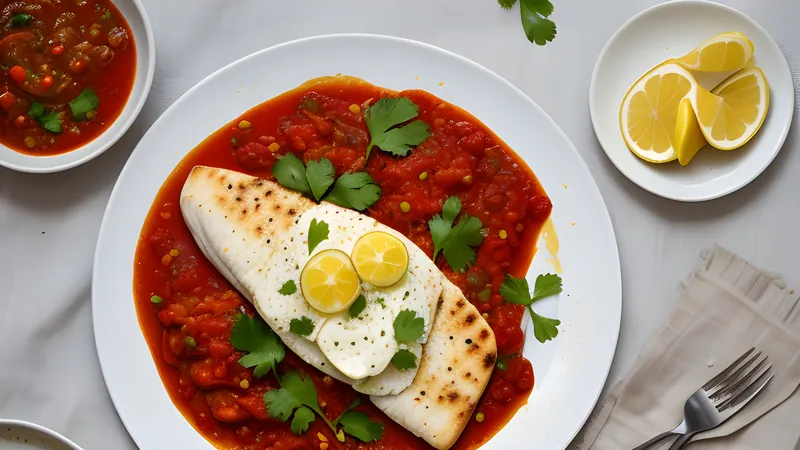
↓ Jump to recipeSome dishes announce themselves the moment they hit the pan, and chraimeh is one of them. Sliced garlic goes into hot oil, then a fistful of spices, and within seconds the whole kitchen fills with a smell that is warm, red and faintly dangerous. By the time the tomatoes go in and the sauce turns to a glossy, brick-coloured braise, you understand why this fish has anchored the Libyan-Jewish table for generations. It is bold, garlicky and properly spicy, and it treats a piece of white fish with far more excitement than it usually gets.
Chraimeh (also spelled hraimi or chreime) is the definition of a big-flavour, low-effort dish. There is no browning of the fish, no complicated technique, no long list of stages. You build a fierce, aromatic tomato sauce in fifteen minutes, then poach the fish gently in it, and the fish takes on the sauce while giving up a little of its sweetness in return. It is the kind of cooking that rewards a heavy hand with the garlic and a nerve with the chilli.
Chraimeh: Libyan-Jewish Spiced Fish in Tomato
Ingredients
- 4 thick white fish fillets or steaks (cod, hake, sea bream or grouper), about 180g each, skin on
- 6 tbsp olive oil
- 8 garlic cloves, thinly sliced
- 2 tbsp tomato purée
- 1 tbsp sweet paprika
- 1 tsp ground caraway seeds
- 1 tsp ground cumin
- 1/2 to 1 tsp hot chilli powder or cayenne, to taste
- 1/4 tsp ground cinnamon
- 400g tin chopped tomatoes, or 4 fresh tomatoes, grated
- 1 tsp caster sugar
- Juice of 1 lemon, plus wedges to serve
- 1 tsp salt, plus more to season
- Small bunch coriander, chopped
- 150ml water
Method
- Season the fish fillets lightly with salt and set aside at room temperature.
- Warm the olive oil in a wide, deep frying pan over medium-low heat. Add the sliced garlic and cook for 1-2 minutes until fragrant and just turning pale gold, well short of browning.
- Stir in the tomato purée, paprika, caraway, cumin, chilli and cinnamon and fry for 30-60 seconds until the spices smell toasted and the oil turns red.
- Add the chopped tomatoes, sugar, 1 tsp salt and the water. Simmer for 10 minutes until thickened to a loose, glossy sauce.
- Stir in half the lemon juice and taste for balance of heat, salt and acid.
- Lower the fish fillets into the sauce, skin-side down, spooning sauce over the tops. Cover and simmer gently for 8-12 minutes until the fish is just cooked and flakes at the thickest point.
- Scatter with coriander and the remaining lemon juice. Rest off the heat for 5 minutes, then serve warm with bread or rice and lemon wedges.
A dish carried across the sea
Chraimeh belongs to the Jews of Libya and, more broadly, to the Sephardi and Mizrahi communities of North Africa, from Tripoli along the coast to Tunisia and beyond. For centuries it was the fish course of the Shabbat table, served on Friday night and often again cold at lunch the next day, and it holds a special place at Rosh Hashanah, the Jewish New Year, when fish symbolises abundance and a head of the year full of good things.
When the great majority of Libya’s Jewish community left in the mid-twentieth century, most settling in Israel, they carried chraimeh with them, and it became one of the defining dishes of the Israeli fish repertoire, sold from delis and cooked in home kitchens far from the North African coast where it began. Food historians point to it as a textbook example of how a community’s cooking outlives its geography; the place changed, the dish did not.
The word itself is thought to come from the Arabic har, meaning hot or spicy, which tells you the cooks who named it knew exactly what mattered. This is not a timid tomato sauce. The heat is the point, balanced by the sweetness of the tomato, the perfume of caraway and cumin, and a good squeeze of lemon to cut through it all.
The spices, and one telltale note
The soul of chraimeh is in the spice paste that fries in the oil before the tomatoes arrive. Paprika gives colour and a gentle sweetness; cumin gives earthiness; chilli or cayenne gives the har; and caraway, that slightly aniseed, slightly bitter seed more associated with rye bread and sauerkraut, gives the dish its unmistakable signature. If you have only ever met caraway in bread, its presence here will surprise you, and it is exactly what makes chraimeh taste like chraimeh rather than a generic spiced tomato fish. Grind the seeds fresh if you can; the flavour fades fast once ground.
My one small liberty is a quarter-teaspoon of cinnamon in with the savoury spices. It is a nod to the warm, sweet-spice tradition that runs through so much North African cooking, and it rounds off the edges of the chilli without softening the heat. You should not be able to name it in the finished dish; you should only notice that everything holds together a little more warmly. Leave it out for a stricter version and you lose nothing you will miss.
Frying the spices in the oil for barely a minute is essential, and it is where people go wrong in both directions. Skip it and the spices taste raw and dusty in the finished sauce. Overdo it and they scorch and turn acrid in seconds, especially the paprika, which burns readily. Watch for the oil turning a deep, glowing red and the smell blooming, then get the tomatoes in immediately to stop the cooking.
Choosing the fish
Chraimeh wants a firm, thick white fish that will hold together in the sauce rather than flaking apart. In Libya and Israel it is often made with grouper, sea bream, or a thick steak of a larger fish, bones and all, which some argue gives a better flavour. At home I use thick cod or hake fillets, or sea bream, skin on, because the skin helps the piece keep its shape. Cut steaks on the bone if your fishmonger has them and you do not mind eating around bones; they are traditional and delicious.
Whatever you choose, thickness matters more than species. Thin fillets overcook and disintegrate before they have taken on the sauce; a good two to three centimetres of fish gives you the window you need. Bring the fish to room temperature and season it lightly before it goes into the pan, so it cooks evenly and does not chill the sauce.
Building the braise
Everything happens in one wide, deep pan. Soften the sliced garlic in plenty of olive oil, gently, so it turns fragrant and pale gold; let it brown and it will taste bitter and dominate the dish. In goes the tomato purée and the ground spices for their brief, crucial fry, then the tomatoes, a little sugar to balance their acidity, salt and water. Simmer that for ten minutes into a loose, glossy sauce that just coats the back of a spoon. Taste it now, before the fish goes in, and adjust: more chilli for heat, more lemon for brightness, more salt to pull it all forward. This is your last easy chance to season.
Now lower the fish in skin-side down, spoon the sauce over the tops, cover, and let it poach very gently. Do not boil it hard; a violent simmer will break the fillets up and toughen them. Eight to twelve minutes, depending on thickness, and the fish should flake at the centre when nudged with a knife. Finish with the rest of the lemon juice and a great deal of chopped coriander, then, and this is worth the wait, let it rest off the heat for five minutes so the sauce settles into the fish and the flavours marry.
Serving, storage and swaps
Chraimeh is traditionally served warm or at room temperature, mopped up with soft white bread, challah on a Friday night, or spooned over plain rice or couscous. The sauce is the treasure, so give people plenty of it and something to soak it up with.
- Make-ahead. It is arguably better the next day, cold or gently reheated, once the sauce has had time to deepen. It keeps three days in the fridge.
- Heat level. Start at half a teaspoon of chilli if you are unsure; you can always add, and different chilli powders vary wildly in strength. A fresh sliced chilli in with the garlic is good too.
- Fish swaps. Salmon works if you prefer oily fish, though it changes the character. Firm white fish is the classic and the most forgiving.
- Make it a feast. Add drained chickpeas to the sauce for the last ten minutes to stretch it into a heartier one-pan supper.
- Balance. If your tomatoes are sharp, a touch more sugar rescues it; if the sauce tastes flat, it almost always needs more lemon or salt rather than more spice.
If you like fish cooked in a bold, spiced sauce, follow this with the coconut-rich Goan fish curry with kokum and coconut, and for another thrifty, tomato-forward fish dish from the same Mediterranean world, try bacalhau à Brás, the Portuguese salt cod, egg and potato. To round out a Levantine spread, serve it alongside moutabal, the smoked aubergine with yoghurt and pomegranate.
Make chraimeh once and it will join your short list of dishes that deliver enormous flavour for almost no work. A pan of red sauce, a nerve for garlic and chilli, and twenty minutes: that is all it asks, and it gives back a Friday-night classic that has crossed a sea and refused to be forgotten.
Related Content