Chocolate, Hazelnut and Sea Salt Tart
A dark, glossy ganache on toasted hazelnut pastry
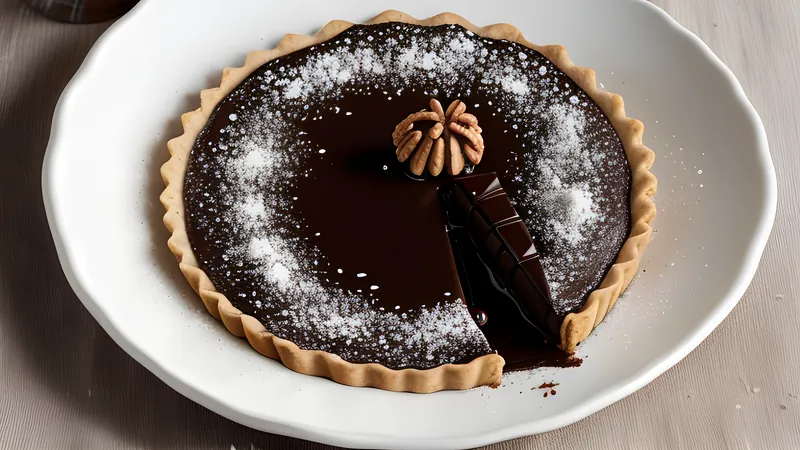
Chocolate, Hazelnut and Sea Salt Tart
Ingredients
- 60g blanched hazelnuts
- 200g plain flour
- 30g cocoa powder
- 80g icing sugar
- 0.25 tsp fine salt
- 140g cold unsalted butter, diced
- 1 large egg yolk
- 2 to 3 tbsp ice-cold water
- 300g dark chocolate (about 70 per cent), chopped
- 300ml double cream
- 40g unsalted butter, softened
- 1 tbsp honey
- Flaky sea salt, to finish
- 2 tbsp chopped toasted hazelnuts, to finish
Method
- Toast the hazelnuts in a dry pan until fragrant and golden, cool, then blitz to a fine powder.
- Pulse the flour, cocoa, icing sugar, salt, ground hazelnuts and cold butter to fine crumbs, then add the egg yolk and just enough water to bring the dough together.
- Shape into a disc, wrap and chill for at least an hour.
- Roll the pastry out and line a 23cm loose-bottomed tart tin, pressing into the corners. Trim the edges and chill for 20 minutes. Heat the oven to 170C fan.
- Line the tart with greaseproof paper and baking beans, blind bake for 15 minutes, then remove the paper and beans and bake for a further 8 to 10 minutes until the base is dry. Cool completely.
- Make the ganache: heat the cream until just steaming, then pour over the chopped chocolate and let it sit for two minutes.
- Stir gently from the centre outwards until smooth and glossy, then stir in the softened butter and honey.
- Pour the ganache into the cooled tart case and tap the tin gently to settle and level it.
- Leave to set at room temperature for at least three hours, or until just firm.
- Before serving, scatter with chopped toasted hazelnuts and a generous pinch of flaky sea salt.
Some puddings are for sharing and some are for staring at. This tart is both. A dark cocoa pastry, shot through with toasted hazelnuts, holds a ganache so glossy you can almost see your reflection in it, and the whole thing is finished with crunched hazelnuts and a deliberate scatter of flaky salt. It is not a difficult tart, but it is a slow one, built in stages with a long sit at the end, and the reward is a slice that tastes like the best chocolate you have ever eaten somehow improved. The clever twist is sea salt, which does not make the tart taste salty so much as make the chocolate taste more profoundly of itself.
1 Chocolate and hazelnut, an old romance
The pairing of chocolate and hazelnut is so familiar now, thanks largely to a certain jar of spread, that it is easy to forget it was born of necessity. In Piedmont in northern Italy, chocolatiers in the early nineteenth century faced cocoa shortages and rising prices, and stretched their precious chocolate by blending it with the region’s abundant Tonda Gentile hazelnuts. The result was gianduja, a smooth chocolate-hazelnut confection that became the pride of Turin and, much later, the ancestor of every chocolate-hazelnut product on the supermarket shelf. What began as a thrifty workaround turned out to be a genuine improvement, because hazelnut’s warm, roasted sweetness rounds chocolate’s bitterness in a way few other flavours manage.
This tart leans on that history. The hazelnuts appear twice, ground into the pastry and toasted on top, so their flavour frames the chocolate from both sides. It is gianduja reimagined as a sliceable centrepiece.
2 Building the tart
There are three jobs here and none is hard, but each needs care. The pastry is enriched with ground toasted hazelnuts and cocoa, which makes it more fragile than a plain shortcrust, so chill it well and patch any cracks with offcuts rather than fretting. Blind bake it fully, because there is no further baking once the ganache goes in; an undercooked base is the one thing that will let this tart down.
The ganache is just cream and good dark chocolate, but technique matters. Heat the cream until it steams rather than boils, pour it over the chopped chocolate, and then leave it alone for a couple of minutes before stirring from the centre outwards. Beating air in or stirring too soon gives a dull, grainy result; patient stirring gives a mirror. A little butter and a spoon of honey added at the end bring extra shine and a softer, more luxurious set. Pour it into the cooled case and then, crucially, leave it at room temperature to set rather than rushing it into the fridge, which can dull the surface and firm the ganache to an unpleasantly hard chill.
3 Tips and getting ahead
Use the best dark chocolate you can, ideally around 70 per cent cocoa, because it is the entire flavour of the filling. Anything much sweeter will make the tart cloying; anything much darker can turn bitter once it sets. If your kitchen is very warm in high summer, the ganache may need a short spell in the fridge to firm up, but bring the tart back to cool room temperature before serving so the filling is silky rather than solid.
Both elements can be made ahead. The baked pastry case keeps in an airtight tin for a couple of days, and the finished tart is happy for two days under a cake dome, the flavour deepening overnight. Add the hazelnuts and salt only just before serving so they stay crunchy and the salt does not dissolve into the surface. Cut it with a hot, dry knife, wiped between slices, for clean edges.
The pastry is the only part that takes real care, so a word on it. Because it is enriched with ground nuts and cocoa, it has less stretch than ordinary shortcrust and will crack rather than drape if you rush it. Roll it between two sheets of greaseproof paper to save flouring and tearing, and if it does split as you line the tin, simply press the pieces together and patch any holes with offcuts; nobody will know once the ganache is poured. Chilling the lined case before baking sets the butter and stops the sides slumping. A small slice of this tart goes a long way, so a single one genuinely serves a crowd, and a spoonful of creme fraiche or a few fresh raspberries alongside cuts the richness beautifully if anyone needs rescuing.
Related Content