Chocolate Guinness Cake with a Cream Cheese Top
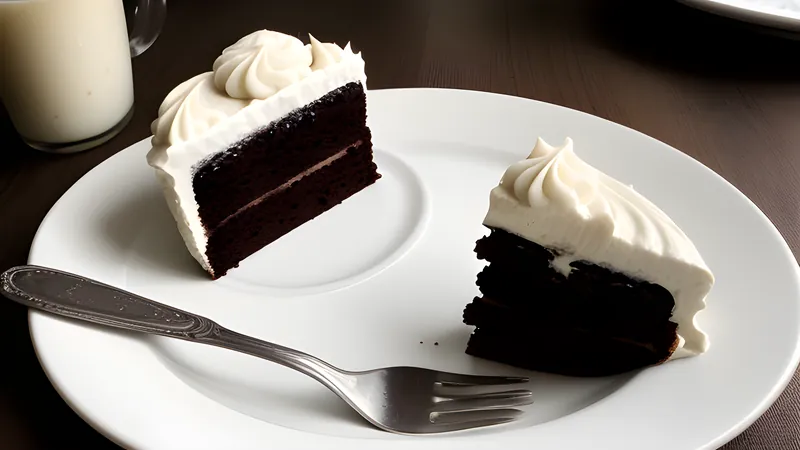
The pint-black one-layer cake, with a whisper of miso in the frosting
Contents
↓ Jump to recipeSome cakes ask you to be a pastry chef and some ask you to own a whisk and a saucepan. This is firmly the second kind, which is a large part of why it has become one of the most-made chocolate cakes in Britain and Ireland since Nigella Lawson published her version at the turn of the millennium. There is no creaming, no folding, no layers, no crumb coat. You melt stout with butter, whisk in the dry things, pour, bake, and top the cooled cake with a slab of cream cheese frosting swirled to look like the head on a pint. It is almost impossible to get wrong, and it is genuinely one of the best chocolate cakes there is. There is a reason it spread the way it did. A cake with no layers to trim and no buttercream to smooth forgives a nervous baker completely, and the drama of the pint-and-a-half of stout going into the batter turns it into a talking point at the table. It arrived just as home baking was becoming a spectator sport again, and it photographs beautifully: that stark contrast of near-black cake and pale, settled head is doing half the work before anyone lifts a fork.
My one change is a teaspoon of white miso whisked into the cream cheese top. It sounds like a stunt and it is not. Miso is fermented, deeply savoury, full of the same glutamates that make Parmesan and anchovy taste of more; a small amount stirred into a sweet topping reads not as “miso” but as a salted, rounded depth that stops the frosting from being merely sweet. It does to the cream cheese what a pinch of salt does to caramel. Against the near-black, faintly bitter cake, it is a genuine improvement, and nobody will guess why.
Chocolate Guinness Cake with a Cream Cheese Top
Ingredients
- 250ml Guinness (or any dry stout)
- 250g unsalted butter
- 75g cocoa powder
- 400g caster sugar
- 142ml soured cream (1 small pot)
- 2 large eggs
- 1 tbsp vanilla extract
- 275g plain flour
- 2.5 tsp bicarbonate of soda
- 1/2 tsp fine salt
- For the top: 300g full-fat cream cheese, cold
- 150g icing sugar, sifted
- 125ml double cream
- 1 tsp white (shiro) miso
- 1/2 tsp vanilla extract
Method
- Heat the oven to 160C fan. Butter a 23cm springform tin and line the base with baking parchment.
- Pour the Guinness into a large pan, add the butter in pieces and heat gently until melted. Whisk in the cocoa and sugar off the heat until smooth and glossy.
- In a jug, whisk the soured cream, eggs and vanilla together, then whisk this into the warm (not hot) Guinness mixture.
- Sift in the flour, bicarbonate of soda and salt, and whisk until you have a smooth, loose batter. It will look alarmingly thin; that is correct.
- Pour into the tin and bake for 45 to 55 minutes, until the top is set and a skewer comes out with only a few damp crumbs. Cool completely in the tin; the cake is fragile while warm.
- For the top, whisk the miso into the double cream until dissolved. Beat the cold cream cheese with the icing sugar and vanilla until smooth, then beat in the miso cream until it holds soft, spreadable peaks. Do not overbeat or it will loosen.
- Set the cooled cake on a plate, spread the cream cheese top thickly over the surface only, and swirl it so it resembles the settled head on a pint of stout.
Why the stout works
Guinness in a chocolate cake is not there to make it taste of beer, and it largely does not. What stout brings is a set of roasted, coffee-and-cocoa flavours from the heavily kilned barley, plus a mild acidity and a lot of moisture. That acidity matters chemically: it reacts with the two and a half teaspoons of bicarbonate of soda to give lift, and it keeps the crumb tender. The dark maltiness amplifies the cocoa so the cake tastes more chocolatey than its actual cocoa content suggests, the same trick a spoonful of coffee plays in a chocolate sponge. Cocoa quality is the one place a little money shows. Because the cake leans on the cocoa and the stout’s roast rather than on melted chocolate, a good, dark, Dutch-processed cocoa gives a noticeably deeper colour and flavour than a pale supermarket own-brand. Sift it well, too; cocoa clumps stubbornly, and a lump of dry cocoa in the finished slice is a small but real disappointment.
Guinness itself carries a surprising amount of history for a baking ingredient. It has been brewed at St James’s Gate in Dublin since Arthur Guinness signed his famous 9,000-year lease in 1759, and the dry Irish stout style, dark from roasted unmalted barley and dry from a long, cool fermentation, is the reason it behaves so well here. Any dry stout works; a sweeter milk stout will skew the balance, and you should avoid anything heavily flavoured. The alcohol, for what it is worth, mostly bakes off, leaving the roast behind.
Making it, and the things that go wrong
The batter is made in one pan and it will look wrong at every stage, which is the only thing you need to make peace with. After you whisk the cocoa and sugar into the melted Guinness and butter it looks like a thin, glossy chocolate sauce; after the flour goes in it is a pourable, almost soupy batter you will be certain is too runny. It is not. That high liquid content is what gives the finished cake its characteristic damp, dense, almost fudgy crumb.
The two real pitfalls are heat and patience. Add the egg mixture only once the Guinness pan has cooled to warm, or you will scramble the eggs into little cooked flecks. And leave the cake completely, properly cold in its tin before you go near it, because warm it is fragile enough to break when you release the springform. A low oven and a long bake are deliberate: this is a deep single layer, and a fierce oven would set the outside while the middle stayed raw. A skewer with a few damp crumbs is done; a clean, dry skewer means you have overbaked it and lost the fudginess. The soured cream is doing quiet double duty as well. Its fat keeps the crumb rich and its acidity, like the stout’s, feeds the bicarbonate of soda for lift, so do not be tempted to swap it for plain yoghurt without accounting for the thinner texture. If all you have is thick natural yoghurt, loosen it with a splash of milk to match the pouring consistency of soured cream, and the cake will be none the wiser.
The cream cheese top has its own small rule: use full-fat block cream cheese straight from the fridge rather than a tub of spreadable, and do not overbeat. Cream cheese loosens and turns soupy if you work it too hard once the cream is in, so beat just until it holds a soft peak and spreads like the head on a stout. Spread it over the top only, leaving the dark sides bare, which is both the traditional look and a mercy for anyone who dislikes too much frosting. A word on the miso, since it is the one thing here that will raise an eyebrow: buy white shiro miso, the pale, sweet, mellow kind sold in a tub in most supermarkets now, and whisk it into the cold cream first so it disperses completely with no gritty specks. Darker red or barley misos are too assertive and will genuinely taste of miso, which is not the effect you want. A level teaspoon is plenty for the whole cake; treat it like the salt in salted caramel and stop there.
Storage, make-ahead and variations
This cake keeps astonishingly well. Un-topped, wrapped, it stays moist for four or five days and arguably improves after one, as the crumb settles and the flavours deepen. Topped, keep it in the fridge under a dome and eat within three days; bring slices back to room temperature so the frosting softens. It freezes well un-topped for up to three months.
If you want to lean into the malt, a tablespoon of black treacle in the batter deepens it further towards gingerbread territory, in which case a little of the warm-spice logic from a sticky ginger cake with lemon icing is worth borrowing. For a fully-frosted celebration version, this batter bakes happily as two shallower layers sandwiched and covered with the same cream cheese top, at which point it sits alongside a red velvet with cream cheese frosting in the pantheon of cream-cheese-topped classics. And if you are chasing pure chocolate intensity rather than the stout’s roast, a devil’s food cake with fudge frosting takes the darkness further still.
Serve it in generous wedges, cold or at room temperature, ideally with nothing more than a cup of tea or, if you are being thematic about it, the other half of the tin of Guinness. It is a forgiving, foolproof, quietly clever cake, and the miso is our little secret.
Related Content