Chocolate Crinkle Cookies
Espresso-deepened fudgy cookies cracked open in a snowfall of icing sugar
Contents
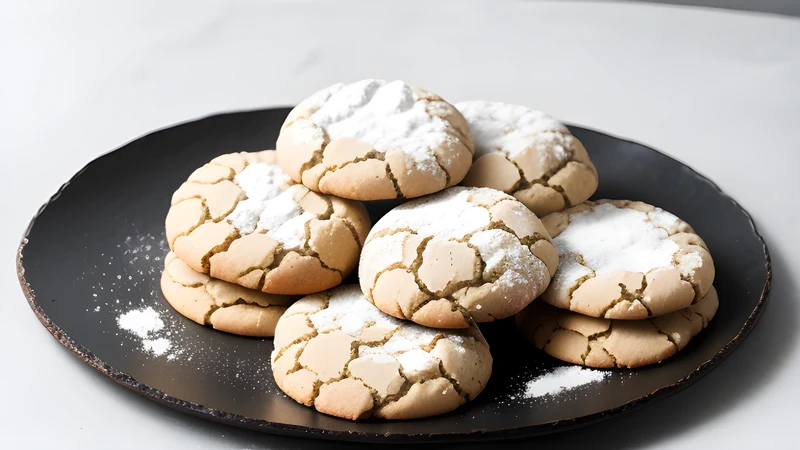
↓ Jump to recipeA chocolate crinkle cookie bakes into one of the prettiest effects in the whole biscuit tin: a ball of dark dough rolled thickly in icing sugar puffs and spreads in the oven, its white coating splitting apart to reveal deep brown fissures underneath, so each cookie ends up marbled like crazed porcelain. Underneath the drama it should be intensely fudgy, closer to the edge of a brownie than to a snappy biscuit. My version leans into that with dark cocoa and a spoonful of espresso powder, which does not make the cookies taste of coffee so much as make the chocolate taste more like itself.
Chocolate Crinkle Cookies
Ingredients
- 200g caster sugar
- 80g flavourless oil (sunflower or vegetable)
- 70g dark cocoa powder
- 1 tbsp instant espresso powder
- 2 large eggs
- 1 tsp vanilla extract
- 190g plain flour
- 1 tsp baking powder
- 1/4 tsp fine salt
- 60g icing sugar, for rolling
Method
- Whisk the caster sugar, oil, cocoa powder and espresso powder into a thick, glossy paste.
- Whisk in the eggs one at a time, then the vanilla, until smooth.
- Stir in the flour, baking powder and salt to a soft, sticky dough.
- Cover and chill for at least 3 hours, or overnight, until firm enough to roll.
- Heat the oven to 170C fan and line two baking sheets with parchment. Put the icing sugar in a shallow bowl.
- Roll the chilled dough into balls of about 25g, then roll each generously in icing sugar until thickly and evenly coated.
- Sit them well apart on the sheets and bake for 10 to 12 minutes until puffed, cracked and just set at the edges but still soft in the centre.
- Cool on the sheet for 5 minutes to finish setting, then move to a rack.
A cookie built for the effect
The crinkle cookie is an American classic most associated with the mid-twentieth century, when recipes for chocolate crinkles circulated widely through community cookbooks, recipe cards and the promotional pamphlets put out by flour and cocoa companies. The technique of rolling a dark, soft dough in powdered sugar so it cracks decoratively as it bakes was a natural fit for the era’s fondness for eye-catching home baking, and the crinkle became a Christmas-tin staple in particular, its snowy, cracked tops reading as festive without any effort. Similar sugar-cracked cookies appear across European and Middle Eastern baking too, but the chocolate crinkle in its familiar form is an American invention of the twentieth-century home kitchen.
The genius of the cookie is that its signature look is a piece of pure food science rather than any decorative skill, which is why it has stayed a reliable favourite for less confident bakers. You do not pipe it, cut it or ice it; you roll a ball in sugar and the oven does the decoration for you. That combination of a striking result and a forgiving method has kept the crinkle in circulation for decades, appearing in the same handwritten recipe boxes that carry oatmeal cookies and gingerbread. Part of the appeal was always thrift, too: the ingredients are storecupboard staples, no butter to cream and no icing to mix, which made it exactly the sort of cookie a household could turn out in quantity for a bake sale or a full biscuit tin at Christmas. It belongs firmly in the festive-baking category alongside my gingerbread men, properly spiced, both of them cookies that earn their place on the Christmas plate as much for how they look as how they taste.
How the crackle actually happens
Understanding why crinkle cookies crack is the key to getting a good pattern every time. As the ball of dough heats in the oven, it warms and spreads outward and upward, and the wet dough underneath expands. The thick coating of icing sugar on the outside, meanwhile, dries into a firmer, more brittle shell that cannot stretch with the expanding dough beneath it, so it splits and fractures, and those splits open up as dark cracks against the white surface. The bigger the contrast you want, the more generously you coat the ball, and a thick, even layer of icing sugar gives the boldest black-and-white marbling.
Two things make or break the pattern. The first is chilling the dough thoroughly, at least three hours and ideally overnight, because a crinkle dough is soft and sticky when freshly made and impossible to roll into neat balls warm; chilling firms it enough to handle and, crucially, slows the spread in the oven so the cookie puffs up and cracks properly rather than melting into a flat, uncracked disc. The second is a genuinely generous coating of icing sugar. A thin dusting mostly dissolves into the dough as it bakes and disappears, leaving faint, unimpressive cracks, so roll each ball until it is thickly and evenly white, pressing the sugar on if you need to.
Some recipes roll the ball first in caster sugar and then in icing sugar, on the theory that the caster layer stops the icing sugar dissolving and gives a cleaner, whiter crack. It genuinely helps if your kitchen is warm or your dough a little soft, and it is worth doing on a humid day when a single icing-sugar coat tends to melt. For most conditions a single thick coat of icing sugar does the job. The other quiet advantage of the double roll is that the caster sugar melts into a thin, slightly crisp shell of its own, which gives the finished cookie a barely-there sugared crunch around its soft edges before you reach the fudge underneath.
Cocoa, espresso and the fudgy centre
The flavour and texture here come from a few deliberate choices. Using oil rather than butter as the fat gives a denser, fudgier, more brownie-like crumb, because oil stays liquid at room temperature and keeps the cooked cookie soft rather than setting firm the way butter does. Dark cocoa powder, whether a good Dutch-processed cocoa or a very dark natural one, gives the deep colour and rich chocolate flavour the cookie needs, and the darker the cocoa, the more dramatic the contrast against the white sugar.
The espresso powder is my addition and it earns its place. A tablespoon of instant espresso stirred into the cocoa paste does not make the cookies taste of coffee at the level used; instead it heightens and deepens the chocolate, the way a pinch of salt sharpens sweetness, giving a fuller, more grown-up chocolate flavour with a faint bitterness that keeps the cookies from being flatly sweet. Coffee and cocoa share a good deal of their roasted, dark flavour chemistry, which is why the two reinforce each other so naturally, and the same trick shows up in my devil’s food cake with fudge frosting.
As with every good soft cookie, the bake is where it is won. Pull the crinkles when they are puffed and cracked and just set at the edges but still soft and slightly underdone in the centre, then let them finish setting on the sheet for five minutes, which gives that fudgy, dense middle. Bake them until the centre feels firm in the oven and they turn cakey and dry, losing the whole point.
The recipe
Whisk 200g caster sugar, 80g flavourless oil, 70g dark cocoa powder and 1 tablespoon instant espresso powder into a thick, glossy paste. Whisk in 2 eggs one at a time, then 1 teaspoon vanilla, until smooth. Stir in 190g plain flour, 1 teaspoon baking powder and 1/4 teaspoon salt to a soft, sticky dough. Cover and chill for at least 3 hours or overnight.
Heat the oven to 170C fan and line two sheets. Put 60g icing sugar in a shallow bowl. Roll the chilled dough into 25g balls, then roll each generously in icing sugar until thickly and evenly coated. Space well apart on the sheets and bake for 10 to 12 minutes until puffed, cracked and just set at the edges but still soft in the centre. Cool on the sheet for 5 minutes before moving to a rack.
Tips, storage and variations
If your cookies bake up with faint cracks and little contrast, the usual culprits are too thin an icing-sugar coating or dough that was not cold enough, so coat generously and keep the unrolled dough in the fridge between batches. If they spread flat and refuse to dome, the dough was too warm or under-chilled; a well-chilled dough holds its shape and cracks best. Baked cookies keep in an airtight tin for up to four days and stay soft in the centre, though the crisp sugared surface softens over time.
For variations, fold 100g of chopped dark chocolate into the dough for molten pockets, or add the finely grated zest of an orange for a chocolate-orange crinkle that is lovely at Christmas. A pinch of chilli or cinnamon in the cocoa paste nods to Mexican hot chocolate. If you like this dark, fudgy chocolate register, my chocolate Guinness cake with a cream cheese top works the same deep-cocoa idea at a larger scale for when a plate of cookies is not quite enough.
Related Content