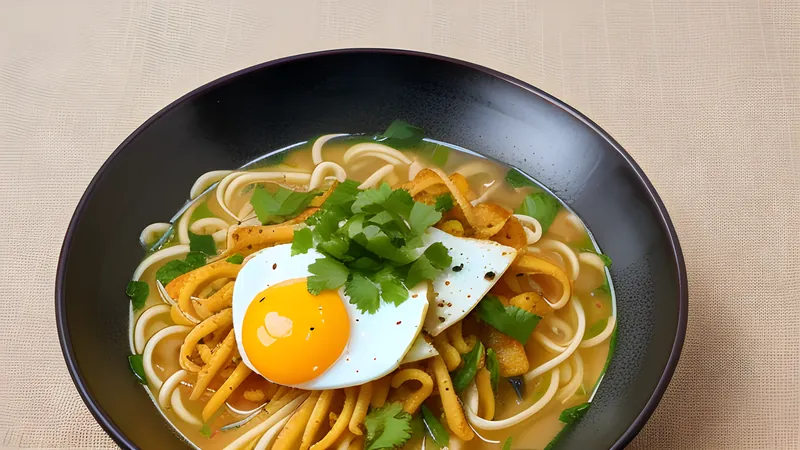
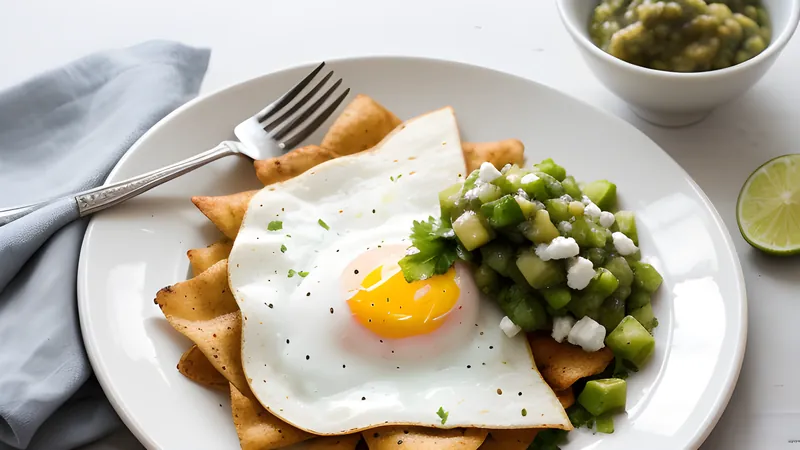
Chilaquiles Verdes with a Fried Egg
Yesterday's tortillas simmered in a bright tomatillo salsa, topped with a runny egg and eaten fast
Contents
↓ Jump to recipeChilaquiles began as a way of not wasting bread, or rather not wasting tortillas. The name comes from Nahuatl, the language of the Aztecs, and is usually glossed as something close to “chillies and greens” or, more loosely, “a broken-up old sombrero”, a nod to the raggedy pile of torn tortillas it starts from. It is the archetypal morning-after breakfast across Mexico: yesterday’s tortillas, gone stale and destined for the bin, fried or toasted crisp and then simmered briefly in a punchy salsa until they soften just enough to eat with a fork. Top it with a fried egg and you have one of the finest ways ever devised to turn scraps into something you would happily order in a restaurant.
Chilaquiles Verdes with a Fried Egg
Ingredients
- 8 corn tortillas (slightly stale is ideal), cut into triangles
- Neutral oil, for frying
- 400g tomatillos, husked and rinsed (or 1 x 400g tin, drained)
- 2 jalapeños or 1-2 serrano chillies
- 0.5 small white onion, plus extra sliced to serve
- 2 garlic cloves
- Small bunch coriander, stalks and leaves separated
- 250ml chicken or vegetable stock
- 2 large eggs
- 3 tbsp soured cream or Mexican crema, loosened with a little milk
- 50g feta or crumbled queso fresco
- Fine salt, to taste
Method
- Husk and rinse the tomatillos, then simmer them with the chillies, onion and garlic in a little water for 4 to 5 minutes until soft (or char under a hot grill for a smokier sauce).
- Blend the softened tomatillos with the chillies, onion, garlic and coriander stalks to a smooth green sauce; season with salt.
- Cut the tortillas into sixths or eighths and fry in 2cm of oil at about 175C, in batches, until golden and crisp; drain and salt at once.
- Heat 1 tbsp oil, fry the blended salsa for 3 to 4 minutes until thickened, then loosen with the stock to a coating sauce.
- Bring the salsa to a lively simmer, fold in the chips gently, cook for 1 to 2 minutes only, then plate immediately.
- Fry the eggs in a little oil, spooning hot oil over, until the whites set and the yolks stay runny.
- Top the chips with a fried egg each, drizzle over the loosened crema, crumble on the feta, scatter with coriander and sliced onion and serve at once.
Verdes, rojos and the great texture debate
The two great camps are verdes and rojos: green, made with tomatillos, and red, made with tomatoes and dried chillies. This is the green version, brighter and tangier, which is my preference in the morning because the acidity of the tomatillos cuts through the richness of the egg and cream. The red is deeper and earthier and equally worth knowing.
Then there is the argument that divides Mexican kitchens more sharply than green versus red: how soft should the chips be? One school wants the tortillas simmered until they slump and soak up the salsa like a savoury bread pudding, soft and saucy throughout. The other insists the chips must stay part-crisp, with bite and structure, folded through the salsa at the very last second. I sit firmly with the second camp, and this recipe is built around it, because the pleasure of chilaquiles for me is the contrast: edges that still crackle against patches that have gone silky with salsa. Get the timing right and you get both textures in one forkful; leave it too long and it collapses into mush.
A quick and important distinction while we are here: chilaquiles are not nachos, and they are not huevos rancheros. Nachos are chips as a vehicle for toppings; huevos rancheros keeps the tortillas whole under the eggs. Chilaquiles are specifically about tortilla pieces cooked in the salsa, taking on its flavour while holding some of their own crunch. That distinction is the dish.
Tomatillos: not green tomatoes
Tomatillos throw people off. They look like small green tomatoes wrapped in a papery husk, but they are a different fruit, a member of the physalis family, with a firm flesh and a bracing, lemony tartness that no tomato has. That acidity is the engine of a verde salsa. Fresh ones want their sticky husks peeled off and the fruit rinsed of its residue before cooking. If you cannot find fresh, tinned tomatillos are a genuinely good substitute here and save you a step, since they are already cooked and soft.
You can build the salsa two ways. Roasting or charring the tomatillos, chillies, onion and garlic under a hot grill until blackened in spots gives a deeper, smokier sauce. Simmering them in a little water until soft, four or five minutes, gives a fresher, greener, more vivid one; that is the classic verde approach and the one I default to for a morning plate. Either way, blend the softened tomatillos with the chillies, onion, garlic and the coriander stalks (they carry more flavour than the leaves) to a smooth, pourable green sauce, and season with salt.
Frying the chips
Stale tortillas are the right tortillas. A day-old, slightly dried tortilla fries up crisper and stays sturdier in the salsa than a fresh, damp one, which is the whole origin of the dish. Cut the tortillas into sixths or eighths. Fry the triangles in a couple of centimetres of hot oil, in batches, until golden and crisp, then drain on kitchen paper and salt them straight away. If you would rather not deep-fry, toss the triangles with a little oil and salt and bake them at 200C fan for twelve to fifteen minutes, turning once, until crisp; they will be a shade less rich but perfectly good. Shop-bought unsalted tortilla chips are the emergency fallback, though home-fried is worth the ten minutes.
Oil temperature is the difference between crisp and greasy. Too cool, around 150C, and the triangles drink up oil before they colour, frying limp and heavy; too hot, past 190C, and they brown outside while staying raw within. Aim for about 175C, where a tortilla scrap sizzles briskly and surfaces at once without violent spitting, and fry in unhurried batches so the oil holds its heat. Salt the chips the second they leave the pan, while the surface is still tacky enough to catch it; salt on a cooled chip just slides off.
The salsa, the sizzle and the timing
Now the part that decides everything. Heat a tablespoon of oil in a wide frying pan or shallow casserole over medium-high heat. Pour in the blended green salsa, standing back because it will spit, and let it fry and bubble for three or four minutes, darkening slightly and thickening. Loosen it with the stock to a sauce that coats the back of a spoon but still flows; you want enough to cloak the chips without drowning them.
Bring the salsa to a lively simmer, then add the fried chips and fold them through quickly and gently with a spatula, coating every piece. From this moment you are on a clock. Cook for no more than a minute or two, just long enough for the chips to warm and drink up some salsa while keeping their spine, then get them off the heat and onto plates at once. The residual heat keeps softening them, so the plate you serve one minute late is a different, sadder dish. Working fast here is the single technique that makes or breaks it.
The egg and the finish
While the salsa is reducing, fry your eggs in a little oil, spooning hot oil over the tops so the whites set and the yolks stay loose. A runny yolk is deliberate: when you break it, it slackens the salsa and enriches the whole plate, doing much the same job the crema does.
Pile the saucy chips onto warm plates and slide a fried egg on top of each. Drizzle over the loosened crema in ribbons, crumble on the feta or queso fresco, scatter with the reserved coriander leaves and a few raw onion slices for bite, and serve immediately. Break the yolk into the chips and eat before the crunch fades.
Fixing the usual failures
Soggy, collapsed chilaquiles mean the chips sat in the salsa too long, or the salsa was too thin; fry the chips well, thicken the salsa, and serve the second they are coated. Chips that stay bone-dry and hard mean too little salsa or too brief a toss, so make enough sauce and fold thoroughly. A salsa that tastes flat and sweetish usually means underripe or overcooked tomatillos, or not enough chilli and salt; the sauce should be assertively tart and a little hot. Bitter, acrid notes come from overcharred garlic or scorched salsa, so watch the heat when you fry the sauce.
Toppings, make-ahead and variations
Chilaquiles are a base for whatever you have. Shredded leftover chicken is the classic addition, turning it into a fuller meal; refried beans, avocado, pickled onions or a handful of extra chillies all belong. In parts of Mexico the dish is served drier or wetter, with more cheese or a slick of extra crema, and everyone has an opinion.
A word on the dairy. The crema wants to be thin enough to drizzle in ribbons, so slacken soured cream with milk a teaspoon at a time until it falls from the spoon in a thread; crème fraîche stands in, though it is tangier and thicker. For the cheese, a young queso fresco or a mild feta crumble well and hold in salty pockets rather than melting into the salsa, whereas a hard aged cheese would disappear. Add both at the table, off the heat, so the cool crema plays against the hot chips.
You can prep ahead sensibly, as long as you keep the elements apart. Make the green salsa up to five days ahead and refrigerate or freeze it. Fry the chips a few hours ahead and keep them in a paper-lined tin at room temperature. Then the whole assembly is a five-minute job: reheat the salsa, toss the chips, fry the eggs. Salsa from the freezer often tastes flatter, so sharpen it with lime or salt before it meets the chips. What you must never do is combine the chips and salsa in advance, because there is no reviving a chip that has already dissolved. The same yesterday’s-tortilla thriftiness runs through a good plate of migas with tortilla, egg and chorizo, and once you have the salsa-and-egg rhythm down, a lazy Sunday breakfast never has to be dull again.
Related Content