Chickpea and Chorizo Stew with Spinach
A twenty-minute Spanish supper with a smoky, sherry-sharp base
Contents
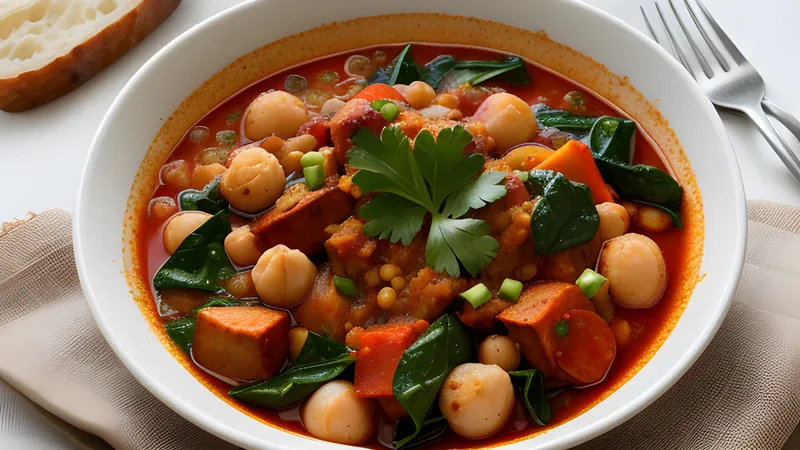
↓ Jump to recipeThere is a dish they serve in the tapas bars of Seville called garbanzos con espinacas, chickpeas stewed soft with spinach and a fistful of spice, and it has fed people through Lent for centuries without a scrap of meat in it. What I cook on a Tuesday is its louder cousin: the same soft chickpeas and dark greens, but with a ring of chorizo rendered down first so the whole pot takes on that orange, smoky slick. It comes together in the time it takes to boil rice you don’t actually need, because the bread does that job better.
The clever bit here has nothing to do with the chorizo, which everyone reaches for anyway. It’s the spoonful of sherry vinegar stirred in at the very end, off the heat. A stew this rich, this paprika-heavy, flattens on the palate after two mouthfuls. The vinegar lifts the lid off it. You taste the smoke, then the sweetness of the pepper, then a clean sharp edge that makes you want the next spoonful. Miss it out and the dish is fine. Put it in and people ask what you did.
Chickpea and Chorizo Stew with Spinach
Ingredients
- 200g cooking chorizo, skinned and cut into 1cm coins
- 2 tbsp olive oil
- 1 large onion, finely diced
- 4 garlic cloves, thinly sliced
- 1 red pepper, diced
- 2 tsp smoked paprika (pimentón, sweet or a mix of sweet and hot)
- 1 tsp ground cumin
- 1 tbsp tomato purée
- 400g tin chopped tomatoes
- 2 x 400g tins chickpeas, drained (480g drained weight)
- 300ml chicken or vegetable stock
- 1 bay leaf
- 200g spinach, washed
- 1 tbsp sherry vinegar, plus more to taste
- Salt and black pepper
- Crusty bread, to serve
Method
- Fry the chorizo coins in the olive oil over medium heat for 4–5 minutes until the fat runs orange and the edges crisp. Lift out with a slotted spoon, leaving the fat behind.
- In that fat, soften the onion, pepper and a pinch of salt for 10 minutes until sweet and slumped. Add the garlic and cook 2 minutes more.
- Stir in the smoked paprika, cumin and tomato purée; cook 1 minute until fragrant. Add the chopped tomatoes and cook 5 minutes until jammy and split from the oil.
- Add the chickpeas, stock, bay leaf and the chorizo. Simmer for 12–15 minutes, mashing a ladle of chickpeas against the side to thicken.
- Wilt the spinach through in handfuls. Take off the heat, stir in the sherry vinegar, then taste and adjust salt, pepper and vinegar. Serve with bread.
Why chorizo behaves like two ingredients
Cooking chorizo and cured chorizo are different animals, and the recipe wants the cooking sort: the soft, raw, horseshoe-shaped sausage you fry, rather than the firm sliceable kind you eat cold. When you set those coins in a little oil over medium heat, two things happen at once. The paprika-stained fat renders out and dyes everything it touches, and the meat itself firms up and catches at the edges. That rendered fat is the actual seasoning of this dish. If you fry the chorizo too hard and burn the paprika in the fat, it turns acrid and there is no coming back, so keep the heat honest and pull the coins the moment their edges crisp.
I skin the sausage first. The casing on cooking chorizo can go rubbery and chewy in a wet stew, and slipping it off with a small knife takes ten seconds. Leave it on if you like the bite; I don’t.
Building a sofrito that earns its keep
Everything good about Spanish home cooking starts with a sofrito, the slow-cooked base of onion, pepper and garlic that Spaniards treat as non-negotiable. The temptation on a weeknight is to rush it, to soften the onion for three minutes and call it done. Give it ten. You want the onion translucent and collapsing, sweet enough to eat on its own, because that sweetness is what balances the paprika and the acid later on. A pinch of salt at the start pulls the water out and speeds the collapse.
Garlic goes in after the onion has had its head start, because raw sliced garlic dropped into hot fat scorches in under a minute and turns bitter. I use four cloves and I have strong feelings about anyone who uses fewer. Sliced, not crushed, so it holds its shape in the finished stew and gives you little sweet slivers rather than a background hum.
When the paprika goes in, it needs about sixty seconds in the hot fat to bloom, which wakes up its oil-soluble colour and flavour, and then the tomato purée wants a minute of frying too, to lose its raw tinny edge. The chopped tomatoes follow and cook down until they split from the oil and go properly jammy, five minutes or so. Rush this and you get a thin, watery, tomatoey stew; hold your nerve and you get a base with body.
The chickpea question
Tinned chickpeas are the right call here, and I say that as someone who soaks and simmers dried pulses for other dishes. The stew cooks in twenty-five minutes and dried chickpeas want an hour or more even after an overnight soak, so tins keep this a weeknight dish. Drain and rinse them; the starchy tin liquid (aquafaba) can go into a different recipe, but here it muddies things.
The trick to thickening without flour or cornflour is to mash a ladleful of the chickpeas against the side of the pan halfway through the simmer. They break down into a rough purée that binds the liquid into something you can pile onto bread rather than something you chase round the bowl with a spoon. It’s the same logic behind a good hummus and behind the way old Andalusian cooks thickened their pot with a slice of fried bread pounded in a mortar.
Spinach, in at the death
Spinach wilts in about ninety seconds and overcooks into khaki sludge in about three minutes, so it is the last thing in. Add it in handfuls, folding each one through until it collapses before the next goes in, and take the pan off the heat while there’s still a bit of structure to the leaves. Two hundred grams looks like an absurd mountain and cooks down to almost nothing, which is the eternal comedy of spinach. Frozen leaf spinach works too, thawed and squeezed dry hard, though fresh keeps a brighter colour.
Then the sherry vinegar, off the heat, and the final tasting. Salt is the last variable because chorizo, stock and tinned tomatoes all bring their own, and you can’t take it out once it’s in.
Tips, swaps and making it ahead
- No sherry vinegar? Red wine vinegar does the job at slightly lower volume, since it’s sharper. A squeeze of lemon works in a pinch but tastes different, brighter and less rounded.
- Vegetarian version: skip the chorizo, fry a teaspoon of smoked paprika and a pinch of fennel seed in the oil at the start to fake that smoky note, and add a tin of butter beans alongside the chickpeas for a plusher pot. Use vegetable stock.
- Make it a full meal: crack eggs into little wells in the surface, cover, and let them poach in the stew for six minutes for something close to a Spanish huevos. A poached egg over pulses is one of the great cheap suppers, which is exactly what happens in sopa de ajo, Castilian garlic soup, where an egg turns a bowl of bread and stock into dinner.
- Storage: this is better the next day, once the flavours have married and the chickpeas have softened further. It keeps three days in the fridge and freezes well for a month; add the spinach fresh on reheating if you can, as it goes slippery on freezing. Loosen with a splash of stock when you warm it through, because the chickpeas drink the liquid overnight.
If you like the chorizo-and-egg direction, the same sausage does beautiful work in a frittata with potato, chorizo and roasted pepper, where the rendered fat crisps the potatoes instead of dyeing a stew, and it turns up again fried into migas with tortilla, egg and chorizo for a breakfast with proper backbone. A packet of cooking chorizo, it turns out, has range.
Serve this in wide shallow bowls with too much bread and a green salad if you’re being good. It is the kind of supper that costs almost nothing, feeds four generously, and tastes like you thought about it for longer than you did.
Related Content