Weeknight Chicken Pho with Charred Ginger
A fragrant, restorative bowl, faster than you think
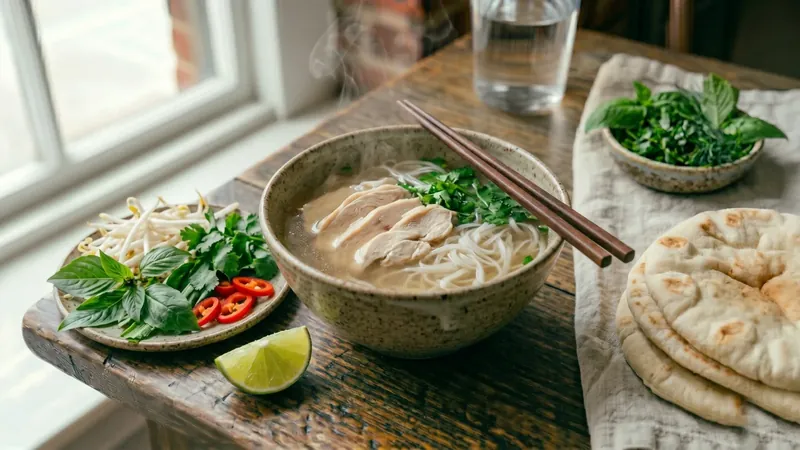
Pho can feel like an all-day project, but a good chicken version is genuinely a weeknight bowl. The twist that makes it sing is charring the ginger and onion before they go into the pot, blistering them over a flame so they lend a smoky, sweet depth that lifts the whole broth. Built on shop-bought stock and a handful of warm spices, it comes together in under an hour, fragrant and restorative.
Weeknight Chicken Pho with Charred Ginger
Ingredients
- 1 large onion, halved and unpeeled
- 1 thumb-sized piece of fresh ginger, halved lengthways
- 1.5 litres good chicken stock
- 4 bone-in chicken thighs, skin removed
- 3 star anise
- 1 cinnamon stick
- 3 cloves
- 1 tbsp coriander seeds
- 2 tbsp fish sauce, plus more to taste
- 1 tsp caster sugar
- 250g flat dried rice noodles
- 200g beansprouts
- 1 handful each of Thai basil and coriander
- 2 red chillies, sliced
- 1 lime, cut into wedges
- 4 spring onions, finely sliced
Method
- Char the onion and ginger directly over a gas flame, or under a hot grill, turning until blackened and fragrant, about 5 minutes.
- Toast the star anise, cinnamon, cloves and coriander seeds in a dry pan for 1-2 minutes until aromatic.
- Put the charred onion and ginger, toasted spices, stock and chicken thighs into a large pan. Bring to a gentle simmer.
- Simmer, partly covered, for 25-30 minutes until the chicken is tender, skimming any foam from the surface.
- Lift out the chicken, shred the meat from the bones and set aside. Strain the broth and discard the aromatics.
- Return the broth to the pan, season with the fish sauce and sugar, and adjust with more fish sauce to taste.
- Soak or cook the rice noodles according to the packet, then divide between four deep bowls.
- Top with the shredded chicken and ladle over the hot broth.
- Serve with beansprouts, herbs, chilli, lime wedges and spring onions for everyone to add at the table.
3 The Story
Pho is Vietnam’s most famous dish, a bowl of rice noodles in a clear, aromatic broth that is eaten at every hour of the day, from breakfast stalls to late-night kitchens. It emerged in the north of the country, around Hanoi, in the early twentieth century, and the southern style that later developed tends to be sweeter and more lavishly garnished. The two great branches are pho bo, made with beef, and pho ga, made with chicken, the lighter cousin that this recipe celebrates.
What makes pho distinctive is the broth, which aims for clarity and fragrance rather than heaviness. The aromatics are kept simple but precise: star anise, cinnamon, cloves and coriander seed give the warm, faintly sweet spicing, while fish sauce provides the savoury backbone that defines so much Vietnamese cooking. A true pho bo broth might simmer for many hours over bones, but a chicken version is naturally quicker, and a good ready-made stock gives a respectable head start without dishonour.
Charring the onion and ginger is the step that separates a flat broth from a fragrant one, and it is standard practice in Vietnamese kitchens rather than a novelty. Blackening them over an open flame or under a fierce grill caramelises their sugars and adds a gentle smokiness that infuses the whole pot. The same goes for toasting the whole spices, a quick step that wakes up their aromatic oils before they steep.
Skimming matters too. As the broth comes up to a simmer, impurities rise as a grey foam, and lifting them away with a spoon keeps the finished soup clean and clear rather than cloudy. A gentle simmer, never a hard boil, is the rule, since vigorous bubbling emulsifies the fat and muddies the broth. The reward for this small patience is a soup that looks as good as it tastes.
The other half of pho is the table itself. A bowl arrives plain, and each person finishes it to taste with a generous plate of accompaniments: crunchy beansprouts, fresh herbs such as Thai basil and coriander, sliced chilli for heat and a wedge of lime for brightness. Some like a dash of hoisin or sriracha stirred in, though purists prefer to taste the broth first. This ritual of building your own bowl is part of the pleasure, letting everyone tune the balance of fresh, hot, sour and savoury exactly to their liking. Served steaming, with the herbs just wilting into the broth, it is as comforting as food gets.
Related Content