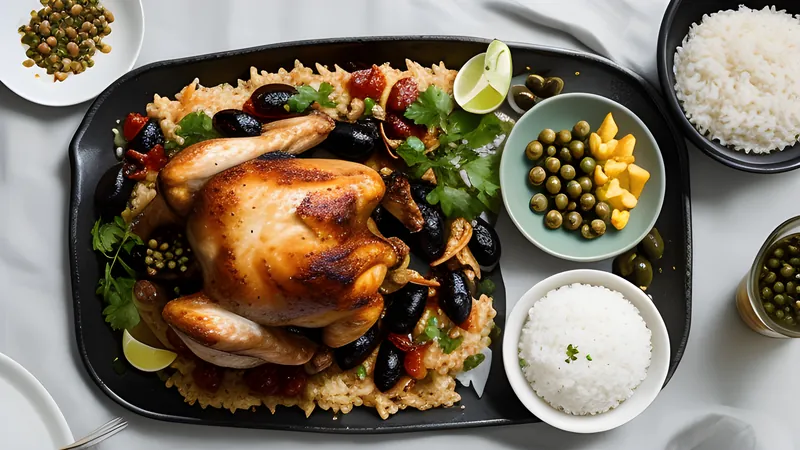
Chicken Marbella with Prunes and Capers
The famous dinner-party bird, with a splash of sherry vinegar for lift
Contents
↓ Jump to recipeSome recipes become so famous they stop belonging to a cookbook and start belonging to everyone. Chicken Marbella is one of them: the sweet-savoury, make-ahead roast that carried a generation of dinner parties, still turned out at Christmas and christenings and quiet Sunday tables the world over. It looks unlikely on paper — chicken with prunes and olives and a fistful of brown sugar — and it works completely. I have made only one change to the original in twenty years, and it is a small one that stops the whole thing tipping into sweetness.
Chicken Marbella with Prunes and Capers
Ingredients
- 8 bone-in, skin-on chicken thighs and drumsticks (about 1.5kg)
- 6 garlic cloves, crushed
- 2 tbsp dried oregano
- 120ml red wine vinegar
- 1 tbsp sherry vinegar
- 120ml olive oil
- 150g pitted prunes
- 100g pitted green olives
- 60g capers, with 1 tbsp of their brine
- 4 bay leaves
- 80g soft light brown sugar
- 120ml dry white wine
- 3 tbsp fresh flat-leaf parsley, chopped
- Salt and black pepper
Method
- In a large bowl, combine the chicken with the garlic, oregano, both vinegars, olive oil, prunes, olives, capers and brine, and bay leaves. Season with salt and pepper. Cover and marinate in the fridge overnight, or at least 4 hours.
- Heat the oven to 180C fan. Arrange the chicken skin-side up in a single layer in a large roasting tin and spoon the marinade, prunes, olives and capers around it.
- Sprinkle the brown sugar evenly over the chicken and pour the white wine around the edges of the tin, taking care not to wash the sugar off the skin.
- Roast for 50 to 55 minutes, basting once or twice with the pan juices, until the chicken is cooked through, deeply golden and the juices run clear.
- Lift the chicken, prunes and olives onto a warm platter. Spoon over some pan juices, scatter with parsley, and serve the rest of the juices in a jug.
The most famous chicken of its era
Chicken Marbella first appeared in 1982 in The Silver Palate Cookbook, written by Julee Rosso and Sheila Lukins, who ran a small, wildly influential food shop of the same name on New York’s Upper West Side. It was the first main course in the book, and it became a phenomenon — the dish that defined a certain kind of relaxed, generous American entertaining through the 1980s and beyond. Its genius was practical as much as culinary: you marinate the chicken the day before, tip everything into a tin, and roast it while you see to your guests. Few celebration dishes are so forgiving of a distracted cook.
The flavour is Mediterranean by way of Manhattan — Spanish in inspiration, named for the resort town on Andalusia’s coast, and built on the Iberian love of pairing meat with dried fruit and briny things. The prunes turn jammy and dark, the olives and capers pull hard in the salty direction, the oregano and garlic hold it together, and the brown sugar and wine bake into a sticky, savoury glaze. It belongs in the same repertoire of make-ahead crowd-pleasers as roast chicken with tarragon butter, done right, and if you like the sweet-and-salty interplay you will recognise the same instinct at work in souvlaki with tzatziki and charred pitta.
The original recipe is remarkably generous — the book version serves ten to twelve and was written for a shop that catered parties — and part of its charm is how it turns an alarming-sounding combination of ingredients into something everyone recognises as delicious. Prunes and olives in the same tin sounds like a dare. On the plate it reads as balance: sweet against salt, soft against chewy, the oregano and garlic tying the two poles together.
My one change: a spoon of sherry vinegar
The original leans sweet — a lot of brown sugar, a lot of soft prunes — and on an off day it can cross over into cloying. My fix is a single tablespoon of sherry vinegar stirred into the marinade alongside the red wine vinegar. Sherry vinegar has a rounder, nuttier, more grown-up acidity than plain wine vinegar, and that extra note of sharpness keeps the finished dish balanced, cutting cleanly through the sugar and the jammy prunes so every mouthful stays bright to the last. It is a Spanish ingredient dropped into a Spanish-inspired dish, so it feels at home, and it is the difference between a bird people enjoy and one they remember.
Why the overnight marinade matters
Do not skip the long marinade. This is where Marbella earns its depth. Overnight, the garlic, oregano and vinegar work into the meat, the prunes plump in the acidic liquid, and the flavours marry into something far greater than a quick toss could manage. Four hours is the minimum; a full 24 is better. Because the chicken sits in an acidic bath, the surface proteins begin to break down and the meat roasts up more tender and more thoroughly seasoned right through.
Use bone-in, skin-on pieces — a mix of thighs and drumsticks is ideal. The bones keep the meat juicy through nearly an hour in the oven, the skin crisps and takes the glaze, and dark meat stands up to the assertive marinade far better than lean breast, which tends to dry.
One practical note on the marinade bowl: use glass, ceramic or a food bag rather than bare metal, because the acid from the vinegars can react with reactive metals and pick up a tinny taste over a long soak. Turn the pieces once if you remember, so everything sits in the liquid evenly, though the recipe is forgiving if you forget.
Roasting for glaze and crisp skin
Arrange the chicken skin-side up in a single layer so every piece browns; piled up, it steams and the skin stays pale. The technique that makes Marbella look and taste special is in the last two steps: sprinkle the brown sugar directly over the skin, then pour the wine around the edges of the tin rather than over the top. That way the sugar caramelises on the skin into a lacquered, sticky crust while the wine keeps the base of the tin saucy and stops the sugars catching. Baste once or twice as it roasts to build up the glaze and keep the prunes and olives glossy.
Fifty to fifty-five minutes at 180C fan should bring bone-in pieces to done — the juices run clear and the meat pulls easily from the bone. An instant-read thermometer in the thickest part of a thigh should show 75C.
Tips and troubleshooting
- Too sweet for you? Cut the brown sugar to 60g and lean on the sherry vinegar; the dish still glazes beautifully.
- Skin not crisp? Your pieces were crowded or the tin was too small. Give them space, and finish under a hot grill for two or three minutes if needed.
- Pan juices thin? Tip them into a small pan and boil for a few minutes to concentrate before serving.
- Prunes too soft, almost dissolving? That is normal and part of the point — they melt into the sauce. Add a few extra whole ones near the end if you want intact fruit on the plate.
- Making a big batch? Use two tins rather than crowding one; the recipe scales up cleanly for a crowd, which is exactly what it was written for.
Make-ahead and storage
This is entertaining food at its most stress-free. The chicken must marinate ahead anyway, and once roasted it is excellent warm, at room temperature, or cold the next day — the flavours only deepen. That make-in-advance quality is precisely why it became a buffet and party staple. Leftovers keep for three days in the fridge; the meat, shredded, is wonderful in a salad or folded through couscous with some of the jammy prunes. It does not freeze as gracefully once roasted, so cook what you need.
What to serve with it
Marbella wants something plain and starchy to carry its rich, sweet-savoury juices. Fluffy white rice or couscous is traditional and soaks up the sauce; buttered orzo, plain boiled potatoes or good bread all work. Keep the vegetables simple and green — a sharp leaf salad or plainly dressed greens balance the sweetness. A chilled fino sherry or a dry Spanish white nods to its Andalusian name.
Variations
Swap the prunes for dried apricots or a mix of both for a lighter, more golden version. Chicken thighs alone make a neater tin if you prefer uniform pieces. For a festive centrepiece you can even use the marinade on a spatchcocked whole bird, roasting it flat so it cooks evenly and the skin lacquers all over. And a scatter of toasted almonds over the finished platter adds a Spanish crunch that suits the flavours perfectly.
Make it once for people you like, the day before you need it, and you will understand why it never went out of fashion. It is the rare showpiece that leaves the cook free to actually sit down and enjoy the party.
Related Content