Smoky Chipotle Chicken Fajitas with Charred Lime
Sizzling, charred and bright
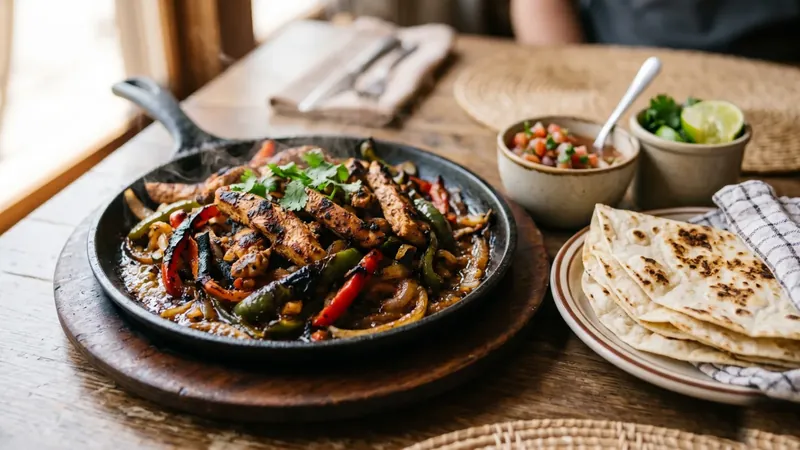
Fajitas live or die on the char, so this version chases it twice over. The chicken sits in a smoky chipotle marinade before hitting a screaming-hot pan, while halved limes are seared cut-side down until caramelised, then squeezed over the lot. The result is sizzling, deeply savoury and lifted by a sweet, smoky burst of citrus, ready to pile into warm tortillas with all the trimmings.
Smoky Chipotle Chicken Fajitas with Charred Lime
Ingredients
- 600g chicken thigh fillets, sliced into strips
- 2 tbsp chipotle paste
- 2 tbsp olive oil
- 1 tsp ground cumin
- 1 tsp smoked paprika
- 1 tsp dried oregano
- 2 garlic cloves, crushed
- Juice of 1 lime, plus 2 limes halved for charring
- 1 red pepper, sliced
- 1 yellow pepper, sliced
- 1 red onion, sliced
- Salt and black pepper, to taste
- 8 small flour tortillas, to serve
- Soured cream, sliced avocado and coriander, to serve
Method
- In a bowl, mix the chipotle paste, 1 tbsp olive oil, cumin, smoked paprika, oregano, garlic, the juice of 1 lime and a good pinch of salt.
- Add the chicken strips and turn to coat. Leave to marinate for at least 20 minutes, or up to a few hours in the fridge.
- Heat a large frying pan or griddle until very hot. Add the remaining oil and cook the peppers and onion for 5-6 minutes until charred but still with some bite. Set aside.
- Add the marinated chicken to the same hot pan in a single layer and cook for 6-8 minutes, turning, until charred at the edges and cooked through.
- Return the peppers and onion to the pan and toss together for 1 minute to combine.
- Meanwhile, place the halved limes cut-side down in a separate dry hot pan for 2-3 minutes until charred and caramelised.
- Warm the tortillas in a dry pan or microwave.
- Squeeze the charred limes over the sizzling chicken and vegetables.
- Serve everything in the pan with the tortillas, soured cream, avocado and coriander, letting everyone build their own.
3 The Story
The word fajita comes from the Spanish faja, meaning a strip or belt, a nod to the cut of beef the dish was originally built on. It traces back to the ranch culture of South and West Texas, where Mexican cowhands working the cattle drives were often paid partly in less prized cuts, including the skirt steak. Grilled over an open fire and rolled into a tortilla, that humble strip of beef became the original fajita.
For decades it stayed a regional, working-class food. The turning point came in the 1960s and 1970s, when cooks and restaurateurs in Texas began putting fajitas on menus and serving them with flair. The now-iconic sizzling cast-iron platter, brought to the table still spitting, did as much for the dish’s fame as the flavour did, and by the 1980s fajitas had become one of the best-known dishes of Tex-Mex cooking across the United States and beyond. Chicken, prawn and vegetable versions followed the original beef.
The smoky heat in this recipe comes from chipotles, which are jalapeño chillies that have been ripened to red, then smoke-dried. That smoking gives them a distinctive deep, woody warmth quite unlike fresh green chillies, and it is sold conveniently as a paste or in adobo sauce. Chipotle is a genuinely Mexican ingredient with a long history, so it sits comfortably here rather than feeling tacked on.
Charring the lime is a small trick with an outsized payoff. Heat caramelises the natural sugars in the fruit and tames some of its raw, sharp acidity, leaving a juice that is rounder, slightly sweet and faintly smoky, an ideal match for the chipotle. Searing citrus this way is a common move in Mexican and South American cooking, and it takes only a couple of minutes in a dry, hot pan.
The non-negotiable rule for good fajitas is heat. The pan must be properly hot so the chicken and vegetables char and caramelise rather than stew in their own juices, and they should be cooked in batches if the pan is crowded. Thigh meat is the better choice over breast, staying juicy under fierce heat. Serve the moment everything is sizzling, and let everyone fold their own.
Related Content