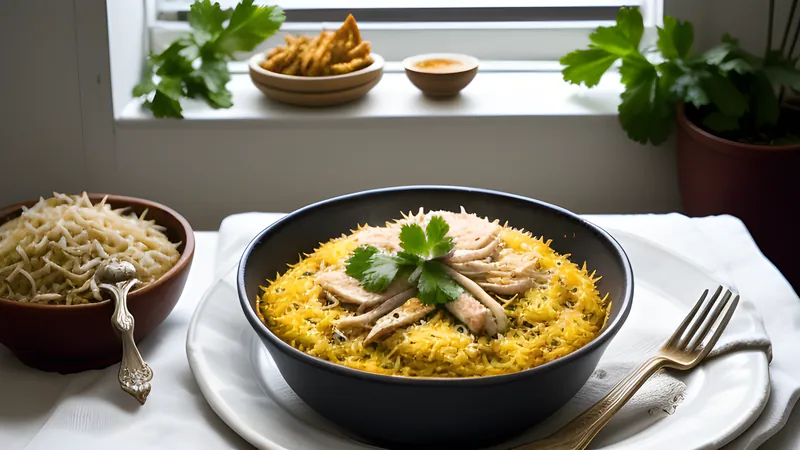
Chicken Dum Biryani, Layered and Sealed
Marinated chicken and saffron rice, cooked shut in its own steam
Contents
↓ Jump to recipeBiryani has a reputation for being difficult, and the truth is that it isn’t hard so much as unforgiving of shortcuts. Every stage does a specific job, and skip one and the whole thing collapses into a soggy chicken-and-rice bake. Do each properly and you get the real thing: fragrant basmati where every grain stands apart, chicken cooked through and tender in its spiced gravy, the two layers married by steam and stained gold with saffron.
The word dum means the technique itself — slow-cooking food in a sealed pot so it steams gently in its own trapped moisture and aroma. It’s a Mughal-era method, brought to the Indian subcontinent by Persian cooks and refined in the royal kitchens of Hyderabad and Lucknow, where sealing the pot with dough was a way of cooking rice and meat together without either drying out or overcooking. My twist is a habit borrowed from the best Hyderabadi cooks: fry the onions until genuinely dark and use them in three places, so their sweetness runs all the way through.
Chicken Dum Biryani, Layered and Sealed
Ingredients
- 800g bone-in chicken thighs and drumsticks, skinless
- 400g aged basmati rice
- 250g full-fat natural yoghurt
- 3 large onions, thinly sliced
- 2 tbsp ginger-garlic paste
- 2 green chillies, slit
- 1 tsp ground turmeric
- 2 tsp Kashmiri chilli powder
- 2 tsp garam masala
- 1 tsp ground cumin
- Juice of 1 lemon
- 1 large pinch saffron, soaked in 4 tbsp warm milk
- Small bunch coriander, chopped
- Small bunch mint, chopped
- 4 green cardamom pods, 1 black cardamom, 1 cinnamon stick, 4 cloves, 2 bay leaves
- 3 tbsp ghee
- 4 tbsp neutral oil (for frying onions)
- 2 tbsp rosewater or kewra water (optional)
- Fine sea salt
Method
- Marinate the chicken: whisk the yoghurt with the ginger-garlic paste, turmeric, chilli powder, garam masala, cumin, lemon juice, green chillies and a teaspoon of salt. Fold in the chicken and half the chopped herbs, cover and chill at least 1 hour, ideally overnight.
- Fry the onions: heat the oil and fry the sliced onions over medium heat, stirring, for 15 to 20 minutes until deep brown and crisp. Drain on paper and stir a third into the marinated chicken.
- Cook the chicken base: warm 2 tbsp of the ghee in a heavy pot, add the marinated chicken with all its marinade and cook over medium heat for 12 to 15 minutes until nearly done and the gravy has thickened to coat the meat. Season boldly.
- Par-boil the rice: rinse the basmati until the water runs clear, soak 20 minutes and drain. Bring a large pot of generously salted water with the whole spices to a rolling boil, add the rice and boil just 4 to 5 minutes until soft at the edges but firm in the middle. Drain immediately.
- Spread the par-boiled rice evenly over the chicken. Drizzle over the saffron milk, the remaining melted ghee and the rosewater, and scatter over the rest of the fried onions and herbs.
- Seal the pot: clamp on a tight lid over a sheet of foil, or seal the rim with a rope of flour-and-water dough so no steam escapes.
- Cook the dum on low heat for 20 to 25 minutes, setting the sealed pot on a flat tava or heavy skillet to diffuse the heat. Take off the heat and rest, still sealed, for a further 10 minutes.
- Crack the seal, slide a wide spoon down the side and lift gently from the bottom to keep the grains whole. Serve with a bowl of cooling raita.
The three pillars: birista, marinade, rice
Birista — deep-fried crispy onions — is the flavour that people can’t quite place in a good biryani. Fried slowly until deep golden-brown and sweet, they go into the marinade, get layered through the rice, and crown the finished dish. Don’t rush them: sliced thin and fried patiently over a medium heat, they turn sweet and crisp; fried too fast they burn bitter. Drain them on kitchen paper and they’ll crisp up as they cool.
The marinade does the tenderising. Yoghurt’s gentle acidity and the ginger-garlic paste break down the chicken and carry the spices deep into the meat. Bone-in thighs and drumsticks are the right cut — they stay juicy through the steaming where breast would dry out, and the bones add flavour. Give it at least an hour, ideally overnight.
The rice must be aged basmati, par-boiled to exactly 70 per cent done before it’s layered on. This is the stage most home cooks get wrong. The rice finishes cooking in the steam of the dum, so if you boil it fully first it turns to mush; too little and it stays chalky. You want grains that are cooked at the edges but still firm at the very centre.
Method
Marinate the chicken. Whisk the yoghurt with the ginger-garlic paste, turmeric, chilli powder, garam masala, cumin, lemon juice, green chillies and a good teaspoon of salt. Fold in the chicken and half the chopped herbs, cover, and leave in the fridge for at least an hour, preferably overnight.
Fry the onions. Heat the oil in a wide pan and fry the sliced onions over medium heat, stirring often, for 15 to 20 minutes until deep brown and crisp. Drain on kitchen paper. Stir a third of them into the marinated chicken.
Cook the chicken base. In a heavy, wide pot with a tight lid, warm 2 tablespoons of the ghee. Add the marinated chicken with all its marinade and cook over medium heat for about 12 to 15 minutes, until the chicken is nearly done and the yoghurt gravy has thickened and reduced — it should coat the meat, not swim around it. Watery gravy here means a wet biryani, so drive off the excess. Taste and adjust the salt to a slightly bold level, since the rice above will be mild.
Par-boil the rice. While the chicken cooks, rinse the basmati until the water runs clear, then soak it for 20 minutes and drain. Bring a large pot of water to a rolling boil, salt it generously like pasta water, and add the whole spices — cardamoms, cinnamon, cloves, bay. Add the rice and boil for just 4 to 5 minutes, until the grains are soft at the edges but firm in the middle. Drain immediately.
Layer and seal. Spread the par-boiled rice evenly over the chicken in the pot. Drizzle over the saffron milk, the remaining melted ghee, the rosewater if using, and scatter over the rest of the fried onions and herbs. Now seal it: either clamp on a tight lid with a sheet of foil under it, or, for the traditional finish, seal the rim with a rope of simple flour-and-water dough so no steam escapes.
Dum. Cook on a low heat for 20 to 25 minutes. For insurance against a scorched base, set the sealed pot on a flat tava or heavy skillet to diffuse the heat, the classic dum set-up. Then take it off the heat and let it rest, still sealed, for a further 10 minutes. Don’t peek — every time you lift the lid you lose the steam that’s doing the cooking.
The reveal
Crack the seal at the table if you can — the burst of saffron, mint and spice is half the pleasure. Slide a wide spoon down the side and lift gently from the bottom so you bring up chicken with each portion of rice, keeping the grains whole rather than stirring them into a mush. Serve with a bowl of cooling raita — yoghurt with cucumber, mint and a little toasted cumin.
What goes wrong, and why
Mushy rice means it was over-boiled before layering. Stop at 70 per cent — firm centres, soft edges — because it cooks on in the steam.
A wet, claggy biryani is too much liquid in the chicken gravy. Reduce it until it clings to the meat before the rice goes on.
A burnt base comes from too high a dum heat or no heat diffuser. Keep it low and sit the pot on a tava or skillet.
Bland, pale rice means timid seasoning or too little saffron and birista. Salt the chicken base boldly and don’t skimp on the fried onions.
Make-ahead, storage and variations
Biryani is forgiving of a staggered cook, which makes it good for entertaining. Fry the onions, make the marinade and even cook the chicken base a day ahead; par-boil the rice and assemble the dum just before you want to eat. It keeps three days in the fridge and reheats well, covered, with a sprinkle of water to bring back the steam. Leftovers are arguably better, the flavours having settled overnight.
For a vegetable version, swap the chicken for par-boiled potato, cauliflower, carrot and peas marinated the same way, and you’re most of the way to a vegetable biryani with saffron and fried onion. If you’d rather a gentler, everyday rice-and-lentil supper from the same pantry, khichdi with ghee and crispy onion is comfort in a bowl and asks far less of you. And to round out an Indian feast, a rich mince curry like keema matar with peas and garam masala makes a fine second main.
The one investment that pays off across all of these is good basmati. Aged basmati — matured for a year or more after harvest — has drier grains that swell long and stay separate, exactly what dum cooking needs. It costs a little more and it’s the difference between grains that stand proud and grains that slump. Buy a decent bag, store it airtight, and it’ll carry a dozen biryanis and pilafs without complaint.
Hyderabadi or Lucknowi?
The two great schools of biryani are worth knowing, because they change how you cook the chicken. The Hyderabadi kacchi style layers raw marinated meat straight under the par-boiled rice and cooks both together from scratch in the sealed pot — a high-wire act, since the meat and rice must finish at the same moment. It’s spectacular when it works and needs precise timing and a long marinade to be sure the chicken cooks through. The Lucknowi (Awadhi) pakki style, which this recipe follows, cooks the meat almost fully first and then layers it under the rice for a shorter, gentler dum. It’s milder, more fragrant, and far more reliable for a home kitchen, which is why I teach it first.
Once you’re comfortable with the pakki method, the kacchi version is a wonderful thing to graduate to — but master the reliable route before you gamble on the dramatic one. Either way, the sealed pot and the saffron-stained rice are the constants, and the moment you break the seal and the steam rises is the same regardless of which school you follow. Serve it the way it’s eaten across the subcontinent, with raita, a wedge of lime, and a spoonful of the crisp fried onions saved back for the top.
Related Content