Chicken Congee with Crispy Shallots and Ginger Oil
Silky rice porridge, the ultimate quiet comfort
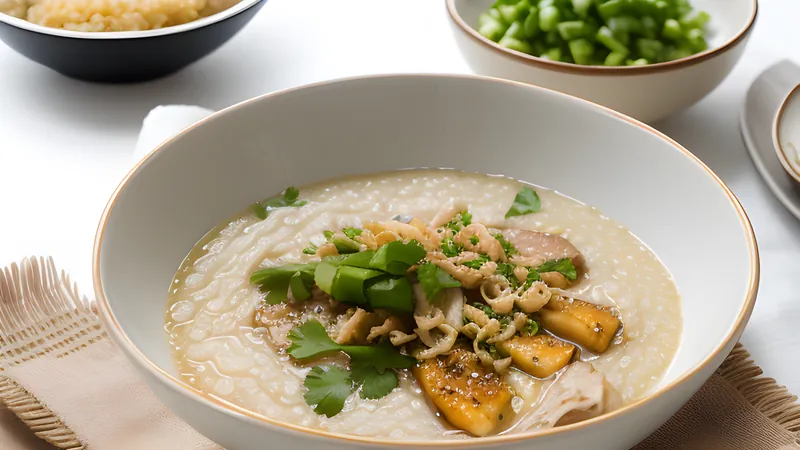
Chicken Congee with Crispy Shallots and Ginger Oil
Ingredients
- 200g jasmine or short-grain rice, rinsed
- 2 litres chicken stock
- 500g bone-in chicken thighs, skin removed
- 30g fresh ginger, sliced, plus 20g extra for the oil
- 2 spring onions, plus extra to serve
- 1 tbsp soy sauce, plus extra to taste
- 1 tsp sesame oil
- Salt and white pepper, to taste
- 4 banana shallots, very thinly sliced
- 150ml neutral oil (groundnut or sunflower)
- 2 garlic cloves, finely chopped
- Fresh coriander, to serve
Method
- Rinse the rice until the water runs clear, then put it in a large heavy pot with the stock, sliced ginger, whole spring onions and the chicken thighs.
- Bring to the boil, then turn down to the gentlest simmer and cook, half-covered, for about 1 hour, stirring now and then so the rice does not catch.
- Meanwhile, make the crispy shallots: put the sliced shallots and the neutral oil in a cold pan together and set over medium heat.
- Fry gently, stirring often, for 12 to 15 minutes until the shallots are golden, then lift out with a slotted spoon onto kitchen paper, keeping the oil.
- To the shallot oil add the extra grated ginger and garlic and warm gently for 2 minutes until fragrant, then set this ginger oil aside.
- Once the rice has broken down into a thick, silky porridge, lift out the chicken and shred the meat, discarding the bones, ginger and spring onion.
- Stir the shredded chicken back into the congee with the soy sauce and sesame oil, and loosen with a little hot water if too thick.
- Season well with salt and plenty of white pepper, then simmer for a final 5 minutes.
- Ladle into bowls and top with the crispy shallots, a generous spoonful of ginger oil, sliced spring onions and coriander.
If chicken soup is what you reach for when you are poorly, congee is what half the world reaches for, and once you have made it you will understand why. This silky, savoury rice porridge is the gentlest, most quietly restorative thing I know how to cook — soothing when you are under the weather, but genuinely delicious enough to want when you are perfectly well. The base is almost absurdly simple: rice and stock, simmered until the grains collapse into something smooth and comforting. The magic is all in the toppings, and a spoonful of homemade crispy shallots and ginger oil turns a plain bowl into something you will think about for days.
1 Breakfast for half the world
Congee — known as jook in Cantonese, zhou in Mandarin, and by many other names across Asia — is the ultimate everyday food. In China it has been eaten for at least two thousand years, mentioned in texts dating back to the Zhou dynasty, valued as much for thrift as for comfort: a small amount of rice stretched with plenty of water to feed many mouths. It remains a staple breakfast across China, and close relatives appear all over the continent, from Korean juk to Filipino arroz caldo and Thai jok.
Part of its enduring appeal is its role as a blank canvas. The plain rice porridge is a backdrop for whatever you fancy — shredded chicken, century eggs, pickles, fried dough sticks, peanuts, fish. In Cantonese cooking it is comfort and medicine at once, the thing you make for someone recovering, the breakfast that starts a cold morning. There is something deeply universal about a pot of grain cooked soft in liquid until it nourishes; congee is that idea, perfected over millennia.
2 How to make it
The method could not be simpler, but it does ask for time. Rinse the rice well to wash off excess starch, then simmer it very gently with stock, ginger, spring onion and chicken thighs for around an hour, stirring occasionally so nothing sticks. The bone-in thighs do double duty: they enrich the broth as it cooks and give you tender meat to shred back in at the end. You are looking for the rice grains to break down completely into a smooth, thick porridge.
While that bubbles away, you make the bit that elevates it. Cook thinly sliced shallots in oil from cold, stirring patiently until golden and crisp — they will keep crisping as they cool, so pull them just before they look done. Then infuse that fragrant shallot oil with grated ginger and garlic to make a glossy ginger oil. Shred the chicken back into the finished congee, season hard with white pepper, and build each bowl with those crispy shallots, a slick of ginger oil and fresh herbs.
The one thing that needs your attention is the stirring. Congee loves to stick to the base of the pot and catch, so give it a stir every ten minutes or so, scraping the bottom, especially in the last half hour as it thickens. A heavy-based pot makes this far easier and guards against scorching. You will know it is done when the individual grains have all but disappeared into a smooth, creamy mass that holds a soft, pourable shape on the spoon.
3 Tips and variations
The texture is entirely up to you. For a looser, soupier congee add more liquid; for a thick, claggy one let it cook down further. It thickens a lot as it sits, so you will almost always need to loosen leftovers with hot water when reheating.
Make the crispy shallots in a big batch — they keep for a week in a jar and are wonderful on noodles, salads and fried rice, and the leftover oil is liquid gold. White pepper is traditional and worth seeking out for its distinctive warm, slightly floral heat, but black pepper will do. For a vegetarian bowl, use a good mushroom or vegetable stock, leave out the chicken and top with fried tofu or a soft egg. A drizzle of chilli oil for those who like heat never goes amiss.
The toppings are really where you make the bowl your own, and congee is endlessly forgiving here. Beyond the crispy shallots and ginger oil, think about a swirl of soy, a few slices of pickled vegetable for sharpness, toasted peanuts for crunch, or a handful of torn herbs. A jammy soft-boiled egg is never wrong. The plain, soothing base is the whole point — it asks only that you give it something bright, salty or crunchy on top to play against, and the rest is up to your mood and your fridge.
Related Content