Chicken Chasseur with Mushroom and Tarragon
The hunter's chicken, brightened with a last-minute hit of tarragon
Contents
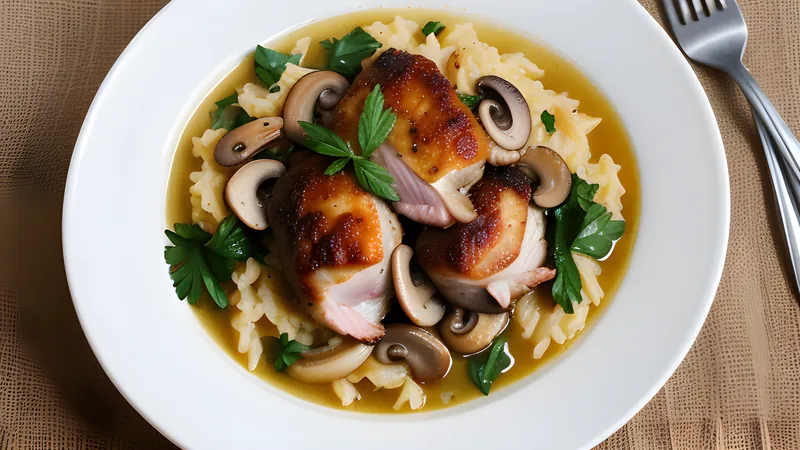
↓ Jump to recipeChasseur means hunter, and this is the sauce a French cook reaches for when there is game or poultry to be dressed up with what the forest gives: mushrooms, shallots, a splash of wine. It is one of the great weeknight braises because it asks for no obscure ingredients and no special skill, only a hot pan and forty-five minutes. And it rewards one small liberty that keeps it from tasting like every other tomato-and-mushroom chicken you have eaten.
Chicken Chasseur with Mushroom and Tarragon
Ingredients
- 8 bone-in, skin-on chicken thighs (about 1.2kg)
- 300g chestnut mushrooms, sliced
- 3 banana shallots, finely chopped
- 3 garlic cloves, finely chopped
- 1 tbsp plain flour
- 150ml dry white wine
- 400g tin chopped tomatoes
- 300ml chicken stock
- 1 tbsp tomato purée
- 2 tsp Dijon mustard
- 1 tbsp brandy or Cognac (optional)
- 3 tbsp fresh tarragon, chopped
- 2 tbsp fresh parsley, chopped
- 30g butter
- 2 tbsp olive oil
- Salt and black pepper
Method
- Pat the chicken thighs dry and season with salt and pepper. Heat the olive oil in a large sauté pan over medium-high heat and brown the thighs skin-side down for 5 to 6 minutes until deep golden, then turn for 2 minutes. Remove and set aside.
- Pour off all but a tablespoon of fat. Add the butter and the mushrooms and fry over high heat for 6 to 8 minutes until browned and any liquid has evaporated. Lower the heat, add the shallots and cook for 4 minutes until soft, then the garlic for 1 minute.
- Stir in the flour and tomato purée and cook for 2 minutes. Add the brandy, if using, then the white wine, and reduce by half, scraping the base of the pan clean.
- Add the tomatoes, stock and Dijon. Return the chicken skin-side up, bring to a simmer, then cook uncovered over low heat for 35 minutes until the chicken is tender and the sauce has thickened.
- Stir most of the tarragon and parsley through the sauce, saving a little to scatter over. Taste for salt, and serve.
The hunter’s sauce and its history
Sauce chasseur is a classic of French cuisine, codified in the grand nineteenth-century kitchens of Escoffier and his contemporaries but rooted in far older country cooking. The idea is simple and seasonal: a hunter returns with a bird, and the sauce is built from mushrooms gathered on the same walk, shallots and garlic from the store, tomatoes and wine from the cellar. The name attaches to the mushroom-and-white-wine treatment rather than to any one animal, which is why you will find chasseur done with rabbit, veal and chicken alike. In the classical brigade it began as a derivative of the mother sauce espagnole, enriched with tomato and finished with a sauté of mushrooms and shallots deglazed in white wine — a genealogy that explains why so many old recipes lean heavy and brown.
Chicken chasseur — poulet sauté chasseur, to give it its full title — became a staple of British bistro menus in the 1970s and never quite left. Some of those pub versions grew heavy and dull, drowned in a floury brown gravy. The original is lighter and sharper, the tomato and wine kept fresh, the mushrooms tasting of mushroom. It belongs to the same family of French chicken braises as coq au vin with lardons and pearl onions, though where coq au vin is dark, wintry and built on red wine, chasseur is its brighter, quicker sibling. If you have made one, the muscle memory carries straight over to the other.
The twist: tarragon at the end
Classic chasseur uses tarragon, but almost everyone adds it too early and boils the life out of it. My change is one of timing. I keep the tarragon back and stir the bulk of it in during the final minute, off the boil, with a little held for the plate. Tarragon has a delicate anise-and-hay perfume that evaporates fast, so a fresh late addition tastes green and alive where a long-simmered one tastes of nothing. That single adjustment turns a decent braise into something that smells wonderful the moment it reaches the table. Tarragon and chicken are old friends — the same partnership carries roast chicken with tarragon butter, done right — and here the herb gets the last word. Buy it fresh: dried tarragon has almost none of the aromatic oils that make the herb worth using, and no amount will rescue a pot at the end.
Getting the mushrooms right
The most common failing in chasseur is grey, waterlogged mushrooms. Mushrooms are mostly water, and if you crowd them into a cool pan they release that water and stew rather than fry. So give them room and heat. After browning the chicken, cook the mushrooms over a high flame in butter, in a single layer if your pan allows, and leave them to colour before stirring. When the pan looks wet, keep going: the liquid will cook off, and the moment it does the mushrooms start to fry and brown properly. That browning is a second layer of savoury depth on top of the chicken fond, and it is worth the extra five minutes. Only then do the shallots go in, softening in the mushroom-flavoured fat until translucent and sweet.
Do not wash mushrooms under the tap if you can avoid it — they drink up water like a sponge. A quick brush or a wipe with a damp cloth keeps them dry so they brown instead of steaming.
Building the sauce
The flour and tomato purée go in together and cook for a couple of minutes to lose their raw edge; this is your gentle thickener, so a light hand is right — chasseur should coat a spoon while staying loose and pourable. A splash of brandy is traditional and worth it for the warmth it lends, but the dish survives happily without.
White wine is the backbone. Reduce it by half before the tomatoes go in, both to cook off the raw alcohol and to concentrate its acidity, and scrape the pan as you do to lift the browned fond. Then tomatoes, stock and a spoon of Dijon, which brings a quiet sharpness that keeps the sauce from turning sweet as the tomato cooks down.
Braise it uncovered. This is the difference between a thin, soupy sauce and one with proper body: leaving the lid off lets the liquid reduce as the chicken cooks, so by the time the thighs are tender at 35 minutes the sauce has thickened to a glossy coat. Bone-in thighs are best here for their flavour and their forgiveness — they stay juicy where breast would dry, and the little bit of collagen around the bone gives the sauce a silkier body.
Tips and troubleshooting
- Sauce too thin at the end? Lift out the chicken and boil the sauce hard for a few minutes to reduce it.
- Sauce too sharp? A pinch of sugar or an extra small knob of butter rounds the acidity of tomato and wine.
- Using breast instead of thighs? Brown it, remove it, build and simmer the sauce for 20 minutes, then return the breast for the final 10 only, or it will go stringy.
- No brandy? Skip it, or use an extra splash of white wine. It is a grace note you can happily leave out.
- Skin gone soft in the braise is expected; if you want a crisper finish, keep the thighs proud of the sauce, skin-side up, and give them a minute under a hot grill before serving.
Make-ahead and storage
Chasseur keeps beautifully. Cook it a day ahead and the tomato and wine mellow overnight; reheat gently, adding a splash of stock if it has tightened, and stir in fresh tarragon just before serving so the herb note is bright again. It holds in the fridge for three days and freezes for up to three months, though the fresh herb finish is always best added on the day you eat it.
What to serve with it
Chasseur wants a starch to soak up its sauce. Buttery mashed potato is the classic partner, but plain rice, soft polenta or crusty bread all do the job, and steamed green beans or buttered leeks with thyme and breadcrumbs keep the plate honest. A glass of the same dry white you cooked with rounds it off.
Variations
Swap the chestnut mushrooms for a mix that includes some wild or dried porcini (soaked, with their soaking liquor added to the sauce) for a deeper, more autumnal pot. A handful of chopped cornichons or a spoon of capers stirred in at the end pushes it towards a sharper, more piquant profile. And if you want it richer for a special occasion, finish with a tablespoon of double cream alongside the herbs, which softens the tomato into something closer to a velouté.
None of it is difficult. Brown the chicken with patience, brown the mushrooms without crowding them, keep the tarragon fresh and late, and you have a French classic on the table in under an hour.
Related Content