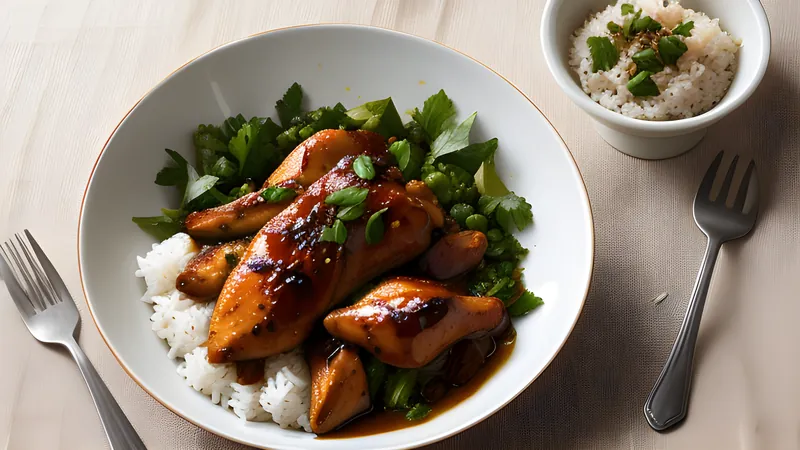
Chicken Adobo with Coconut and Charred Garlic
The Philippines' everyday braise, deepened with coconut milk and burnt garlic
Contents
↓ Jump to recipeAdobo is the dish every Filipino family argues about and every Filipino family is right, because there is no single adobo — only a method, applied a thousand ways across seven thousand islands. This version keeps the two arguments that matter (vinegar for sourness, soy for depth) and adds a coconut milk finish that rounds the sauce into something closer to a curry, then tips the whole thing over the edge with garlic charred until it is properly, deliberately burnt. Bitter garlic against sweet coconut against sour vinegar is the whole point of this braise.
Chicken Adobo with Coconut and Charred Garlic
Ingredients
- 1.2kg bone-in, skin-on chicken thighs and drumsticks
- 120ml cane or coconut vinegar
- 80ml dark soy sauce
- 1 whole head garlic, cloves separated and lightly crushed, skin on
- 1 extra head garlic, peeled and thinly sliced, for the charred garnish
- 3 bay leaves, fresh if you can get them
- 1 tbsp black peppercorns, cracked
- 400ml tin full-fat coconut milk
- 1 tbsp brown sugar
- 2 tbsp neutral oil, plus extra for frying the garlic
- 2 spring onions, sliced, to finish
- Steamed jasmine rice, to serve
Method
- Put the chicken, vinegar, soy sauce, crushed unpeeled garlic, bay leaves and peppercorns in a bowl, turn to coat, and set aside at room temperature for 20 minutes (or cover and marinate up to 4 hours in the fridge).
- Lift the chicken from the marinade and pat the skin dry with kitchen paper, reserving the marinade including the garlic and bay leaves.
- Heat the oil in a heavy pot or wide sauté pan over medium-high heat and brown the chicken skin-side down for 5 to 6 minutes until deeply golden, then turn and brown the other side for 3 minutes. Work in batches so the pan stays hot. Remove the chicken.
- Pour the reserved marinade, garlic and bay leaves into the same pot and bring to a boil, scraping up the browned bits from the base.
- Return the chicken to the pot, skin-side up, reduce to a gentle simmer, cover and cook for 20 minutes.
- Stir in the coconut milk and brown sugar, then simmer uncovered for a further 15 to 18 minutes, until the sauce has reduced by about a third and coats the back of a spoon.
- While the adobo finishes, heat a thin layer of oil in a small frying pan over medium-high heat and fry the sliced garlic, stirring constantly, until it goes from gold to a deep mahogany brown at the edges, about 3 to 4 minutes — do not walk away.
- Tip the charred garlic straight onto a plate lined with kitchen paper to stop the cooking and let it crisp.
- Taste the sauce and adjust with a splash more vinegar for sharpness or a pinch more sugar for balance.
- Serve the chicken over steamed rice, spooning over plenty of sauce, and scatter with the charred garlic and sliced spring onions.
Where adobo comes from
The word “adobo” is Spanish — it means marinade, from adobar, to season or pickle — but the technique long predates Spanish colonisation of the Philippines, which began in 1565. Pre-colonial Filipinos already had a method for preserving meat in vinegar and salt in a hot, humid climate with no refrigeration; the Spanish simply recognised something close to their own pickling tradition and gave it a Spanish name. That’s the short version of a longer, contested history, but the upshot is that adobo is one of the few dishes that can plausibly claim to be the Philippines’ national dish precisely because it isn’t fixed. Ilocano adobo runs drier and more vinegar-forward. Adobong puti skips the soy sauce for a paler, sharper braise. Some cooks add potatoes, some add pineapple, and Bicolano versions lean on coconut milk and chillies, which is the branch this recipe borrows from — the Bicol region of southern Luzon, famous for cooking almost everything in coconut, from laing (taro leaves in coconut milk) to bicol express (pork in coconut and chilli).
What holds every regional variant together is the ratio logic: vinegar and soy (or salt) cook down with garlic, bay and peppercorns until the meat is fall-tender and the sauce has reduced to something you’d happily drink by the spoonful. It travels well, keeps for days, and — this is the detail every Filipino cook will tell you — tastes better the next day, because the vinegar mellows and the garlic keeps working into the meat overnight.
Two brands turn up in almost every Filipino kitchen and are worth seeking out if you want the dish to taste properly like itself: Datu Puti cane vinegar, sharper and less sweet than most Western white vinegars, and Silver Swan or Marca Piña soy sauce, both saltier and thinner than the dark Chinese-style soy found in most UK supermarkets. Asian grocers stock both, usually cheaply, and either makes a noticeably closer adobo than a generic supermarket vinegar-and-soy combination.
Why the char matters
Garlic goes through three distinct stages as it cooks: raw and sharp, then softened and sweet as the sulphur compounds break down, then — if you keep going past where most recipes tell you to stop — bitter and toasty as the sugars caramelise hard and start to burn at the edges. Most recipes fear that third stage. This one wants it.
Charred garlic isn’t the same as burnt garlic gone wrong. Burnt-wrong garlic is acrid throughout, usually because it went into oil that was too hot from the start and cooked unevenly. Charred-right garlic is fried gently until golden, then pushed for another minute so the edges properly darken while the core stays sweet — the contrast between the mahogany crisp bits and the softer centre is what reads as depth rather than as a mistake. That bitterness does real work against the coconut milk, which is a rich, sweet, fairly one-note ingredient on its own. Without something bitter or acidic cutting through it, coconut-based sauces can taste flat by the third bite. The charred garlic — and the sour tang of the cane vinegar — are what stop that from happening here.
The other function of coconut milk in adobo is textural. Straight vinegar-soy adobo has a thin, sharp sauce that’s closer to a jus. Adding coconut milk toward the end (not at the start, where prolonged simmering can make it split and grainy) gives you a sauce with body — thick enough to properly cling to rice — while the acidity of the vinegar keeps that richness from turning cloying.
The method, explained
Browning the chicken skin-side down before it ever touches the braising liquid isn’t optional theatre. It renders fat out of the skin so the finished dish isn’t greasy, and it starts the Maillard reaction — the browning that produces hundreds of new flavour compounds and gives the sauce something to build on when you deglaze the pan with the marinade. Skip this step and you get a paler, flatter-tasting adobo even if every other ingredient is identical.
The order of operations for the coconut milk matters more than it looks. Simmer chicken in coconut milk from the very start for 45 minutes and the fat can separate out into an oily sheen, and the milk solids can break and turn slightly grainy under sustained heat. Adding it in the last 15 to 18 minutes, after the chicken is already close to tender from its vinegar-soy braise, keeps the coconut milk glossy and emulsified.
Fry the charred garlic separately, at the end, in its own small pan — not in the main pot. Frying it alongside the chicken would either undercook the garlic (if timed for the chicken) or scorch the chicken’s braising liquid (if timed for the garlic). Keeping it as a finishing garnish, added at the table, also means it stays crisp instead of steaming soft in the sauce.
Judge the chicken by feel rather than the clock once it’s back in the pot: at the 20-minute covered simmer, a skewer or the tip of a knife should slide into the thickest part of a thigh with no resistance, and the meat should be starting to loosen very slightly from the bone at the drumstick’s narrow end. If it still fights back, give it another five minutes covered before moving on to the coconut milk stage — better a longer first braise than a sauce that reduces around chicken that hasn’t caught up.
The recipe
Marinate the chicken in vinegar, soy sauce, crushed garlic, bay and cracked pepper for at least 20 minutes — longer if you have the time, up to 4 hours in the fridge. Pat it dry and brown it well in a hot pot, working in batches. Deglaze with the reserved marinade, return the chicken, cover and simmer 20 minutes until nearly tender. Stir in coconut milk and brown sugar, then simmer uncovered until the sauce reduces and thickens, 15 to 18 minutes. While that finishes, fry sliced garlic in a separate pan until it goes properly dark at the edges, then drain on kitchen paper. Serve the chicken and sauce over rice, piled with the charred garlic and spring onions.
Taste before you plate. A good adobo balances sour, salty and — here — sweet-from-coconut in a way that shouldn’t need much correcting, but a squeeze more vinegar at the end sharpens everything if the sauce tastes flat, and it usually does need one.
Tips, substitutions, make-ahead and storage
Use bone-in, skin-on thighs and drumsticks rather than breast — the collagen and fat keep the meat moist through the braise and give the sauce more body. Coconut vinegar is the traditional choice and worth seeking out (Asian grocers stock it), but cane vinegar or a light rice vinegar work well; avoid balsamic or malt vinegar, which bring the wrong flavour entirely. If dark soy sauce isn’t to hand, use regular soy and add a scant teaspoon of brown sugar to compensate for the missing depth and colour.
Adobo genuinely improves overnight, as the vinegar mellows and the sauce keeps working its way into the meat while it chills. Cool, cover and refrigerate for up to 4 days; reheat gently on the hob, adding a splash of water if the sauce has thickened too far. It also freezes well for up to 2 months, though it’s best to fry the charred garlic fresh each time you serve, since it loses its crunch in the freezer.
Leftovers are worth planning for rather than treating as an afterthought. Shred any remaining meat off the bone, fry it hard in a little of its own reduced sauce until the edges catch and crisp — this is essentially adobo flakes, a popular way to stretch a second meal — and pile it over rice or into a fried-rice base with a leftover egg. Reheated adobo also splits its coconut sauce a little more readily than it did fresh, so reheat it low and slow, stirring gently rather than at a hard simmer, to bring it back together.
Variations
For a Bicol-leaning heat, add 2 to 3 whole bird’s eye chillies to the braise along with the coconut milk — leave them whole so diners can push them aside. Pork belly, cut into 3cm chunks, is a very traditional swap for the chicken and wants the same timings, though check for tenderness at the 20-minute mark since belly can need slightly longer. For a version closer to classic dry adobo, once the sauce has reduced with the coconut milk, keep it on the heat for a further 5 minutes uncovered so it thickens closer to a glaze, then finish under a hot grill for 3 minutes to crisp the skin further before scattering the garlic.
If you like the coconut-braise idea, beef rendang with toasted coconut kerisik pushes coconut even further with a dry-toasted paste, and for another dish built on a hard char, bun cha does the same trick with grilled pork instead of garlic. Adobo rewards patience and a heavy pot — once you’ve made it once, you’ll understand why every Filipino household has its own version and defends it.
Related Content