Cheese and Onion Pasty
Flaky pastry, sweet onions, sharp cheddar
Contents
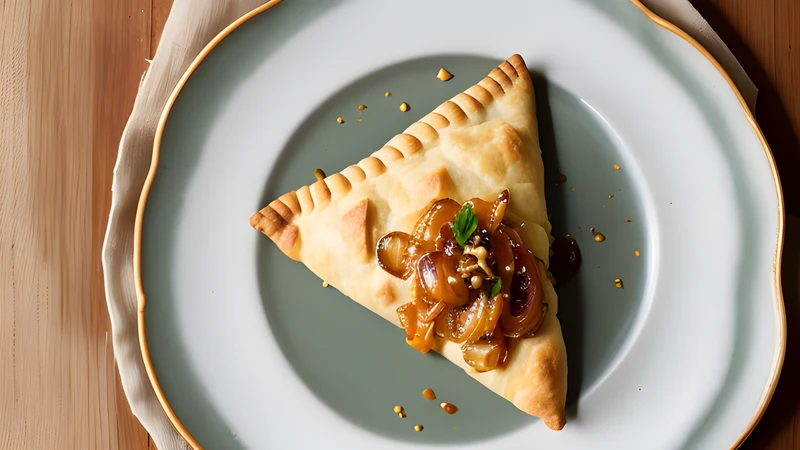
↓ Jump to recipeA cheese and onion pasty lives or dies by the onions. Raw onion in the filling steams into something wet and harsh, so the twist here is to cook them down first: three onions softened slowly in butter until sweet and jammy, then bound with sharp cheddar, a little grated potato to hold everything together, and a spoon of English mustard to keep the whole thing from turning bland. Wrapped in short, flaky pastry and crimped along the edge, it bakes into a proper handheld lunch, the kind that steams when you break it open on a cold day.
Cheese and Onion Pasty
Ingredients
- 350g plain flour, plus extra for dusting
- 175g cold butter, diced (or 85g butter and 85g lard)
- 1/2 tsp fine salt
- About 90ml very cold water
- 3 large onions, finely sliced
- 40g butter, for the onions
- 1 tsp English mustard powder
- 250g mature cheddar, coarsely grated
- 75g floury potato (such as Maris Piper), coarsely grated
- 1 tbsp caramelised onion marmalade or chutney (optional)
- Black pepper and a little sea salt
- 1 egg, beaten, for glazing
Method
- Rub 175g cold diced butter into 350g plain flour and 1/2 tsp salt until the mixture looks like coarse breadcrumbs, keeping a few larger flecks of butter for flakiness.
- Cut in about 90ml cold water a little at a time until the dough just comes together, then flatten to a disc, wrap and chill for at least 30 minutes.
- Melt 40g butter in a wide pan, add 3 finely sliced onions and a pinch of salt, and cook gently for 20-25 minutes, stirring often, until soft, sweet and pale gold.
- Tip the onions into a bowl and cool completely, so the warm filling does not melt the pastry.
- Squeeze the liquid from 75g grated potato in a cloth, then mix it into the cooled onions with 1 tsp mustard powder, 250g grated mature cheddar, 1 tbsp onion marmalade if using, plenty of black pepper and a little salt.
- Roll the pastry to about 3mm thick and cut four rounds using an 18-20cm side plate as a guide.
- Pile a quarter of the filling onto one half of each round, leaving a clear border, then brush the edge with beaten egg, fold into a half-moon and press to seal.
- Crimp the sealed edge in small overlapping pleats or press firmly with a fork, then sit the pasties on a lined baking tray.
- Brush all over with beaten egg, cut a small steam vent in each, and chill for 15 minutes while the oven heats to 200C (180C fan).
- Bake for 35-40 minutes until deep gold and glossy, then cool for at least 10 minutes before eating, as the cheese will be molten.
The story
The pasty is a West Country institution, and its home is Cornwall, the long peninsula at the far south-western tip of England. The Cornish pasty earned Protected Geographical Indication status from the European Union in 2011, which fixed in law what generations of bakers already knew: a genuine Cornish pasty is D-shaped, crimped on one side rather than over the top, and filled with beef, swede, potato and onion. That famous crimped edge was once a handle. Tin miners carried pasties underground and, the story goes, held them by the thick seam of pastry so their arsenic-dusted fingers never touched the part they ate, discarding the crust when they were done.
Cheese and onion is the great meat-free cousin of that tradition, and it has a life well beyond Cornwall. Across the mining and industrial towns of the north and the Midlands, a pasty or a slice was a cheap, filling, portable lunch, and cheese and onion was the version that cost the least to make. Bakery chains built whole reputations on it, and for many people the smell of a warm cheese and onion pasty is pure high-street nostalgia. It belongs to the same family of savoury pastry that gives us the sausage roll, where the whole appeal is a well-seasoned filling wrapped in pastry you can eat with one hand.
What separates a memorable cheese and onion pasty from a stodgy one is treating the onion with respect. Cooking it down first draws out its sugars and drives off the raw bite, giving a filling that tastes sweet and rounded. A spoon of caramelised onion marmalade folded in doubles down on that sweetness and adds a sticky depth, which the sharp cheddar and the mustard then cut straight through. The potato is not filler; its starch soaks up any moisture the cheese releases as it melts, stopping the base from turning to soup.
Getting the pastry right
Shortcrust is forgiving, but two things make it flaky rather than tough. First, keep everything cold: cold butter, cold water, and a cold worktop if your kitchen runs warm. Warm butter melts into the flour and coats it, giving a dense, greasy crust. Second, handle the dough as little as possible. The moment it holds together, stop working it. Overworked pastry develops gluten and bakes hard, so a light touch and a proper rest in the fridge are what give you that short, crumbling bite. If you want extra flakiness and a savoury note, swap half the butter for lard, the traditional fat for a Cornish pasty.
Rolling to about 3mm is the sweet spot. Thinner than that and the pastry cracks or leaks under the weight of the filling; much thicker and it bakes to a doughy shell that never fully cooks through. Chilling the shaped pasties before they go in the oven firms the butter back up, which is what makes the pastry rise into flaky layers rather than slumping. Do not skip the steam vent either. Trapped steam has to go somewhere, and without a vent it will split a seam and push the molten filling out onto the tray.
Tips and troubleshooting
If your pasties leak, the seal was the problem. Make sure the pastry border is clean and free of filling before you fold, brush it with egg to act as glue, and crimp firmly. A gap the width of a fork tine is enough for hot cheese to escape. If the filling seems wet, you either skipped squeezing the potato or the onions went in warm; both add moisture the pastry cannot cope with.
Season more boldly than feels right. Cheddar is salty, but the onions and potato are not, and a cheese and onion pasty eaten cold at room temperature always tastes blander than it did straight from the oven, so add a good grind of pepper and a proper pinch of salt. For a bit more character, a pinch of cayenne or a spoon of wholegrain mustard alongside the English mustard powder lifts the whole filling.
Variations and storage
The base recipe takes well to additions. A handful of chopped spring onion stirred in at the end brings a fresh, green sharpness against the sweet cooked onion. Crumbled Lancashire or a little blue cheese mixed with the cheddar gives a tangier, more grown-up filling. Cooked leeks, softened in butter the same way as the onions, make a gentler leek and cheese version that is lovely in autumn.
Unbaked pasties freeze beautifully. Open-freeze them on a tray, then bag them up, and bake straight from frozen with an extra 10 minutes or so in the oven. Baked pasties keep in the fridge for up to three days and are best reheated in a hot oven for 10-12 minutes to crisp the pastry back up; a microwave will warm them through but leaves the crust soft. They travel well cold too, which is, after all, the whole point of a pasty. Pair one with a spoon of tangy piccalilli and you have a proper lunch. Serve them warm with a crisp side salad and a mug of tea, and you have the honest bakery-counter lunch that keeps drawing people back.
Why the twist works
Most cheese and onion pastries lean entirely on the cheese and let the onion sit in the background, raw and sharp. Cooking the onion down slowly changes its whole character: the harsh sulphur compounds break down with gentle heat, and the natural sugars concentrate into something mellow and almost sweet. That sweetness is what gives the filling its rounded, savoury depth, and it means the cheddar tastes cheesier by contrast rather than fighting the onion for attention. The mustard sits underneath both, a low warmth that stops the richness from feeling flat by the third bite. It is a small amount of extra work at the stove, twenty patient minutes, and it is the single change that lifts a decent pasty into one worth making from scratch.
Related Content