Chè Chuối: Vietnamese Banana and Tapioca
Warm coconut, soft banana and chewy tapioca, with the bananas charred first for a smoky edge
Contents
↓ Jump to recipeThere is a version of this pudding on nearly every street of Ho Chi Minh City after dark, ladled from a battered aluminium pot into a plastic bag with a rubber band and a spoon. Chè chuối belongs to the vast Vietnamese family of chè, a word that covers hundreds of sweet soups and puddings, some served over crushed ice in tall glasses, some warm and soupy in a bowl. This is one of the warm ones, and one of the plainest: bananas, tapioca, coconut. It is the kind of thing a grandmother makes because the bananas on the counter have gone a day past their best and something has to be done with them.
I first ate it standing up in a market in Hoi An, out of one of those knotted bags, and I remember being surprised by how savoury it read despite all the sugar. That is the salt and the peanuts doing their work, and it is the reason chè chuối lands as pudding rather than a sugar hit. The bananas half-dissolve into the coconut milk, the tapioca gives it body and that gentle chew, and the whole thing sits somewhere between a soup and a custard. It is one of the most comforting bowls I know, and it takes under half an hour.
Chè Chuối: Vietnamese Banana and Tapioca
Ingredients
- 4 ripe but firm bananas, ideally short fat ones (or 3 large)
- 60g small pearl tapioca (the tiny 2-3mm pearls rather than the large boba)
- 400ml tin full-fat coconut milk
- 250ml water, plus more to loosen
- 60g palm sugar, chopped (or light brown soft sugar)
- 1/4 tsp fine salt
- 1 pandan leaf, knotted (optional but worth it)
- 2 tbsp coconut cream, from the top of a chilled tin
- 2 tbsp toasted sesame seeds
- 2 tbsp roasted salted peanuts, roughly crushed
Method
- Rinse the tapioca in a sieve under cold water. Soak in cold water for 15 minutes while you gather everything else.
- Peel the bananas and halve lengthways. Heat a dry heavy frying pan or griddle over a high heat and lay the bananas cut side down. Leave undisturbed for 2-3 minutes until deeply caramelised, almost charred at the edges. Lift out and cut each half into 2cm chunks.
- Drain the tapioca. Pour the coconut milk and water into a saucepan with the palm sugar, salt and knotted pandan leaf. Bring to a gentle simmer, stirring until the sugar dissolves.
- Tip in the drained tapioca. Simmer, stirring often so it does not catch, for 12-15 minutes until the pearls turn from chalky white to clear with only a pinprick of white left in the centre.
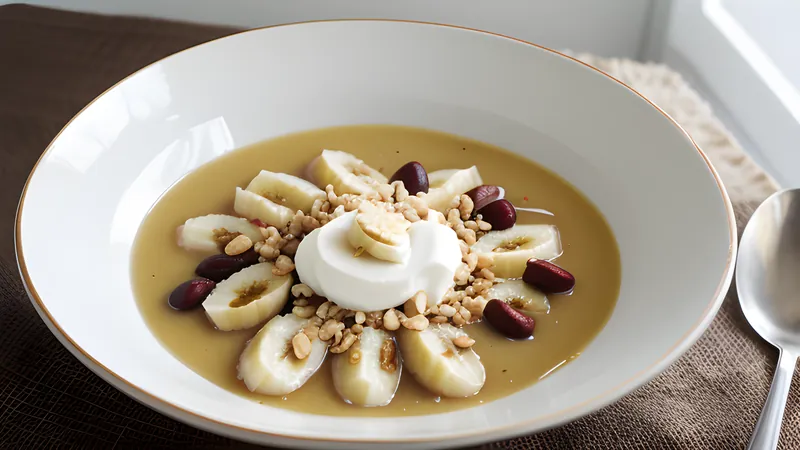
- Add the charred banana chunks and simmer for a further 4-5 minutes, until the bananas are soft and have coloured the coconut milk faintly. Loosen with a splash of water if it thickens too far; it should pour like thin custard.
- Fish out the pandan leaf. Taste and add a pinch more salt if it needs waking up.
- Ladle warm into bowls. Spoon over a little cold coconut cream, then scatter with toasted sesame seeds and crushed peanuts. Eat warm.
Where the pudding comes from
Chè is old, and it is everywhere in Vietnam, adapting to whatever the region grows. In the Mekong Delta, where bananas and coconut palms crowd the waterways, chè chuối is a household staple rather than a special-occasion sweet. The specific banana that matters here is chuối xiêm (sometimes sold abroad as pisang awak or “namwah” bananas), a short, fat, faintly tart variety that holds its shape and turns fragrant rather than sludgy when cooked. You will most likely be working with ordinary Cavendish bananas from the supermarket, and that is fine, but choose ones that are ripe with a few brown freckles rather than green, and firm rather than mushy. A banana that is already collapsing will vanish entirely into the coconut milk.
Tapioca deserves a word too, because it is the ingredient people get wrong. The pearls you want are the tiny ones, roughly 2 to 3mm across, sometimes labelled “small pearl tapioca” or bột báng. These are not the big black boba pearls from bubble tea, which are a different animal entirely and cook for the best part of an hour. The small pearls cook in a quarter of the time and turn glassy and slippery, giving the pudding its texture. If you have used them for a British tapioca pudding, or for the coconut base in coconut sago pudding with palm sugar, you already know the trick: keep stirring, because they love to sink and weld themselves to the bottom of the pan.
The clever bit: char the bananas first
Here is where I have wandered off the traditional path, and I do it every time now. Before the bananas go anywhere near the coconut milk, I caramelise them in a dry, screaming-hot pan until the cut faces are deeply browned, in places almost black. It takes three minutes and it changes the pudding.
Raw banana simmered in sweet coconut milk tastes, unavoidably, of sweet banana and coconut, which is lovely but a little one-note. Charring first drives off some of the moisture, concentrates the sugars into something toffee-ish, and layers in a whisper of smoke and bitterness that gives the finished bowl somewhere to go. It is the same instinct behind grilled peaches with amaretti and mascarpone, where fire against fruit sugar turns a nice thing into a memorable one. You do not need a griddle pan with ridges; a plain heavy frying pan gets you there. What you must have is patience and a hot pan, because the char only happens if you leave the banana alone long enough to colour and resist the urge to poke it.
Method, and what can go wrong
The sequence is forgiving once you understand what each stage is doing.
Soaking the tapioca for fifteen minutes shortens the cooking time and, more usefully, helps the pearls cook evenly instead of leaving you with a clear outside and a chalky core. Do not skip the rinse, either, which washes off loose starch that would otherwise thicken the pudding into wallpaper paste.
When you simmer the pearls, the visual cue is everything: they start chalk-white and opaque, and you are cooking until they turn almost fully translucent with just a speck of white at the centre. Stop there. They keep cooking in the residual heat and will finish clear in the bowl. If you cook them until completely clear in the pan, they overshoot into gluey by the time you serve.
The most common failure is scorching. Coconut milk and sugar and starch all conspire to catch on the base of the pan, and once it catches you get an acrid note through the whole batch. A heavy-based pan, a moderate simmer rather than a hard boil, and a wooden spoon dragged across the bottom every minute or so will save you. The second most common problem is a pudding that sets too thick as it cools, which is simply the tapioca continuing to swell. Keep a mug of hot water to hand and loosen it back to a pourable consistency whenever you like; it reheats happily.
The pandan leaf is optional and I understand it is not in everyone’s corner shop. It gives a grassy, faintly vanilla-coconut perfume that is deeply characteristic of Southeast Asian sweets. A knotted fresh or frozen leaf simmered in the milk and fished out at the end is the way; skip the bottled pandan essence, which tastes of green food colouring. If you cannot find it, a split vanilla pod is a different but honest substitute.
Salt, sesame and the peanut finish
Do not treat the salt as optional seasoning to add if you feel like it. A quarter teaspoon in the pot, and a pinch more at the end if the pudding tastes flat, is what stops chè chuối from being cloying. The peanuts and toasted sesame on top are structural too: they bring crunch against all that softness and a savoury, roasty note that echoes the char on the bananas. Toast the sesame in a dry pan until it smells nutty and just begins to pop, and crush the peanuts coarsely so some pieces stay big enough to bite.
The spoonful of cold coconut cream over the warm pudding is a small, worthwhile luxury. Chill a tin of coconut milk overnight and the thick cream sets at the top; scoop that off. Against the hot pudding it half-melts into cool ribbons, and the temperature contrast is genuinely part of the pleasure.
Make-ahead, storage and variations
Chè chuối keeps in the fridge for three days and, if anything, the flavour rounds out overnight. It thickens considerably when cold, so reheat gently with a good splash of water or milk, stirring, until pourable again. I would add the sesame and peanuts only when serving, so they stay crisp.
For variations, a handful of cooked mung beans or a spoon of cooked glutinous rice stirred in at the end makes it more substantial and is entirely authentic; many Mekong versions include both. If you like a more pronounced coconut hit, finish with extra coconut cream rather than more sugar. And if you want to lean into the toasted, caramelised character, a scrape of lime zest at the table cuts cleanly through the richness and wakes the whole bowl up. Serve it warm on a cold evening and it does exactly what a good pudding should: asks nothing of you and gives back a great deal.
Related Content