Char Siu Bao: Steamed BBQ Pork Buns
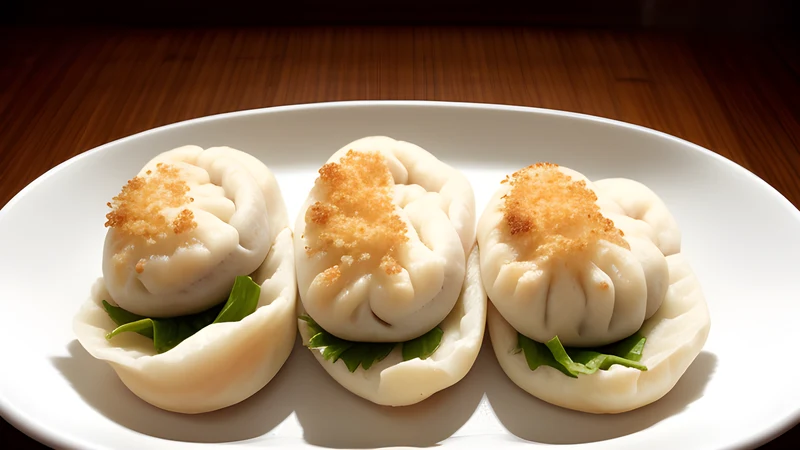
Cloud-white steamed buns split to show glossy, sweet-savoury barbecue pork
Contents
↓ Jump to recipeThere is a particular pleasure in the first char siu bao of a dim sum lunch: the bun so white and soft it barely holds its shape, and then the split that reveals the dark, glossy pork inside, sweet and savoury and slightly sticky. It is a study in contrast — pillowy against rich, plain against intense — and it is one of the great snacks of the Cantonese kitchen. Making them at home is far less daunting than the tea-house version suggests, and the reward is a batch of warm buns for a fraction of the price.
Char siu itself means “fork roast”, after the long forks on which strips of marinated pork were once suspended over a fire. The barbecue pork is a dish in its own right, lacquered in maltose, honey, soy and fermented bean, roasted until the edges catch and blacken. Chop that pork, bind it in a quick gravy of its own flavours, and wrap it in a sweet yeasted dough, and you have cha siu bao, a Cantonese staple that travelled with the diaspora to every Chinatown on earth. The steamed version, with its cracked white top, is the one most people picture; there is a baked, golden-glazed cousin too, softer and more bread-like, common in Hong Kong bakeries.
Char Siu Bao: Steamed BBQ Pork Buns
Ingredients
- 300 g char siu (Chinese barbecue pork), diced small — see method for a quick version
- 300 g plain flour, plus extra for dusting
- 40 g caster sugar
- 5 g fast-action dried yeast
- 4 g baking powder
- 160 ml warm whole milk
- 15 g lard or flavourless oil, plus a little for the bowl
- 2 tbsp vegetable oil (for the filling)
- 3 shallots, finely diced
- 2 garlic cloves, minced
- 1 tbsp oyster sauce
- 1 tbsp dark soy sauce
- 1 tbsp light soy sauce
- 1 tsp dark miso paste
- 1 tbsp honey
- 1 tsp sesame oil
- 1 tbsp cornflour mixed with 4 tbsp cold water
- 150 ml water or unsalted stock (for the filling sauce)
Method
- Make the dough: whisk the flour, sugar, yeast and baking powder in a bowl. Add the warm milk and lard, then bring together and knead on a lightly floured surface for 8-10 minutes until smooth and springy. Return to an oiled bowl, cover, and prove somewhere warm for 60-90 minutes until doubled.
- Make the filling: heat the vegetable oil over a medium heat and fry the shallots for 4-5 minutes until soft and pale gold. Add the garlic and cook for 30 seconds.
- Stir in the oyster sauce, both soy sauces, miso, honey and sesame oil. Add the water or stock and bring to a simmer. Stir in the cornflour slurry and cook for 1-2 minutes until thick and glossy.
- Fold in the diced char siu, coating every piece. Spread on a plate and chill for at least 30 minutes — a cold, firm filling is far easier to pleat.
- Knock back the dough and divide into 12 equal pieces (weigh them for even buns). Roll each into a ball, then flatten into a disc about 10 cm wide, thicker in the centre than at the edge.
- Place a heaped tablespoon of cold filling in the centre. Gather the edges up and around, pleating as you turn, then pinch the top firmly to seal. Set each bun seal-side down on a 7 cm square of baking parchment.
- Arrange in a steamer, leaving 3 cm between buns, and prove again for 20-30 minutes until puffy and light.
- Steam over a rolling boil for 12-14 minutes. Turn off the heat and wait 3 minutes before lifting the lid gently, so the buns do not collapse in the sudden cold air. Serve warm.
Getting the char siu right
The filling stands or falls on the pork. If you have a good Chinese barbecue shop nearby, buy 300 g of char siu and you have saved yourself an afternoon. Ask for a fattier cut — pork shoulder or collar rather than lean loin — because the fat is what keeps the filling succulent.
If you are making it from scratch, marinate 400 g of pork shoulder cut into long strips in a mixture of 2 tablespoons each of hoisin, honey and soy, a tablespoon of Shaoxing wine, a crushed garlic clove and a pinch of five-spice, ideally overnight. Here is the small change I swear by: rather than roasting the pork gently through, I finish it hard under a very hot grill until the sugary edges genuinely char and blister. That controlled scorch, the same principle behind a well-caught barbecue, gives the filling a smoky bitterness underneath the sweetness that a low oven never delivers. Baste, grill, turn, baste again, and let some parts go properly dark.
The dough, and why it stays so white
A char siu bao dough is enriched and softened with sugar, milk and a little lard, and it carries both yeast and baking powder. The yeast does the slow, flavour-building work; the baking powder gives a final lift in the steamer that helps the classic top burst open. Traditional recipes reach for a bleached, low-protein flour called bao flour to get that snowy colour, but plain flour makes a perfectly good bun with a slightly creamier tone, which I rather like.
Knead until the dough is smooth and elastic, then let it prove until doubled. The second prove, once the buns are shaped, matters just as much: skip it and the buns steam up dense and heavy. When you press a proved bun gently it should spring back slowly, leaving a faint dimple.
Pleating without tears
Two things make pleating easier. First, roll each dough disc so the centre is thicker than the rim; the base carries the weight of the filling while the thin edges gather into neat folds. Second, chill the filling until it is firm and cold. A warm, loose filling slides about and breaks through the dough every time.
Cup a disc in one hand, spoon the cold filling into the middle, and use your other thumb and forefinger to make small pleats around the edge, turning as you go, until the folds meet at the top. Pinch that final knot firmly and twist it off. Don’t fret about a museum-grade spiral; even a rough gather seals fine once you set the bun pleat-side down. If you want the top to crack open dramatically, use a slightly wetter dough and a fierce, rolling steam.
Steaming, and the three-minute rule
Steam over a genuine rolling boil — a lazy simmer gives you flat, wrinkled buns. Space them well, because they will swell, and keep the water level topped up. If you use a metal steamer, wrap the lid in a tea towel to stop condensation dripping onto the buns and pocking the surface; a bamboo steamer breathes and manages this on its own.
When the time is up, turn off the heat and wait three minutes before you lift the lid, and lift it away from you so no cold air rushes across the buns. Steamed dough is delicate the instant it stops cooking, and a blast of cold can wrinkle or deflate a beautiful bun in seconds. This one habit is the difference between a smooth dome and a sad, shrivelled top.
Make-ahead, storage and a few variations
These freeze beautifully, which is half the point of making a dozen. Steam them fully, cool, then freeze on a tray before bagging, so they stay separate. Reheat from frozen with 6-7 minutes of steaming and they taste freshly made; there is no need to defrost first. They also keep in the fridge for three days, and a quick re-steam brings them back to life better than a microwave, which turns the dough gummy at the edges. If you are proving in a cold kitchen, a turned-off oven with the light on, or the residual warmth above a pan of just-boiled water, gives the dough the gentle heat it wants.
For a vegetarian version, the same sauce works with diced mushrooms and firm tofu, or with the classic filling of braised shiitake and reconstituted dried bean curd. If you like the baked bakery style, brush the shaped buns with egg wash and bake at 180°C for 15 minutes, then glaze with a little sugar syrup as they come out.
If you have got the dumpling bug from making these, the same steamy, hands-on pleasure runs through a batch of pork and chive potstickers, which share the pleating logic, and the translucent har gow prawn and chive dumplings, which teach a very different, hot-water dough. A tray of each and a pot of tea, and you have built your own dim sum lunch at home.
The miso in the filling sauce is my one quiet liberty here, and it earns its place. A single teaspoon does not read as Japanese; it simply deepens the fermented savour that fresh oyster and soy sauces provide, and it steadies the sweetness so the pork tastes rounded rather than merely sugary. Start there, and adjust the honey up or down to your own taste. The measure of a good char siu bao is that the first bite makes you reach immediately for the second.
Related Content