Cauliflower Cheese with a Mustard Crumb
A proper cheese sauce, roasted florets and a crunchy Dijon topping
Contents
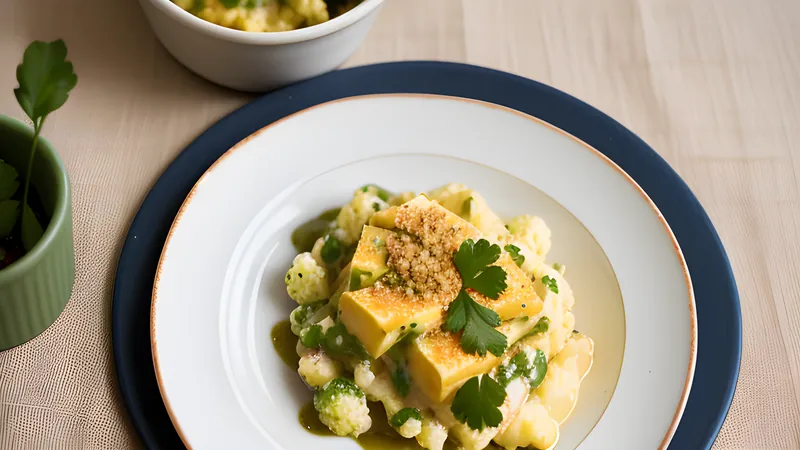
↓ Jump to recipeCauliflower cheese is one of those dishes almost everyone has eaten in a mediocre form, drowned in a thin, floury sauce with a waterlogged, sulphurous cauliflower underneath, and so almost everyone underrates it. Made properly, it is a serious pleasure: florets with a bit of roasted colour and bite, a glossy, deeply savoury cheddar sauce, and a crunchy, golden crumb on top that gives every forkful a bit of texture. Two changes get you there, and neither is difficult. Roast the cauliflower instead of boiling it, and finish the whole thing with a mustard-and-Parmesan crumb that crisps up in the oven.
From boiled vegetable to Sunday centrepiece
Cauliflower cheese in something like its modern form is a Victorian dish, arriving as cheese sauce, or sauce Mornay in the French tradition that so influenced British cookery of the period, met the cauliflower that had become widely available in British kitchens. The pairing of a béchamel enriched with cheese and poured over a cooked vegetable was a natural one, and the cauliflower’s mild, nutty flavour and sturdy texture made it an ideal candidate. By the twentieth century it had become a fixture of the British table, sometimes served as a side to a roast, sometimes as a supper in its own right with nothing more than bread alongside.
The Mornay sauce that binds it is a genuine piece of technique worth learning, because it underpins a great deal of good cooking. It begins as a béchamel, one of the French mother sauces: butter and flour cooked into a roux, then milk whisked in and simmered to a smooth, thickened sauce. Grate cheese into it off the heat and you have a Mornay. The same base, well made, is what carries a good gratin dauphinois and a proper macaroni cheese, and once you can make it without lumps you have unlocked a whole category of comforting dishes. The trick, as ever, is patience: a slow roux and milk added gradually with constant whisking.
Cauliflower Cheese with a Mustard Crumb
Ingredients
- 1 large cauliflower (about 900g), cut into florets
- 1 tbsp olive oil
- 50g butter
- 50g plain flour
- 600ml whole milk
- 1 bay leaf
- 1 tsp English mustard powder
- 150g mature cheddar, grated
- 30g Parmesan, grated
- A grating of nutmeg
- Salt and white pepper
- 60g panko breadcrumbs
- 1 tbsp Dijon mustard
- 20g Parmesan, grated, for the crumb
- 1 tbsp melted butter, for the crumb
Method
- Heat the oven to 200C fan. Toss the cauliflower florets with the olive oil and a good pinch of salt, spread on a baking tray in a single layer and roast for 20 minutes, until tinged golden at the edges but still with some bite.
- Meanwhile, warm the milk with the bay leaf in a small pan until steaming, then set aside to infuse.
- Melt the 50g butter in a medium pan over a medium heat. Stir in the flour and cook, stirring, for 2 minutes to form a pale roux that smells faintly biscuity.
- Remove the bay leaf, then add the warm milk to the roux a ladleful at a time, whisking smooth after each addition, until thick and glossy. Simmer gently for 3 to 4 minutes, whisking often.
- Off the heat, stir in the mustard powder, cheddar, the 30g Parmesan and a good grating of nutmeg until melted and smooth. Season with salt and white pepper.
- Tip the roasted cauliflower into a baking dish, pour over the cheese sauce and turn gently to coat.
- Mix the panko, Dijon, the 20g Parmesan and the melted butter, and scatter evenly over the top.
- Bake for 18 to 20 minutes, until the sauce is bubbling at the edges and the crumb is deep golden. Rest for 5 minutes before serving.
Roast the cauliflower, don’t boil it
This is the change that transforms the dish, and once you have made it this way you will not go back. The traditional method boils the cauliflower until tender, then bathes it in sauce, and it goes wrong in two predictable ways. Boiling waterlogs the florets, so they leach liquid into the sauce as the dish bakes and thin it to a pale puddle. And boiling drives off none of the cauliflower’s water, so its flavour stays flat and washed-out, sometimes tipping into that faintly sulphurous, overcooked-cabbage smell that gives the vegetable a bad name.
Roasting fixes both problems in one move. In a hot oven the surface of the florets browns through the Maillard reaction and their natural sugars begin to caramelise, giving a nutty, savoury depth that boiled cauliflower never develops. At the same time the dry heat drives off moisture and concentrates the flavour, so the florets hold their shape and their bite through the second bake instead of collapsing into mush. You want them golden at the edges but still firm at the centre when they come out, because they will finish cooking under the sauce. It is the same principle that makes a whole roasted cauliflower with green tahini taste of so much more than a boiled floret ever could.
The small clever twist: a mustard crumb
The crunchy topping is where I part company with the plain version, and it earns its keep on every level. A béchamel-and-cheese dish, however good, is soft all the way through, and a crisp crumb gives you a contrast of texture that makes the whole thing more interesting to eat. I make it with panko, the coarse Japanese breadcrumb that crisps up lighter and crunchier than ordinary crumbs, bound with a spoon of Dijon mustard, grated Parmesan and a little melted butter.
The mustard is the clever part. Cauliflower cheese has a natural affinity with mustard, which is why there is English mustard powder in the sauce as well, and the Dijon in the crumb amplifies that gentle warmth while its acidity cuts through the richness of all that cheese. As the crumb bakes, the butter and Parmesan brown and the mustard mellows into a savoury tang, so you get a topping that shatters under the fork and tastes of toasted cheese and mustard. It is the same flavour logic as a good Welsh rarebit with ale and mustard, where cheese and mustard grill into something far more than their parts. If you want more crunch still, a handful of extra panko does no harm.
Building a smooth sauce
A lumpy, floury sauce is the other thing that ruins cauliflower cheese, and avoiding it comes down to a few small habits. Cook the roux for a full two minutes so the raw, pasty taste of the flour cooks out and it can absorb the milk cleanly. Warm the milk first, and infuse it with a bay leaf while you are at it, because warm milk incorporates into the roux far more smoothly than cold and the bay adds a subtle savoury note in the background. Add the milk gradually and whisk hard after each addition until smooth before adding more, which is the single most reliable defence against lumps. And always melt the cheese off the heat: boiling a cheese sauce can make it split and turn grainy as the fat separates out. A mature cheddar gives the best flavour for the least quantity, and the Parmesan adds a savoury depth that plain cheddar lacks.
Make-ahead, storage and variations
Cauliflower cheese is a superb make-ahead dish, which is exactly why it appears on so many Christmas tables. Assemble it completely, up to and including the crumb, then cover and refrigerate for up to two days; bring it back to room temperature and bake as directed, adding a few extra minutes if it goes in cold from the fridge. It also freezes well before baking. Leftovers keep for three days and reheat happily in the oven, where the crumb re-crisps, though the microwave will soften the topping.
For variations, a handful of cooked leeks or sautéed onion folded through the cauliflower adds sweetness and body, and a few rashers of crisp bacon or pancetta scattered in turns it into a heartier supper. Blue cheese in place of some of the cheddar gives a sharper, more grown-up sauce, while a scatter of chopped chives or a little grated Gruyère lends a nutty edge. Served as a side, it is a natural partner to a roast, sitting happily alongside roasted Brussels sprouts with bacon and chestnut; served as a main with good bread and a sharp green salad, it is a full, satisfying meal that makes the humble cauliflower the best thing on the table.
Related Content